


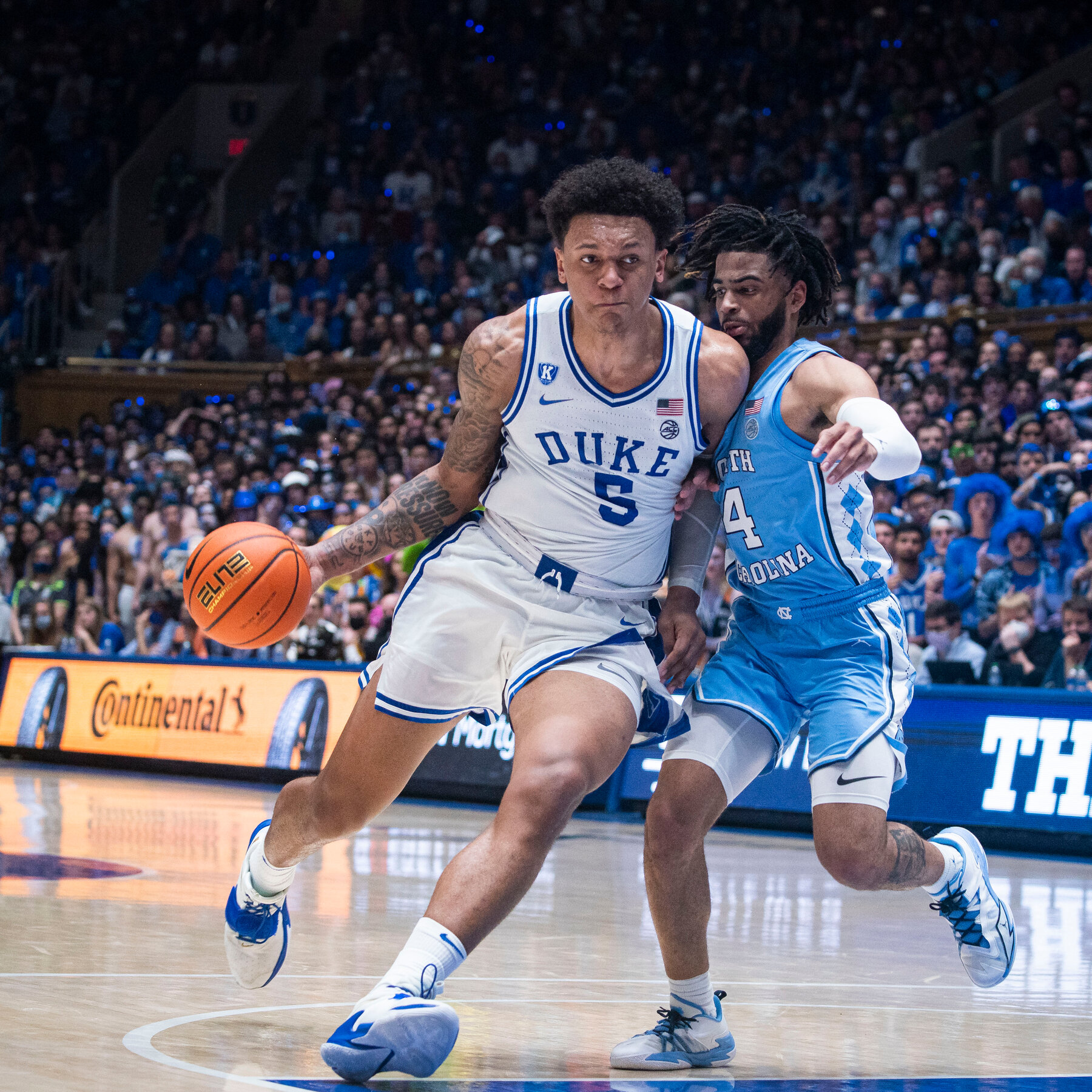
The question might make some in Chapel Hill flinch: would you trade the last five years of North Carolina Tar Heels men’s basketball for those of Duke Blue Devils men’s basketball? It’s the kind of debate that fuels barbershop arguments, message board wars, and heated group chats across the Tobacco Road rivalry. And yes, it might require ducking from a few flying objects before answering.
Rivalry has always been the measuring stick in this corner of college basketball. Decades ago, whispers grew loud when Dean Smith appeared to plateau while Mike Krzyzewski surged, leading Duke to five straight Final Fours, three national title games, and two championships. “Dean must go!” was a real sentiment among some frustrated fans — a reminder that perspective often gets lost in the heat of comparison.
Fast forward to the last five seasons, and the spotlight has shone brighter in Durham. Duke has lived center stage in the national conversation, buoyed by elite recruiting classes and star power that translated directly to the NBA Draft stage. Two No. 1 overall picks and a parade of first-rounders kept the Blue Devils embedded in highlight reels and draft-night celebrations.
Meanwhile, North Carolina’s NBA pipeline hasn’t been nearly as flashy in that same span. A pair of late first-round selections doesn’t quite carry the same headline weight as Duke’s draft dominance. In the modern era — where recruiting rankings and draft slots are often equated with program health — that disparity has shaped much of the outside narrative.
On the conference front, Duke also holds the recent edge. Two ACC Tournament titles in five years underscore consistency at the top of the league, while UNC has come up empty in that category during the same stretch. For a fan base that measures success in banners, that stings.
Seeding tells a similar story. Duke has earned high seeds in four straight NCAA Tournaments and appears positioned for another strong placement. UNC, by contrast, endured the indignity of missing the tournament entirely one season and barely sneaking in another. For a blueblood program, Selection Sunday anxiety is never comfortable.
Yet the postseason isn’t solely about seeding — it’s about surviving. Duke reached two Final Fours in the last five years but failed to convert either into a national championship. Deep runs are celebrated, but in Durham, they ultimately fell short of cutting down the nets.
North Carolina, for its part, made one Final Four in that span — and turned it into a win on the sport’s biggest Saturday stage. That victory carries emotional weight, particularly when it came at Duke’s expense in a historic tournament clash that will live forever in rivalry lore.
Both programs can also claim an Elite Eight appearance during this period, reinforcing that neither has fallen far from national relevance. Even in seasons that felt turbulent, each found ways to reassert itself on the biggest stage.
The perception gap, however, is undeniable. Duke’s constant presence in national broadcasts and recruiting headlines creates an aura of momentum. Media praise and top-ranked freshmen tend to amplify the sense that the Blue Devils are perpetually ascending.
UNC’s narrative has been more uneven — flashes of brilliance punctuated by frustrating inconsistency. At times, questions about roster construction, player development, and overall direction have grown louder in Chapel Hill than they have in Durham.
But here’s the heart of the debate: what defines success? Is it NBA Draft dominance and regular-season consistency? Or is it rivalry moments, Final Four victories, and memories etched into program history?
If you value star power, lottery picks, and steady positioning near the top of the ACC standings, Duke’s five-year stretch is hard to ignore. It represents stability and sustained national prominence in an era defined by rapid roster turnover.
If you value rivalry triumphs and the magic of March — especially when it includes knocking off your biggest rival on the sport’s grandest stage — UNC’s path holds a different kind of appeal. Those moments resonate in ways recruiting rankings never can.
So, would you trade Carolina’s last five years for Duke’s? The answer likely depends on what you cherish most about college basketball. In a rivalry built on comparison, the debate itself might be the truest sign that both programs remain exactly where they’ve always been: at the center of it all.




