


Back in November, it all felt so inevitable.
The banners hanging inside Rupp Arena and the KFC Yum! Center seemed to shimmer a little brighter. The rankings rolled in. The optimism poured out. When the preseason coaches poll slotted Kentucky at No. 9 and Louisville right behind at No. 10, it didn’t feel bold — it felt logical. Two proud programs. Two energized fan bases. Two head coaches preaching vision, pace, and possibility. There were whispers of something poetic: a deep March run for both. Maybe even a collision course. Maybe even echoes of 2012.
Now? The conversation sounds different.
Instead of dreaming about Houston and the Final Four, fans are nervously calculating seed lines. Instead of debating semifinal matchups, they’re arguing about rotations, offensive droughts, late-game decisions, and whether their team can survive the first weekend.
So what happened?
How did two top-10 programs loaded with promise find themselves staring at a postseason full of uncertainty?
A Preseason That Felt Like Destiny
When the preseason rankings dropped, it validated what both programs believed internally.
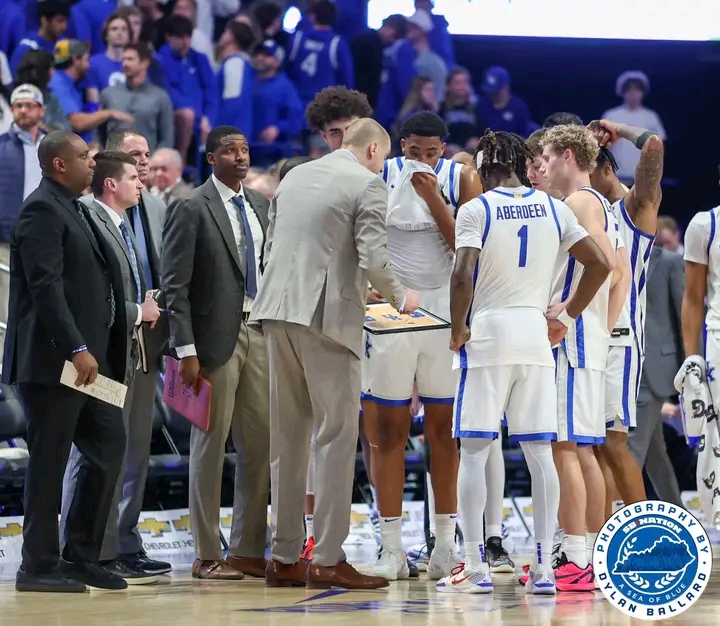
The Kentucky Wildcats men’s basketball entered the year with renewed energy. Mark Pope’s arrival symbolized a new era — one built on modern spacing, ball movement, emotional connection, and a refreshing honesty that resonated with fans. The roster had talent. The expectations were clear. This wasn’t a rebuild. This was a reload.
Meanwhile, the Louisville Cardinals men’s basketball felt reborn under Pat Kelsey. After years of turbulence and inconsistency, there was direction. Identity. Enthusiasm. Louisville basketball wasn’t just trying to stabilize — it was trying to matter nationally again.
When the USA Today Sports Coaches Poll placed Kentucky ninth and Louisville tenth, it wasn’t just about numbers. It was about belief.
Two bluebloods. Side by side. Back in the spotlight.
And then the games started.
Kentucky: Talent, Turbulence, and Thin Margins
Kentucky’s season hasn’t been a disaster. That’s what makes the frustration sharper.
The Wildcats have shown flashes of brilliance — offensive stretches where the ball pops from side to side, shooters find rhythm, and defenders rotate with purpose. There are moments when the preseason optimism looks justified.
But there have also been collapses.
Late-game execution has wavered. Defensive lapses have surfaced at the worst times. Close losses — the kind that swing on a single possession — have piled up. And in a league as unforgiving as the Southeastern Conference, thin margins feel enormous.
The loss at Auburn encapsulated it all: intensity, controversy, heartbreak. It wasn’t just a defeat. It was a psychological bruise.
Mark Pope’s emotional postgame comments — which later resulted in a fine from the SEC — reflected more than frustration with officiating. They revealed how desperately Kentucky wants to be elite again.
The maddening part?
The Wildcats are close.
Close to turning a few of those losses into résumé-shaping wins.
Close to silencing the doubt.
Close to looking like the team that earned that No. 9 ranking.
But “close” in March can be dangerous.
Louisville: Resurgence With a Question Mark
If Kentucky’s frustration is about unrealized precision, Louisville’s is about validation.
Pat Kelsey’s system injected pace and excitement. The Cardinals have shown they can score in bunches. They’ve beaten quality opponents. They even claimed bragging rights in the rivalry.
But here’s the nagging issue: consistency against elite competition.
Louisville’s record looks solid. The energy looks contagious. The culture looks improved. Yet when facing top-tier opponents, the Cardinals haven’t always looked like a Final Four contender. They’ve struggled to string together complete performances against the very teams they would have to beat in March.
That’s the maddening part.
They are clearly better. Clearly competitive. Clearly relevant again.
But are they dangerous?
The Ghost of 2012
You don’t mention Louisville and Kentucky in the same breath without invoking 2012.
That year, the rivals met in a Final Four semifinal — a moment etched permanently into state basketball lore. It was drama. It was pride. It was everything March is supposed to be.
This season, preseason chatter dared to imagine something similar.
What if both teams peaked at the right time?
What if the bracket aligned?
What if destiny delivered a sequel?
Instead, the narrative has shifted from “collision course” to “can they survive?”
The possibility of another historic chapter has been replaced by bracket anxiety.
Expectations Can Be a Heavy Burden
Being ranked in the top 10 in November doesn’t guarantee a smooth path. In fact, it can amplify every stumble.
Every loss feels larger.
Every rotation decision is scrutinized.
Every offensive drought becomes a referendum.
For Kentucky and Louisville, expectation isn’t optional. It’s structural. These are programs with banners, legacies, and fan bases that measure seasons in championships.
That’s why a “good” year isn’t always satisfying.
That’s why a 4-seed can feel like underachievement.
That’s why March doesn’t just bring madness — it brings judgment.
The Psychological Edge of March
March basketball is less about talent and more about clarity.
Can you defend without fouling for 40 minutes?
Can you score when legs are tired?
Can you execute when the crowd roars and the margin is two points?
Kentucky has the offensive firepower. Louisville has the tempo and resilience. But both teams have shown vulnerability in closing moments.
And in the NCAA Tournament, vulnerability is fatal.
The maddening feeling surrounding both programs isn’t rooted in hopelessness. It’s rooted in uncertainty.
They’re good enough to make a run.
They’re flawed enough to exit early.
That tension is exhausting.
Coaching Under the Microscope
Mark Pope and Pat Kelsey are at different stages of their tenure, but both face defining stretches.
For Pope, this is about establishing Kentucky’s postseason identity under his leadership. A strong March could validate his system instantly. An early exit would fuel uncomfortable questions.
For Kelsey, it’s about proving Louisville’s resurgence is real. Progress is clear — but March is where progress becomes proof.
In high-profile programs, patience has limits.
March doesn’t just evaluate players.
It evaluates vision.
The Bracket Doesn’t Care About November
Preseason rankings fade quickly once the tournament begins.
A No. 9 ranking in November doesn’t earn you a second-round bye.
A No. 10 ranking doesn’t guarantee a favorable matchup.
The bracket is ruthless. It exposes weaknesses. It punishes inconsistency.
Kentucky’s half-court defense.
Louisville’s shot selection under pressure.
Both teams’ ability to close.
Those are the real storylines now.
Not the rankings.
Not the hype.
The Emotional Weight on Fans
Perhaps the most maddening part of this March buildup isn’t tactical — it’s emotional.
Fans believed.
They saw top-10 beside their team’s name. They imagined deep runs. They allowed hope to stretch.
Now they refresh bracket projections with unease.
For Kentucky fans, there’s an urgency to return to dominance.
For Louisville fans, there’s hunger to prove the rebuild is complete.
Hope has turned into nervous anticipation.
And that emotional whiplash is what defines a maddening March.
Could This Be the Perfect Setup?
Here’s the twist.
Sometimes seasons that feel unstable become magical.
Sometimes doubt sharpens focus.
Sometimes close losses teach composure.
Sometimes frustration fuels discipline.
Both Kentucky and Louisville are talented enough to flip the narrative instantly.
A statement win in the conference tournament.
A gritty Sweet 16 victory.
A bracket breakthrough.
March doesn’t reward the team with the best November.
It rewards the team that evolves.
So Why Does It Feel So Maddening?
Because both programs sit in the most uncomfortable place in sports:
Good enough to dream.
Unstable enough to fear.
They were supposed to be the main event.
They were supposed to be collision-course contenders.
Instead, they are volatile.
And volatility is thrilling — but terrifying.
The Final Question
When the ball tips in the first round, none of the preseason narratives will matter.
Only execution will.
Will Kentucky’s offense finally align with its defensive intensity?
Will Louisville prove its style translates under tournament pressure?
Will one of them catch fire at exactly the right time?
Or will this season be remembered as the year expectations outran reality?
That’s what makes this March maddening.
Not failure.
Not collapse.
But possibility — tangled with doubt.
They were supposed to be the main event.
Now, they are the mystery.
And in college basketball, sometimes the mystery becomes the story that defines everything.




