


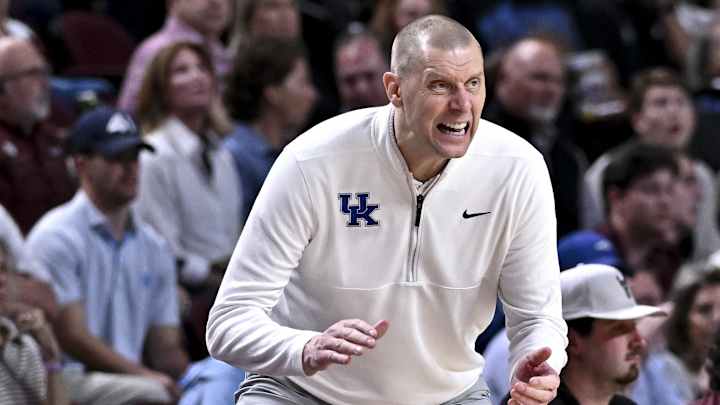
For a brief stretch inside Reed Arena, it felt like Kentucky was about to make a statement. The ball was moving. The shots were falling. The Wildcats were defending with edge and confidence. A double-digit lead had silenced the crowd, and one more three-pointer would have pushed the margin to 15 — the kind of cushion that forces a timeout and shifts pressure squarely onto the home team. But that shot didn’t fall. Texas A&M answered on the other end. And in what felt like the blink of an eye, momentum didn’t just shift — it vanished. What followed wasn’t just a loss. It was a collapse that left Kentucky fans asking one question: what really went wrong?
The 96-85 defeat to the Texas A&M Aggies will go down as one of the most frustrating losses of the season — not because Kentucky was overmatched, but because they were in control before everything unraveled.
The Moment That Changed Everything
Basketball games rarely hinge on a single possession. But sometimes they hinge on a sequence — a subtle turning point that spirals into something much bigger.
Kentucky had the Aggies on their heels. Up 12 in the first half, they had rhythm offensively and confidence defensively. The Wildcats were dictating tempo, making smart decisions, and playing like a team ready to secure a critical SEC road win.
Then came the missed three.
Texas A&M drained one on the other end.
Suddenly the building woke up.
But even then, Kentucky still had control. What truly ignited the Aggies’ massive 44-11 run wasn’t just shot-making. It was timing. It was lineup management. It was substitutions.
The Substitution Debate Returns
All season long, substitutions under head coach Mark Pope have sparked conversation among Kentucky fans. Rotation patterns, bench usage, timing during opponent runs — these have been debated repeatedly.
And in this game, that debate intensified.
When Texas A&M began heating up, Kentucky’s lineup on the floor consisted of four bench players. At a moment when stability and star presence were desperately needed, key players like Otega Oweh and Denzel Aberdeen were off the court. The Aggies sensed the shift immediately.
They attacked.
They shot with confidence.
They fed off the crowd.
By halftime, what was once a Kentucky-controlled game felt almost unreachable.
It wasn’t simply that Texas A&M played well. It was that Kentucky never regained its footing.
A Run That Felt Fatal
A 44-11 run in high-level college basketball isn’t just a scoring surge — it’s domination. It’s a stretch where one team imposes its will completely.
The Aggies knocked down threes at crucial moments. They attacked mismatches. They forced defensive breakdowns. Kentucky’s offense stalled, shots became rushed, and communication slipped.
Momentum in basketball is fragile. When it shifts this violently, it can bury even the most talented teams.
And that’s what made this loss sting the most.
Kentucky didn’t slowly fade away. They were flipped upside down.
Talent Isn’t the Problem
The frustrating truth for Wildcats fans is this: the talent is there.
We’ve seen it.
Against Vanderbilt just days earlier, Kentucky looked cohesive and dangerous. That version of the Wildcats could compete with anyone in the country. The offense flowed. Defensive intensity was high. Rotations were crisp.
And in the first half against Texas A&M, that same energy was visible.
Which is why this loss feels heavier than some of the earlier non-conference blowouts.
Because this wasn’t about ability.
It was about consistency.
The Inconsistency Dilemma
One night Kentucky looks like a Sweet 16 threat.
The next, they look vulnerable to extended droughts and defensive lapses.
That unpredictability is what makes projecting this team in March so difficult.
When Kentucky is locked in, their spacing, scoring balance, and perimeter shooting can overwhelm opponents. But when focus wavers or rotations disrupt rhythm, the cracks show quickly.
Against Texas A&M, the shift was immediate and dramatic.
The SEC Tournament Implications
This loss wasn’t isolated. It had real consequences.
Instead of locking up a double bye in the SEC Tournament, Kentucky now finds itself back in a precarious position. Playing on Wednesday instead of earning extra rest could change the postseason trajectory entirely.
Missouri’s loss earlier in the night had opened a door. Kentucky needed to walk through it.
Instead, they let it close.
That’s what makes this sting.
It wasn’t just about pride. It was about positioning.
Credit Where It’s Due
The Texas A&M Aggies deserve recognition. They didn’t panic when down double digits. They responded with confidence and execution. Their perimeter shooting ignited the run, and they maintained composure throughout.
Home court mattered.
Energy mattered.
Execution mattered.
But the question still lingers — could this have been prevented?
The Florida Test Looms
Next up: the Florida Gators.
And right now, Florida might be the hottest team in the nation.
Momentum heading into the postseason matters. Confidence matters. Identity matters.
If Kentucky responds to this loss with urgency and discipline, this Texas A&M game becomes a lesson.
If they stumble again, doubt grows louder.
What Really Went Wrong?
It’s easy to point at one substitution stretch and say that’s the sole reason.
But the bigger picture includes:
Defensive breakdowns during the run
Perimeter defense lapses
Offensive stagnation
Poor timing during momentum swings
Inability to regain composure
The substitutions were the spark.
The execution afterward fueled the fire.
And once the Aggies caught flame, Kentucky didn’t have an extinguisher.
The Bigger Concern for March
March Madness punishes inconsistency.
Tournament games are often decided in 4-5 minute stretches. A lapse like the one Kentucky experienced against Texas A&M could end a season instantly.
The Wildcats have shown they can beat quality teams.
But can they maintain composure when adversity hits?
That’s the defining question.
Final Thought: A Turning Point or a Warning Sign?
Losses can do one of two things.
They can fracture confidence.
Or they can forge resilience.
Kentucky was on the brink of running away with a key SEC road game. Instead, they endured one of their most frustrating collapses of the year.
The talent is real.
The ceiling is high.
But until consistency matches potential, nights like this will continue to haunt the Wildcats.
The matchup with Florida now carries enormous weight. Not just for standings but for identity.
Because if Kentucky wants to make noise in March, they must prove that what happened in Reed Arena was an exception, not a preview.
And that answer? We’ll find out soon enough.




