


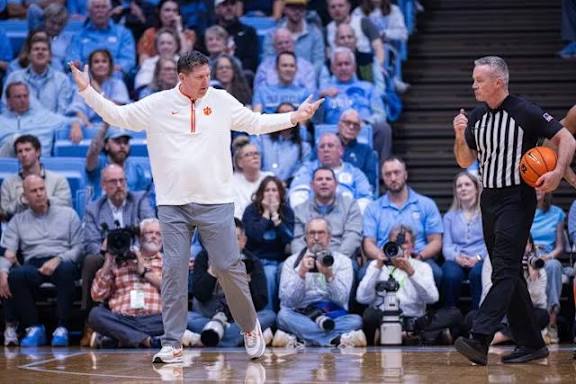
For a split second inside the Dean E. Smith Center, time seemed to slow down. Clemson trailed by three. Ten seconds remained. The ball was in Dillon Hunter’s hands. The season — or at least a crucial chapter of it — hung in that fragile space between decision and execution. Should he rise for the tying three? Should he attack the rim? Should he trust the design or trust his instinct? In that moment, with the noise swelling and defenders switching, Hunter made his choice. And now, everyone is asking the same question: what was he thinking?
The Tigers ultimately fell 67-63 to No. 18 North Carolina on March 3 in Chapel Hill. But the final possession will linger far longer than the final score. Because games like this — tight, emotional, tournament-implication games — often boil down to one decision.
And this one is being debated across Clemson circles.
The Setup: A Chance to Tie
Clemson trailed by three with 10 seconds remaining. The design was clear. Head coach Brad Brownell had drawn up an action to free either Butta Johnson or Jestin Porter for a clean three-point look. Two off-ball screens were set. The goal was simple: get a shooter space, tie the game, extend the night.
But North Carolina didn’t cooperate.
The Tar Heels switched the screens.
The intended options weren’t open.
Hunter, inbounding the ball, was nearing a five-second violation. Forced to react quickly, he passed to Carter Welling, who immediately returned the ball to him.
Now the play was broken.
Now it was instinct.
The Drive Heard Around Clemson
With the clock ticking under seven seconds, Hunter faced a split-second decision. Instead of pulling up for a contested three, he attacked the paint.
It wasn’t reckless. It wasn’t panicked.
It was calculated.
If he scored quickly, Clemson could foul and extend the game. If he drew contact, he might get to the line with a chance to tie.
Hunter drove. Contact occurred. UNC’s Luka Bogavac was there. No whistle.
The layup missed.
Hunter followed his shot. The tip-in attempt also missed.
And just like that, the opportunity slipped away.
Brownell’s Perspective: Not a Bad Play
After the game, Brownell didn’t criticize his senior guard.
“Dillon made a good play to try and go ahead,” Brownell said. “You could go for three, but it wasn’t bad because, I guess, he didn’t feel comfortable. Go get a quick two. If he makes the first layup, there’s still probably five seconds left, and we could’ve fouled them again and had a chance.”
That’s the nuance.
This wasn’t a wild gamble.
It was a strategic alternative.
The risk of taking a rushed, contested three is obvious. Miss it, and the game ends immediately. Attack the rim, score fast, and extend the pressure.
Hunter chose the latter.
The Contact Debate
Of course, Clemson fans are pointing to the contact.
There was visible body-to-body action as Hunter attempted the layup. Some believe a foul should have been called. Others argue it was standard late-game physicality.
No whistle means no free throws.
No free throws means no extension.
And that silence from the officials amplified the frustration.
A Missed Opportunity Beyond One Play
While the final seconds draw the spotlight, this loss wasn’t decided in one possession.
Clemson had other chances.
The Tigers led at moments. They battled throughout. RJ Godfrey delivered a career-high 22 points, dominating inside and even knocking down his second three-pointer of the season.
North Carolina struggled to contain him early.
But in the final five minutes?
Godfrey had just one shot attempt.
That’s a bigger strategic question than Hunter’s drive.
Why go away from the hot hand?
The Bogavac Factor
While Clemson searched for answers late, UNC found theirs in Luka Bogavac.
Bogavac drained six three-pointers — including back-to-back daggers with under six minutes left to flip momentum permanently. The Tar Heels finished with 12 made threes, tying for their second-highest total this season.
Clemson made seven.
In modern college basketball, that gap is often decisive.
Brownell acknowledged it plainly: “(Bogavac) was the difference in the game.”
And when a shooter finds rhythm in Chapel Hill, it can feel insurmountable.
Bigger Implications: The ACC Picture
This loss dropped Clemson to 21-9 overall and 11-6 in ACC play. More importantly, it prevented them from clinching a double bye in the ACC Tournament.
Instead of controlling their path, the Tigers now need help from other conference teams.
That’s the real sting.
March positioning matters. Rest matters. Matchups matter.
Clemson had a chance to secure breathing room.
Instead, they’re in scramble mode.
Confidence Amid Adversity
Despite losing five of their last six games, Clemson’s locker room remains confident.
RJ Godfrey said postgame: “We’re finding our groove back, getting our swagger back, our mojo back. We’re going to be good at the right time.”
That belief is critical.
Because while the loss hurts, the Tigers aren’t broken.
They’re competing.
They’re fighting.
They’re close.
So What Was Dillon Hunter Thinking?
Let’s answer the headline directly.
Hunter was thinking about extending the game.
He was thinking about maximizing odds.
He was thinking about creating pressure rather than forcing a low-percentage three.
He trusted his ability to finish.
He trusted that contact might draw a whistle.
He trusted the math of time management.
It didn’t work.
But the thought process wasn’t irrational.
It was aggressive.
And sometimes aggression defines winners — even when the shot doesn’t fall.
The Fine Line Between Hero and Question Mark
If that layup drops, we’re praising Hunter’s composure.
If a foul is called, we’re talking about clutch free throws.
If the tip-in falls, Clemson is down one with time to foul.
Instead, it’s a miss.
And in sports, outcomes shape narratives.
But process still matters.
Final Thought: One Decision Doesn’t Define a Season
Clemson’s March fate won’t hinge on one drive in Chapel Hill.
It will hinge on:
Defensive consistency
Late-game execution
Perimeter containment
Maximizing hot hands
Composure under pressure
Hunter made a decision in chaos.
It was defensible.
It was competitive.
It just wasn’t successful.
And sometimes, that’s the difference between heartbreak and overtime.
Now the Tigers turn to Georgia Tech with urgency. A win secures their third straight March Madness appearance and restores momentum.
The final 10 seconds in Chapel Hill will linger.
But they don’t have to define Clemson’s season.
Because in March, redemption always waits for the bold.
And Dillon Hunter? He wasn’t afraid to be bold.




