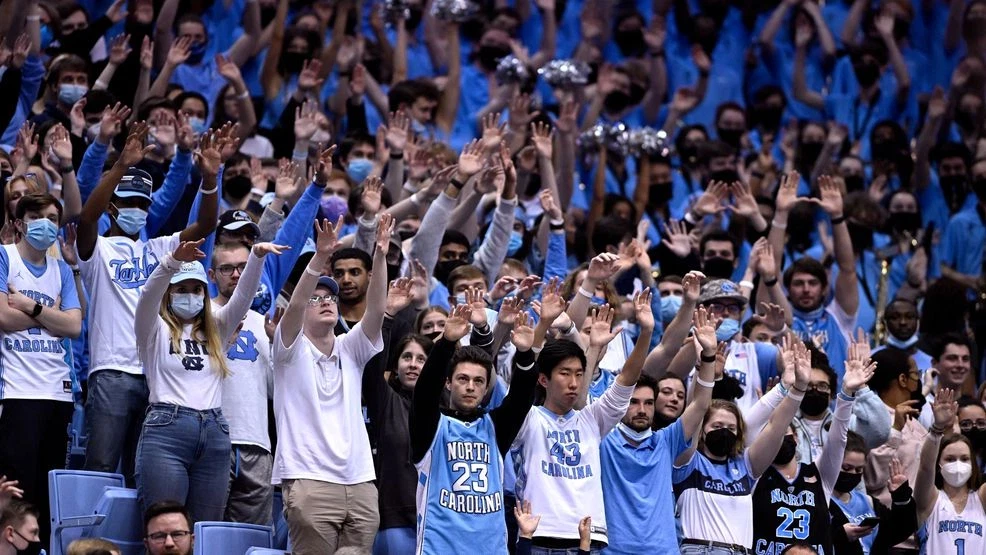
For nearly four decades, the roar inside the Dean E. Smith Center has echoed far beyond the campus of the University of North Carolina at Chapel Hill. It has been the home of unforgettable buzzer-beaters, championship celebrations, and the electric energy of thousands of fans dressed in Carolina blue. But today, a question that once seemed unthinkable is stirring passionate debate across the college basketball world: what should the future of the Dean Dome look like? As discussions about renovation, relocation, and modernization grow louder, Tar Heel fans are wrestling with a delicate balance between honoring tradition and preparing the program for the rapidly evolving future of college athletics.
A Cathedral of College Basketball
Few arenas in college sports carry the symbolic weight of the Dean Dome. Since opening in 1986, the building has served as the epicenter of one of the sport’s most iconic programs. Named after legendary coach Dean Smith, the arena was designed to house the passion of a fan base that stretches across generations.
The program that plays within those walls helped turn the university into a global brand. From the early dominance under Dean Smith to the national championships under Roy Williams, Carolina basketball has become one of the defining identities of the institution.
The players who have worn the Carolina uniform have left an indelible mark on basketball history. Among them is Michael Jordan, whose legendary career began in Chapel Hill before transforming the NBA. The banners hanging inside the Dean Dome tell the story of a program that has consistently stood among college basketball’s elite.
For many fans, stepping inside the arena is not just attending a game — it is stepping into history.
Why the Debate Has Exploded
Recently, discussions about the future of the Dean Smith Center have intensified. University leaders and athletic administrators have been exploring options that include major renovations or potentially building a new arena entirely.
What might appear at first glance to be a simple facilities upgrade has quickly evolved into an emotional campus-wide conversation.
Petitions have circulated among alumni and fans, gathering thousands of signatures. Social media discussions have grown heated. Students, donors, former players, and longtime supporters are all asking the same question:
Should Carolina preserve the Dean Dome as it is, renovate it, or move on to something entirely new?
At the center of the controversy is a proposed reduction in seating capacity — from roughly 21,000 seats to closer to 16,000 in some potential designs.
To some, this feels like shrinking the heart of Carolina basketball itself.
Why Seating Capacity Matters So Much
Few programs in college basketball can claim the level of fan support that North Carolina enjoys.
Year after year, the Tar Heels rank among the national leaders in attendance. The Dean Dome routinely fills with more than 20,000 fans, creating one of the most visually striking atmospheres in the sport.
Reducing the arena’s size raises several concerns among fans:
Who loses access to tickets?
Will longtime supporters be priced out?
Will the student section shrink?
Does a smaller arena change the identity of Carolina basketball?
For many alumni and fans, the Dean Dome represents accessibility. It is a place where students, families, and lifelong supporters gather together in massive numbers to support the team.
Changing that formula, even slightly, feels like altering a cherished tradition.
The Emotional Connection to Carolina History
Part of the intensity surrounding this debate stems from the program’s deep historical roots.
North Carolina basketball has always been intertwined with broader moments in university history. One of the most significant figures in that story is Charlie Scott, who became the first African American scholarship athlete at UNC and the first Black player in the Atlantic Coast Conference.
Scott’s impact went far beyond the basketball court. His success helped pave the way for greater racial integration across college athletics and the university itself.
Some fans have drawn symbolic parallels between past struggles for inclusion and modern debates about accessibility within the arena. While the contexts are very different, the comparison reveals just how deeply people connect the Dean Dome to Carolina’s identity.
To many supporters, protecting the arena feels like protecting the story of the program itself.
The Modern Economics of College Basketball
While tradition plays a powerful role in the debate, university leaders must also confront a modern reality: college athletics has become an extremely complex business ecosystem.
The financial structure of elite basketball programs has evolved dramatically in recent years. Revenue streams now include:
Television contracts
Corporate sponsorships
Premium seating and luxury suites
NIL collectives for players
Donor-funded facility upgrades
National brand partnerships
Competing at the highest level requires enormous financial resources.
Programs like Duke Blue Devils men’s basketball, Kansas Jayhawks men’s basketball, Kentucky Wildcats men’s basketball, and Indiana Hoosiers men’s basketball have all invested heavily in modern facilities to maintain their competitive edge.
In this environment, arenas are no longer just places to watch games — they are strategic assets that influence recruiting, fundraising, and national brand visibility.
Why Smaller Arenas Sometimes Generate More Revenue
One of the most misunderstood elements of modern arena design is the shift toward fewer seats but higher revenue per seat.
Luxury suites, premium lounges, and hospitality experiences can generate far more income than traditional upper-deck seating.
For example:
A single premium suite can generate hundreds of thousands of dollars annually.
Courtside club seating often includes exclusive dining and VIP services.
Corporate hospitality packages attract high-level donors and sponsors.
In many cases, 16,000 premium-focused seats can produce more revenue than 21,000 traditional seats.
From a purely financial perspective, reducing capacity can sometimes strengthen the athletic department’s long-term stability.
But economics alone cannot answer the deeper cultural questions facing Carolina.
The Recruiting Factor
Modern recruits evaluate far more than coaching and playing time when choosing a college program.
Facilities have become a major selling point. Prospective players look at:
Locker room design
Player lounges
Training technology
Recovery facilities
Arena atmosphere and presentation
Programs that invest heavily in these areas often gain an advantage on the recruiting trail.
For North Carolina, maintaining elite facilities is essential if the program hopes to continue competing with the best teams in the country.
Renovation vs. Relocation
The two main paths under discussion each carry significant implications.
Renovation
Renovating the existing Dean Dome would allow UNC to preserve its historic home while modernizing the building’s infrastructure.
Potential upgrades could include:
Expanded concourses
Improved fan amenities
Updated technology and video boards
Enhanced premium seating areas
Modern locker rooms and training spaces
The advantage of renovation is clear: the program stays rooted in its historic home.
But renovation also presents challenges. The current building’s design may limit how much it can be transformed.
Building a New Arena
Constructing a new arena would allow the university to design a facility tailored specifically to modern expectations.
A new building could incorporate:
State-of-the-art technology
Innovative seating configurations
Enhanced television presentation
Flexible event hosting capabilities
Expanded revenue opportunities
However, relocating would mean leaving behind the arena that has hosted decades of Carolina basketball history.
For many fans, that possibility is difficult to imagine.
The Political Dimension
Major construction projects at public universities rarely occur in isolation.
State funding, university governance boards, donor influence, and public opinion all play roles in shaping the outcome.
At the same time, higher education faces increasing scrutiny regarding spending priorities.
Critics argue that universities should prioritize academic investment rather than athletic infrastructure. Supporters counter that successful athletic programs drive national visibility, alumni engagement, and fundraising that ultimately benefits the entire university.
The debate surrounding the Dean Dome sits squarely within this larger conversation.
The Risk of Standing Still
While preserving tradition is important, refusing to adapt can carry risks.
College athletics continues to evolve at a rapid pace. Media rights deals, NIL opportunities, recruiting dynamics, and fan expectations are all changing.
Programs that fail to modernize their facilities may eventually find themselves falling behind competitors who embrace innovation.
For North Carolina, the challenge lies in adapting without losing the essence of what makes Carolina basketball special.
Protecting the Soul of Carolina Basketball
At its core, the debate surrounding the Dean Dome is about stewardship.
Carolina basketball is more than a sports program — it is a cultural institution. The players who have passed through Chapel Hill, the coaches who shaped its philosophy, and the fans who fill the arena have all contributed to a legacy that stretches across generations.
Any decision about the arena’s future must honor that legacy.
That means protecting:
Student access to games
Affordable tickets for longtime fans
The electric atmosphere of a full arena
The traditions that define Carolina basketball
Change may be inevitable, but losing the spirit of the program would be a far greater cost.
A Moment That Could Define the Next Era
The conversation about the future of the Dean Smith Center is still unfolding. University leaders continue to evaluate options, gather feedback, and consider the long-term implications of their decisions.
Handled wisely, this moment could represent a powerful turning point — a chance to preserve Carolina’s historic identity while building a foundation for future success.
Handled poorly, it could deepen divisions among the very community that has made Carolina basketball one of the sport’s most beloved programs.
The challenge ahead is not simply choosing between renovation or relocation.
It is finding a path that honors the past while embracing the future.
The Legacy That Must Endure
From the championship banners to the echoes of unforgettable victories, the Dean Dome represents decades of basketball excellence.
It is where generations of Tar Heels learned what Carolina basketball truly means.
Whether through thoughtful renovation or a carefully planned new arena, the next chapter must ensure that the essence of the program remains intact.
Because long after the construction debates fade, one truth will remain:
Carolina basketball is bigger than any building.
But the building that houses it still matters.
And the decision made today will shape the experience of Carolina fans for generations to come.