


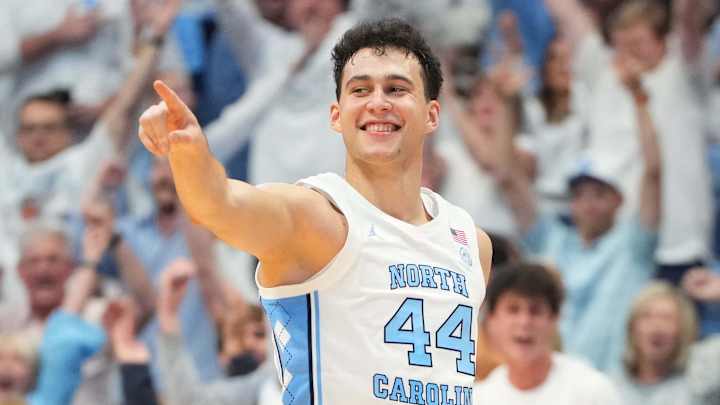
Rivalry games rarely follow a script. When the North Carolina Tar Heels stepped into the hostile environment of Cameron Indoor Stadium on Saturday night, they knew the challenge waiting for them would be enormous. The stakes were high, emotions were even higher, and every possession felt like it could tilt the balance of one of college basketball’s fiercest rivalries. But as the night unfolded against the Duke Blue Devils, the story became bigger than just the final score. It became a moment that sparked passionate reactions across social media, leaving fans debating everything from effort to execution long after the buzzer sounded.
A Rivalry That Never Lacks Drama
Few rivalries in sports carry the intensity and history of the battles between the North Carolina Tar Heels and the Duke Blue Devils. For decades, the two programs have represented the pinnacle of college basketball competition, with every meeting feeling like an event that extends far beyond the court.
Saturday night’s rematch was no different.
North Carolina arrived at Cameron Indoor Stadium knowing the odds were stacked against them. Playing on the road against one of the most talented teams in the country is never easy, but facing Duke inside their iconic arena makes the challenge even more daunting. The Blue Devils were not only defending their home floor but also seeking revenge after falling earlier in the rivalry series.
The Tar Heels, meanwhile, were chasing a rare accomplishment—sweeping their archrivals during the regular season. That goal alone added another layer of intensity to a matchup that rarely needs additional motivation.
First Half: UNC Shows Fight
Despite the hostile atmosphere and heavy expectations surrounding the game, North Carolina came out with determination.
The Tar Heels matched Duke’s energy early, refusing to let the home crowd dictate the pace. For much of the first half, the teams traded baskets and momentum swings, with neither side fully pulling away.
North Carolina’s defensive effort helped keep them within striking distance. They managed to slow Duke’s early offensive rhythm, forcing contested shots and capitalizing on transition opportunities whenever they could.
At halftime, it felt like the game was still wide open.
For UNC fans watching closely, there was hope that the team might once again find a way to spoil Duke’s night. But as many rivalry games have proven over the years, maintaining that momentum inside Cameron Indoor Stadium is often easier said than done.
The Turning Point
The second half told a very different story.
As the game resumed, Duke began to assert its dominance in key areas—particularly in rebounding and defensive pressure. The Blue Devils tightened their defense, forcing turnovers and converting them into quick points on the other end.
Those mistakes proved costly for North Carolina.
By the end of the night, Duke had turned 14 UNC turnovers into 24 points, a statistic that highlighted just how damaging those extra possessions were.
Rebounding also became a major factor. Duke controlled the glass with 42 rebounds compared to North Carolina’s 29, allowing them to extend possessions and wear down the Tar Heels over time.
Perhaps the most noticeable difference came in the paint. Duke scored 36 points inside, while UNC managed 28, a gap that reflected the Blue Devils’ ability to attack the basket and dominate physically.
Once Duke seized control midway through the second half, the momentum shift was unmistakable.
Cameron Boozer Takes Over
A major storyline entering the game centered around the absence of one of North Carolina’s key players.
UNC superstar forward Caleb Wilson had targeted a return for the matchup against Duke, but a broken thumb suffered earlier in the week forced him to undergo season-ending surgery. Without Wilson’s presence, the Tar Heels were missing one of their most impactful contributors on both ends of the floor.
Duke took full advantage of that opportunity.
Leading the charge was star forward Cameron Boozer, who delivered a dominant performance. Boozer finished the night with an impressive 26 points and 15 rebounds, recording a double-double that helped propel Duke to victory.
His ability to control the paint, grab rebounds, and convert key scoring opportunities proved to be one of the biggest differences in the game.
For the Blue Devils, it was exactly the kind of performance they needed from one of their brightest stars in a rivalry matchup.
Contributions Across the Board
While Boozer’s performance grabbed the headlines, he wasn’t the only Duke player who made an impact.
Maliq Brown added 15 points, providing consistent scoring throughout the contest. Meanwhile, Isaiah Evans and Dame Sarr chipped in with 11 and 10 points respectively, giving Duke the balanced attack necessary to pull away in the second half.
North Carolina, to their credit, still managed to produce several solid individual performances.
Point guard Derek Dixon led the Tar Heels with 17 points, while Henri Veesaar, Jarin Stevenson, and Seth Trimble each reached double figures.
However, the Tar Heels struggled to maintain consistent scoring during Duke’s decisive second-half run. That lull ultimately allowed the Blue Devils to create enough separation to secure a 76–61 victory.
The Emotional Side of the Rivalry
Beyond the statistics and the final score, rivalry games often come down to emotion and response under pressure.
After the game, UNC forward Henri Veesaar offered a candid reflection on what went wrong during Duke’s game-changing run.
According to Veesaar, once Duke began to build momentum, the Tar Heels struggled to respond with the same intensity.
That moment highlighted one of the toughest challenges teams face in rivalry environments: maintaining composure when the opposing crowd senses an opportunity to shift the momentum.
On the Duke side, the victory carried special meaning as well.
Guard Cayden Boozer expressed how significant it was to close out the regular season at home with a win over North Carolina. For him, the moment was even more meaningful because it might be one of the final times he shares the court with his brother in the rivalry.
Those personal connections often add another layer of significance to games between Duke and UNC.
Social Media Erupts After the Game
As soon as the final buzzer sounded, fans quickly took to social media to share their reactions.
The responses ranged from praise and pride to frustration and analysis, illustrating just how deeply invested fans are in the rivalry.
Some observers pointed out the statistical differences that ultimately decided the game. Others focused on specific moments that they believed could have changed the outcome.
One recurring topic among fans was the Tar Heels’ turnover issues and struggles on the boards. Many felt those two areas were the biggest reasons UNC couldn’t keep pace with Duke down the stretch.
Another interesting discussion emerged around advanced metrics.
Some fans noticed that despite losing by 15 points, North Carolina’s ranking in certain analytics systems actually improved after the game—something that surprised many observers and sparked debate about how those rankings work.
Meanwhile, others chose to focus on the bigger picture.
Several fans pointed out that North Carolina had played a significant portion of the season without key players, yet still managed to maintain a strong record. That perspective suggested there might still be optimism heading into postseason play.
Looking Ahead to the ACC Tournament
While rivalry games carry enormous emotional weight, the college basketball season rarely pauses for long.
For North Carolina, the focus now shifts to the postseason.
After a brief period of rest, the Tar Heels will travel to Charlotte for the upcoming ACC Tournament, where they’ll look to regroup and build momentum.
The postseason presents a new opportunity for redemption.
Regardless of what happened in the regular-season finale against Duke, North Carolina’s ultimate goal remains unchanged: competing for a championship.
For a program with the history and expectations of the Tar Heels, every game in March carries the potential to reshape the narrative of the season.
The Bigger Picture
Saturday night’s rivalry clash ultimately served as a reminder of how thin the margin for error can be in high-level college basketball.
North Carolina showed flashes of competitiveness and resilience, especially during the first half. But small mistakes—turnovers, missed rebounds, and scoring droughts—can quickly become decisive against elite opponents.
Duke capitalized on those opportunities, delivering a performance that reinforced their status as one of the top teams in the country.
At the same time, the passionate reactions from fans across social media demonstrated something equally important: the enduring power of the Duke–UNC rivalry.
Even after decades of legendary games, iconic players, and unforgettable moments, every new chapter still captures the attention of the college basketball world.
And judging by the reactions that flooded social media after this latest meeting, the rivalry remains as intense and compelling as ever.




