


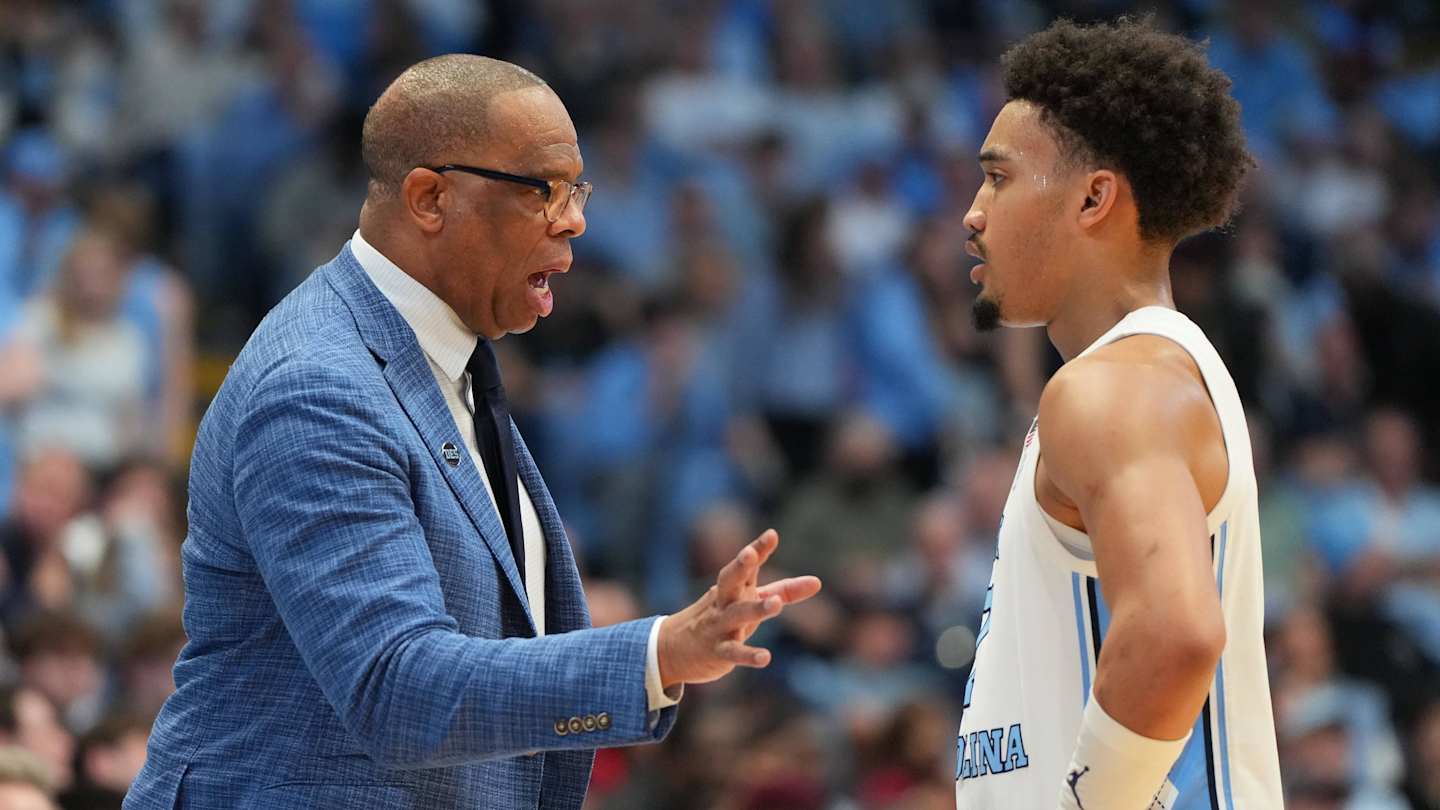
The season took an unexpected turn for the North Carolina Tar Heels men’s basketball when standout forward Caleb Wilson was ruled out for the remainder of the year due to injury. For many programs, losing a key contributor this late in the season could derail momentum and force a complete tactical overhaul. But according to head coach Hubert Davis, the Tar Heels have no intention of abandoning the identity that has carried them throughout the season.
Instead of panic or dramatic change, Davis has delivered a clear message: North Carolina will move forward with the same philosophy, the same standards, and the same relentless approach that has defined the program for years.
While Wilson’s absence is undeniably significant, Davis believes the Tar Heels are prepared for the challenge ahead.
A Major Loss for North Carolina
There’s no denying that Wilson’s injury leaves a noticeable void in the lineup. Throughout the season, he had become one of the team’s most valuable pieces, contributing on both ends of the floor with energy, physicality, and versatility.
Wilson’s ability to defend multiple positions, battle on the boards, and finish around the rim made him a key component of North Carolina’s system. His presence often allowed the Tar Heels to control the tempo of games, especially when they needed stops or momentum-shifting plays.
Losing that kind of production is never easy.
For many teams, such a loss would trigger major adjustments—changing offensive systems, reshuffling rotations, or slowing the pace to compensate for the missing player.
But Davis made it clear that the Tar Heels won’t be abandoning their identity.
Experience Without Wilson
One reason Davis remains confident is that the Tar Heels already have experience playing without Wilson earlier in the season.
During that stretch, North Carolina was forced to adjust on the fly. Players stepped into expanded roles, and the coaching staff experimented with different combinations on the floor.
Those games, Davis explained, gave the team valuable insight into how it can operate without Wilson.
“We do have a seven-game sample without him,” Davis noted when discussing the situation. “Defensively, we know what we need to do. From an offensive standpoint, we know our attack.”
In other words, the Tar Heels aren’t entering unknown territory.
They’ve already navigated similar circumstances before, and that experience could prove invaluable as they push toward the final stretch of the season.
The Identity Remains the Same
For Davis, the most important thing is maintaining the culture and style that define North Carolina basketball.
That identity revolves around physical play, disciplined defense, strong rebounding, and an aggressive offensive mindset.
Even without Wilson in the lineup, Davis emphasized that the core philosophy remains unchanged.
“The foundation of who we are hasn’t changed whether Caleb is in the lineup or not,” he explained.
That statement reflects the broader mindset within the program. Rather than focusing on what they’ve lost, the Tar Heels are determined to focus on what they can still accomplish.
Rebounding: The Non-Negotiable Priority
If there’s one area Davis refuses to compromise on, it’s rebounding.
North Carolina has long prided itself on dominating the glass, and Davis believes that will be even more important now.
“Whether Caleb is here or not, we’ve got to rebound,” he said. “We’ve got to box out and limit teams to one shot every possession.”
This philosophy is deeply rooted in North Carolina’s basketball tradition.
Rebounding isn’t just about defense—it’s about controlling the game. By limiting opponents to one shot and securing the ball, the Tar Heels can dictate tempo and create opportunities on the other end of the floor.
In many ways, rebounding becomes the engine that drives everything else.
Defense Starts with Effort
While rebounding is a critical component, Davis also emphasized the importance of defensive discipline.
Without Wilson’s versatility, the Tar Heels will need every player to contribute on the defensive end.
Communication, positioning, and effort will all play major roles in maintaining the team’s defensive standard.
The coaching staff is focusing on ensuring players understand their responsibilities and remain connected as a unit.
When the defense functions properly, it creates the kind of stops that can shift momentum and energize the team.
And that leads directly to one of North Carolina’s greatest strengths.
Igniting the Transition Game
One of the most exciting aspects of the Tar Heels’ style of play is their ability to push the ball in transition.
When North Carolina secures a defensive rebound, the next step is immediate: attack.
Davis believes this is where the team can continue to thrive.
“One, it gets us a stop. Two, it ignites us in transition where we’ve been really good all season,” he explained.
Fast-break opportunities allow the Tar Heels to capitalize on their athleticism and speed. It also prevents opposing defenses from getting set, creating easier scoring chances.
Even without Wilson, the Tar Heels plan to maintain that aggressive pace.
Offensive Focus: Living in the Paint
On the offensive side of the ball, Davis wants the team to remain committed to attacking the paint.
For North Carolina, the paint is where everything begins.
Penetration forces defenses to collapse. Offensive rebounds create second chances. Post play generates physical advantages near the basket.
“We still want to dominate points in the paint through post penetration and offensive rebounds,” Davis said.
This strategy also opens the door for perimeter scoring.
When defenders are forced to help in the paint, it creates space for shooters on the outside. Kick-out passes can lead to open three-point attempts—an important part of the Tar Heels’ offensive balance.
Playing Through Contact and Getting to the Line
Another key objective for North Carolina is getting to the free-throw line.
Davis believes that attacking the basket consistently will create foul opportunities, allowing the team to score with the clock stopped while putting pressure on opposing defenses.
“We want to live in the paint and live at the free throw line,” he said.
Drawing fouls accomplishes multiple goals.
It disrupts defensive rhythm, puts opponents in foul trouble, and gives the Tar Heels chances to score efficiently.
In tight games, those free points at the line can make a significant difference.
Next Man Up Mentality
While strategy is important, Davis also stressed the importance of mindset.
Injuries are part of sports, and successful teams find ways to adapt.
For North Carolina, that means embracing a “next man up” mentality.
Players throughout the roster will have opportunities to step into larger roles. Some may see increased minutes, while others may take on new responsibilities within the system.
This kind of challenge often reveals new strengths within a team.
Sometimes the absence of a key player forces others to rise to the occasion.
Leadership in the Locker Room
Moments like this also test a team’s leadership.
Veteran players and experienced contributors must help maintain focus and confidence during difficult stretches.
Davis has emphasized communication and accountability within the locker room.
Players are being encouraged to support each other, stay locked into the team’s goals, and trust the system that has brought them success.
The culture of the program plays a major role here.
North Carolina’s tradition is built on resilience, teamwork, and belief.
Preparing for the Challenge Ahead
As the Tar Heels prepare for upcoming games, the focus remains on execution.
Practices have emphasized fundamentals—boxing out, defensive rotations, ball movement, and attacking the paint.
Davis wants his players to approach each game with intensity and purpose.
Every possession matters, especially as the season moves toward its most critical moments.
The Tar Heels understand that adversity often defines championship-caliber teams.
Looking Toward Charlotte
With postseason competition approaching, North Carolina’s attention is already shifting toward the challenges that lie ahead.
Davis made it clear that the Tar Heels intend to dictate the pace and style of play when they take the court.
“That’s the way we play here at North Carolina,” he said. “And we’ve got to dictate that next week in Charlotte.”
Those words reflect confidence—not just in strategy, but in the players who will carry the team forward.
Turning Adversity into Opportunity
Injuries can be devastating, but they can also create unexpected opportunities.
For the Tar Heels, Wilson’s absence could serve as a rallying point.
Teams often grow stronger when faced with adversity. They become more connected, more determined, and more focused on their shared goals.
Davis believes that mindset will be crucial moving forward.
Rather than dwelling on the setback, North Carolina is choosing to embrace the challenge.
The Road Ahead
The remainder of the season will undoubtedly test the Tar Heels.
Opponents will look to exploit Wilson’s absence, and the margin for error may become smaller.
But if Davis and his players remain committed to their identity—dominating the glass, attacking the paint, defending with discipline, and pushing the pace—the Tar Heels believe they can continue to compete at a high level.
In the world of college basketball, resilience often separates good teams from great ones.
And for North Carolina, the mission remains clear.
No matter who is in the lineup, the standard stays the same.
The Tar Heels will keep playing their brand of basketball—and they fully intend to prove that their foundation is strong enough to withstand any challenge that comes their way.




