


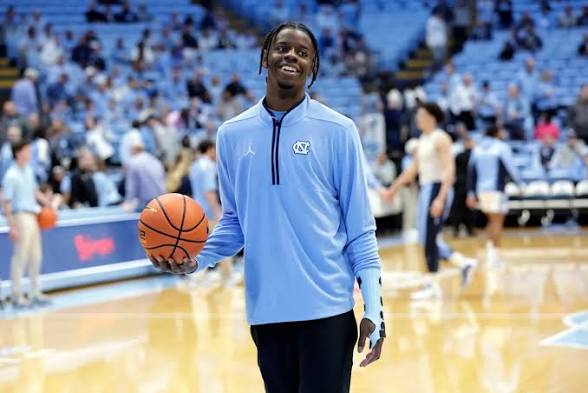
ESPN college basketball analyst Jay Bilas has offered a measured but cautious outlook on North Carolina Tar Heels men’s basketball as they prepare to open their NCAA Tournament journey.
On Thursday evening, the Tar Heels step into a win-or-go-home scenario against the VCU Rams men’s basketball, a matchup that already carries upset potential despite UNC’s higher seeding. Slotted as a No. 6 seed in the South Region, North Carolina enters the tournament with momentum—but also with a major void.
That void, of course, is star forward Caleb Wilson, whose season-ending thumb injury during practice dramatically altered the team’s outlook. His absence not only removes one of the ACC’s most dynamic players but also forces a shift in offensive identity at the most critical point of the season.
Bilas acknowledged UNC’s overall improvement compared to last season but emphasized that losing a centerpiece like Wilson lowers their ceiling. In tournament play, where star power often decides close games, that absence could be the difference between a deep run and an early exit.
Still, Bilas believes the Tar Heels have enough to survive the opening round. While he labeled the VCU matchup as “scary,” he ultimately picked North Carolina to advance, citing their talent advantage and experience in high-pressure situations.
However, the warning signs are clear. VCU enters the tournament as one of the hottest teams in the country, having won 16 of its last 17 games. Their recent Atlantic 10 Tournament title run only reinforces their confidence heading into March Madness.
The Rams are powered by a balanced attack, led by Terrence Hill Jr. and Lazar Djokovic. Both players have been consistent scoring threats, while the team’s defensive intensity has been a hallmark of their success all season.
Should UNC survive that test, Bilas projects their run to end in the Round of 32 against the Illinois Fighting Illini men’s basketball. According to him, Illinois presents a much tougher challenge due to its depth and scoring versatility.
With players like Keaton Wagler leading a group where five scorers average double figures, Illinois has the kind of offensive firepower that can overwhelm teams lacking a go-to star—something UNC must now navigate without Wilson.
That puts increased pressure on Henri Veesaar, who has stepped into a leading role. Averaging 16.7 points per game, the 7-footer has become the focal point of the Tar Heels’ offense, capable of scoring inside and stretching defenses.
Meanwhile, the backcourt duo of Seth Trimble and Derek Dixon provides stability and playmaking. Their ability to control tempo and limit turnovers will be crucial, especially against aggressive defensive teams like VCU.
Head coach Hubert Davis has remained confident in his squad’s resilience. He has consistently emphasized that his team is built to adapt, pointing to their depth and collective mentality as reasons they can still compete at a high level.
Another X-factor for North Carolina could be its bench production. Throughout the season, the Tar Heels have shown flashes of explosive scoring from their second unit—an element that could swing momentum in tightly contested tournament games.
Ultimately, UNC’s path in the tournament will hinge on how quickly they adjust to life without Wilson. If Veesaar continues his strong play and the guards rise to the occasion, the Tar Heels could outperform expectations.
But as Bilas suggests, the margin for error is slim. In March, even the smallest weaknesses are exposed—and for North Carolina, the challenge begins immediately.




