


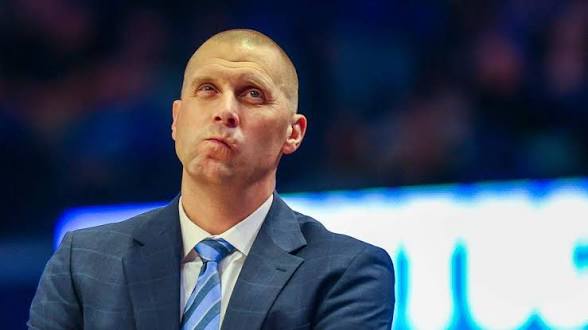
Mark Pope is heading into what could be the defining offseason of his tenure with the Kentucky Wildcats men’s basketball, and the mission is already crystal clear: find elite shooting in the transfer portal.
This upcoming transfer cycle carries massive weight, especially with Kentucky currently lacking commitments in the 2026 recruiting class. That reality puts even more pressure on Pope and his staff to rebuild the roster almost entirely through portal additions unless a late high school prospect unexpectedly joins the fold.
While there are technically 11 players on the current roster eligible to return next season, expectations around college basketball suggest that number will shrink quickly. The transfer portal has become a revolving door, and Kentucky is unlikely to be an exception in this new era.
Because of that uncertainty, Pope must prioritize skill sets over continuity—and at the top of that list is perimeter shooting. Without reliable spacing, his offensive philosophy simply cannot function at its highest level.
At the moment, Collin Chandler stands out as the most dependable shooter expected to return. His ability to stretch the floor gives Kentucky a foundation, but relying on one consistent shooter is far from enough in today’s game.
There is also growing optimism around Kam Williams and his potential development. Many believe he could take a significant leap next season, but projecting improvement is not the same as securing proven production.
That’s where the concern lies.
Kentucky’s current roster lacks multiple players who can consistently knock down shots from deep on a nightly basis. In high-level college basketball, one shooter can be schemed against—but two or three can change everything.
The statistical drop-off tells part of the story. This season, the Wildcats are shooting 34.1% from three-point range, a noticeable decline from last year’s 37.4%. That difference might seem small on paper, but in practice, it has dramatically affected offensive rhythm and spacing.
Equally important is shot volume. In both of Pope’s seasons at Kentucky, his teams have failed to reach his preferred benchmark of over 30 three-point attempts per game. That shortfall suggests not just a stylistic deviation, but also a lack of personnel capable of sustaining that approach.
Fans who expected a high-octane, perimeter-oriented offense have instead seen a system that feels more constrained. The free-flowing, spacing-heavy attack that defined Pope’s previous teams hasn’t consistently shown up this season in Lexington.
To fix that, Kentucky needs more than just “good” shooters—they need players with confidence and a green light. The type of players who can take—and make—difficult shots without hesitation, stretching defenses to their limits.
Koby Brea previously filled that role perfectly, offering a level of reliability that forced defenses to stay honest. Chandler has flashed similar potential, especially in clutch moments, but his inconsistency game-to-game shows why another elite shooter is necessary.
Ultimately, if Pope wants his system to fully come alive, the priority is simple: add one or two proven shooters who can deliver two or three made threes every single night. In a roster likely shaped heavily by transfers, elite shooting isn’t just a need—it’s the foundation for everything Kentucky hopes to become in 2026-27.




