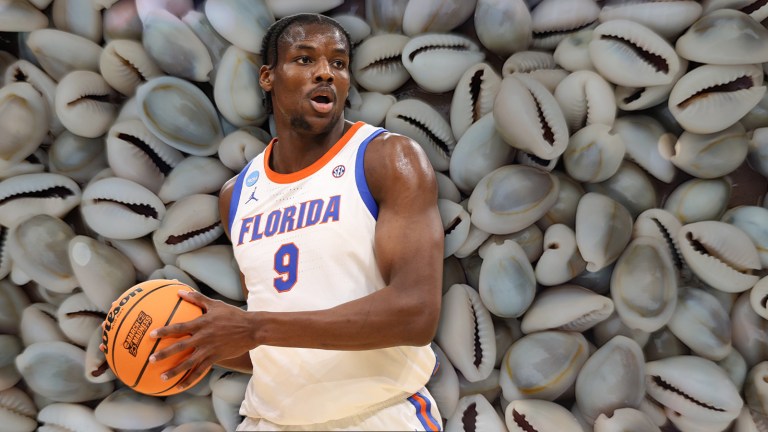
In a sport defined by intensity, precision, and split-second decisions, no one expected one of the most talked-about moments in college basketball to revolve around something as unexpected as hair. But when Rueben Chinyelu stepped onto the court with cowrie shells braided into his hair, he wasn’t just showcasing a unique style—he was expressing culture, identity, and a deep-rooted connection to his African heritage. What followed, however, turned a simple personal expression into a nationwide controversy that has left fans, analysts, and players divided.
The moment itself came without warning. In the middle of a competitive game, with energy surging and tension building, attention shifted away from the action and onto Chinyelu’s appearance. The cowrie shells—small, symbolic, and culturally significant—suddenly became the center of scrutiny. What many saw as a powerful representation of identity was quickly viewed by others as a potential violation of rules. And just like that, a situation that had nothing to do with scoring, defense, or gameplay became the defining storyline of the moment.
At the heart of the controversy were concerns reportedly raised during the game, with Mark Pope, head coach of the Kentucky Wildcats men’s basketball, linked to the issue. The concern wasn’t about style or expression—it was about compliance. Under the regulations of the NCAA, players are prohibited from wearing hard objects, jewelry, or anything that could pose a safety risk during competition. In that context, the cowrie shells were suddenly no longer cultural symbols; they were seen as potential hazards.
What happened next shocked many. Chinyelu was reportedly instructed to remove the cowrie shells before continuing to play. In the middle of a game, under the pressure of competition, he was forced to take off something deeply meaningful to him. It wasn’t just a quick adjustment—it felt like a powerful and symbolic moment that instantly sparked debate. For some, it was a straightforward enforcement of rules. For others, it was something much deeper—a moment where cultural expression appeared to be overshadowed by rigid regulation.
To fully understand why this incident resonated so strongly, one must recognize the significance of cowrie shells. Across many African cultures, they are far more than decorative items. They symbolize wealth, spirituality, history, and identity. For a Nigerian athlete like Chinyelu, wearing them is not about standing out—it’s about representing where he comes from. It’s about carrying a piece of his heritage onto one of the biggest stages of his life. So when those shells were removed, the reaction wasn’t just about a rule being enforced—it was about what that enforcement represented.
The response from the public was immediate and intense. Social media erupted with opinions from all sides. Some समर्थed the decision, arguing that rules exist for a reason and must be applied equally to all players, regardless of intent or meaning. From their perspective, safety and fairness must always come first, and allowing exceptions could create inconsistencies. Others, however, strongly disagreed. They saw the situation as overly strict and lacking cultural awareness, arguing that it highlighted a broader issue within sports—one where personal and cultural expression can sometimes be misunderstood or dismissed.
This divide has led to a much larger conversation that extends far beyond one player or one game. It raises critical questions about the role of identity in sports. Where should the line be drawn between regulation and self-expression? Can organizations like the NCAA adapt to a more global and culturally diverse generation of athletes, or will rules remain inflexible in situations like this? These are not easy questions, and they don’t come with simple answers.
Coaches and officials also find themselves in a difficult position. Individuals like Mark Pope operate within established systems and are expected to uphold the rules. From that standpoint, raising a concern about something that could be interpreted as unsafe falls within their responsibility. Officials, too, are bound by the rulebook, often with little room for interpretation in the heat of the moment. Yet situations like this reveal the limitations of those systems, especially when they intersect with deeply personal forms of expression.
What makes this story so powerful is how something seemingly small evolved into a major talking point. There was no buzzer-beater, no controversial foul, no dramatic altercation—just a decision about hair. And yet, it captured widespread attention because it touched on something real and emotional. It highlighted the growing presence of international athletes in college basketball, players who bring not only talent but also culture, tradition, and identity into the game.
Chinyelu’s journey itself reflects this shift. As part of a new wave of global talent, he represents more than just athletic ability—he represents diversity in its truest form. His presence on the court is a reminder that basketball is no longer confined by borders. And moments like this, while controversial, also serve as opportunities for growth, understanding, and change within the sport.
Ultimately, this incident is about more than rules or hairstyles. It’s about the evolving nature of sports in a global era. It’s about how institutions respond when tradition meets transformation. And it’s about whether the game can continue to grow while embracing the identities of those who play it.
In the end, what happened to Rueben Chinyelu is not just a fleeting headline—it’s a moment that has sparked a lasting conversation. Whether viewed as a necessary enforcement of rules or an unfortunate clash with cultural expression, it has undeniably left its mark. And as the debate continues, one question lingers above all: if a moment like this can create such a powerful reaction, what does it say about the future of sports—and who gets to define it?