


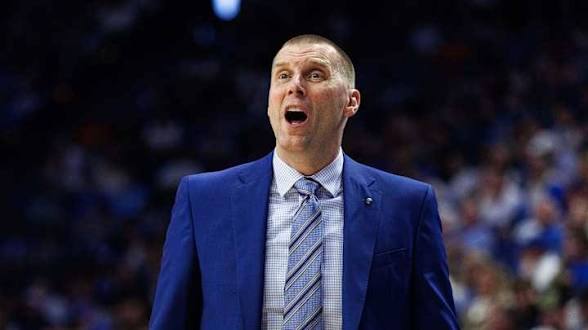
The reality of coaching at Kentucky Wildcats men’s basketball is simple, brutal, and unforgiving: you are either winning at the highest level, or you are being questioned. There is very little space in between. For Mark Pope, that reality is no longer theoretical—it is beginning to take shape in real time. As he approaches his third season at one of the most tradition-rich programs in the history of NCAA Division I men’s basketball, the conversation is no longer about building or adjusting. It is about proving. And in Lexington, proof only comes in March.
From the outside, Pope’s tenure has not been a failure. In fact, there are several measurable positives that suggest stability. Recruiting pipelines have remained active, the roster has shown flashes of high-level offensive execution, and Kentucky has maintained national visibility. But inside the culture of Kentucky basketball, those are not the metrics that define success. This is a program built on championships, Final Four appearances, and deep tournament runs. The banners inside Rupp Arena do not celebrate “potential” or “progress”—they celebrate dominance. That is the standard Pope inherited, and it is the standard he is now being measured against.
The first two years of his tenure can best be described as incomplete. There have been moments where Kentucky looked like a legitimate contender—fast-paced offense, dynamic scoring, and the ability to compete with elite teams. But those moments have been inconsistent, often overshadowed by defensive breakdowns, missed opportunities in big games, and, most importantly, a lack of meaningful postseason success. And that last point is the one that matters most. At Kentucky, regular-season wins can build excitement, but March defines legacies. Without a deep run in the NCAA Tournament, everything else begins to lose its weight.
Year 3, therefore, is not just another season—it is the evaluation season. By this stage, any head coach at a major program is expected to have fully implemented his system. The roster is largely composed of his recruits, the culture reflects his philosophy, and the results should begin to align with expectations. For Pope, that means there are no longer transitional excuses. This is his team, his identity, and ultimately, his responsibility.
One of the most critical areas that will determine his future is postseason performance. The path to stability is clear: Kentucky must make a deep run in the NCAA Tournament. A Sweet 16 appearance might quiet some critics, but given the expectations surrounding the program, an Elite Eight or Final Four push would provide the kind of validation that secures long-term confidence. Anything less, particularly an early exit, would intensify scrutiny and accelerate discussions about the program’s direction. This is not speculation—it is the historical pattern of Kentucky basketball. Coaches are judged not by participation, but by advancement.
Closely tied to postseason success is the issue of defensive identity. Throughout his tenure, Pope’s teams have shown offensive creativity and scoring ability, but defense has remained inconsistent. In modern college basketball, especially within a conference as competitive as the Southeastern Conference, elite defense is not optional—it is essential. Championship-caliber teams are built on balance, and without a reliable defensive foundation, even the most explosive offenses can collapse under pressure. Kentucky’s inability to consistently control games defensively has been one of the most significant obstacles to sustained success, and it is an area that must show clear improvement in Year 3.
Beyond tactics and performance, there is also the matter of perception. Kentucky is not just a basketball program—it is a national brand with one of the most passionate fan bases in sports. That passion creates an environment where narratives can shift quickly. A few high-profile losses, a disappointing tournament result, or even visible frustration on the court can ignite widespread criticism. Conversely, a strong run can restore confidence just as quickly. Pope’s challenge is not only to win games but to manage the narrative surrounding the program. Leadership, communication, and composure will play a crucial role in shaping how his tenure is perceived moving forward.
Recruiting and player development also remain central to the evaluation. Kentucky has long been known as a destination for elite talent, producing players who transition to the professional level. Maintaining that pipeline is critical, not just for roster strength but for the program’s reputation. Pope must demonstrate that his system not only attracts talent but develops it effectively. Players need to improve year over year, perform in high-pressure situations, and, ideally, elevate their profiles on the national stage. When recruits see a program that enhances careers, it sustains long-term success. When that perception weakens, it creates challenges that extend far beyond a single season.
Another layer of pressure comes from internal expectations within the conference. The Southeastern Conference has evolved into one of the most competitive environments in college basketball, with multiple programs capable of deep tournament runs. Kentucky is expected to be at or near the top of that hierarchy. Finishing in the middle of the standings or struggling against key rivals does not align with the program’s identity. Year 3 must include strong conference performance—consistent wins, resilience in tough matchups, and a clear presence as a contender. Without that, questions about leadership and direction become unavoidable.
What makes this situation particularly compelling is the contrast between potential and urgency. Pope has shown enough to suggest that success is possible. There have been glimpses of a system that works, players who can compete at a high level, and moments where Kentucky looks like a team capable of making noise in March. But potential is a temporary currency in college basketball. Eventually, it must be converted into results. And that conversion is what Year 3 demands.
It is also important to recognize that the concept of the “hot seat” at Kentucky operates differently than at most programs. It is not always about immediate termination or drastic change. Instead, it is about momentum, confidence, and belief. A coach can move closer to the hot seat without officially being on it, simply by failing to meet expectations over time. That gradual shift can become difficult to reverse, especially in a program where history amplifies every comparison. Pope is not yet in a crisis position, but he is approaching a point where outcomes will begin to define narratives more permanently.
There is, however, a clear path forward. If Kentucky enters the season with a cohesive identity, demonstrates defensive improvement, competes at a high level within the SEC, and most importantly, delivers a deep NCAA Tournament run, the conversation changes entirely. Instead of questions about job security, the focus shifts to long-term potential and sustained success. Confidence returns, recruiting strengthens, and the program regains its position as a national powerhouse.
On the other hand, if those elements fail to materialize, the consequences will be difficult to ignore. Another early tournament exit, continued defensive inconsistency, or a lack of progress in key areas would not just raise concerns—it would intensify them. At that point, discussions about the future would become more direct, more public, and more urgent. That is the reality of coaching at Kentucky: success buys time, but stagnation accelerates pressure.
Ultimately, this season represents more than just another chapter in Mark Pope’s tenure. It is the defining moment that will determine whether he is the right coach to lead Kentucky into its next era of success. The margin for error is small, the expectations are enormous, and the spotlight is constant. But within that pressure lies opportunity. Few positions in sports offer the chance to build a legacy as significant as the one available at Kentucky. The question is whether Pope can seize it.
Because in the end, the headline says it all—this is the season that could quietly decide everything.




