


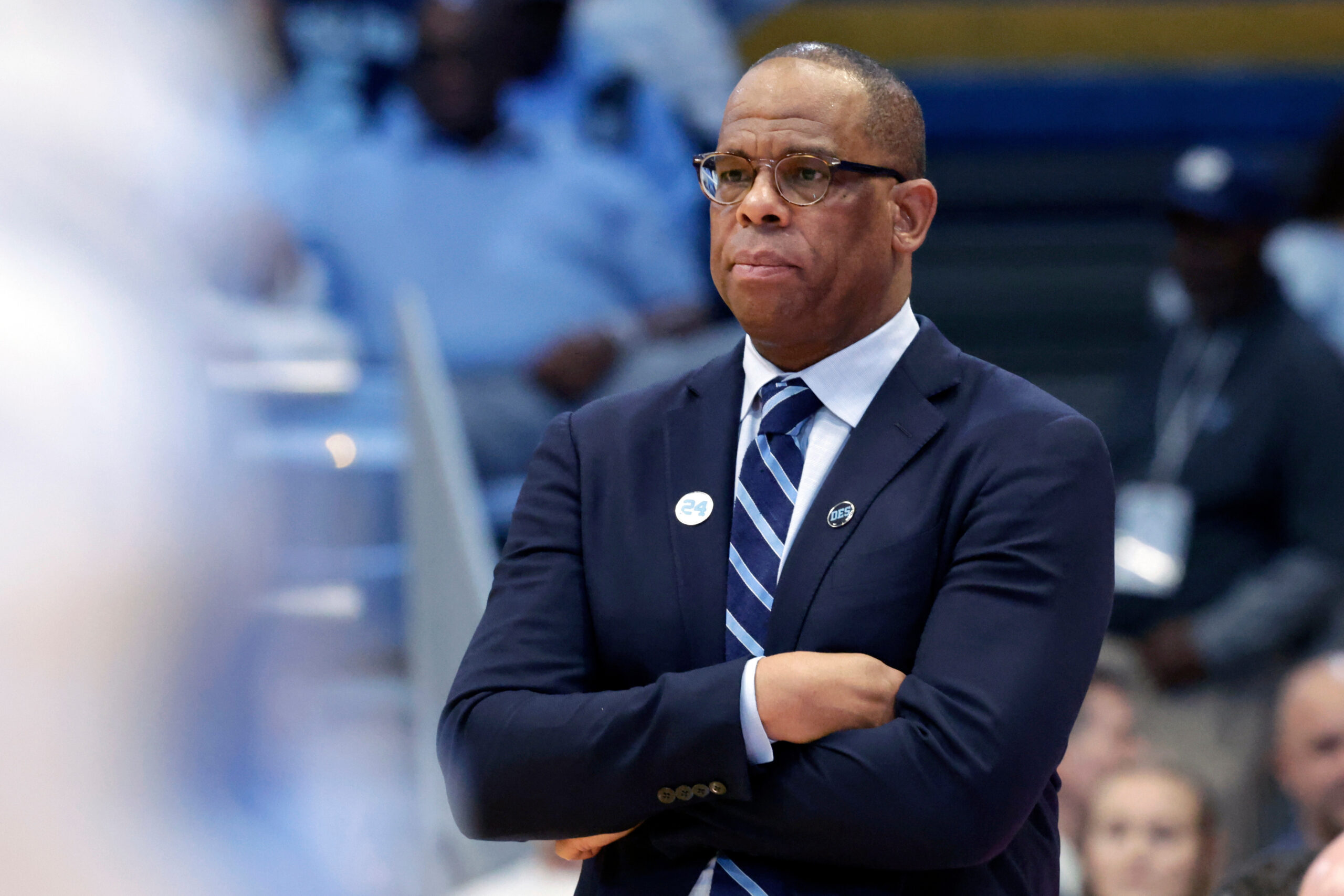
The situation unfolding in Chapel Hill right now feels less like a routine offseason and more like a defining crossroads—one that could either reinforce North Carolina’s place among college basketball’s elite or send shockwaves through the program for years to come. Behind the scenes, the pressure is immense. Every conversation, every meeting, every decision carries weight. The coaching search isn’t just about filling a vacancy—it’s about preserving a legacy, protecting a roster, and ensuring that one of the sport’s most iconic brands doesn’t lose its grip on national relevance.
For North Carolina, this moment is bigger than basketball games. It’s about identity. It’s about culture. And most importantly, it’s about timing.
A Program at a Crossroads
North Carolina has long been synonymous with excellence. From championship banners to NBA legends, the program has built its reputation on consistency, tradition, and elite talent. But even the most stable blue-blood programs aren’t immune to turbulence—especially in today’s rapidly evolving college basketball landscape.
Now, UNC finds itself navigating a storm fueled by uncertainty. The coaching situation has created a ripple effect that touches every corner of the program. Players are watching closely. Recruits are asking questions. Rivals are circling.
And perhaps most critically, the transfer portal looms like a ticking clock.
This is no longer just about who will lead the team next season. It’s about whether the program can hold itself together long enough to make the right choice.
The Coaching Search: More Than Just a Hire
At the center of everything is the coaching search—a decision that will define the program’s direction for years to come. But this isn’t a simple process. The stakes are too high, and the margin for error is too small.
North Carolina isn’t just looking for a coach. They’re searching for a leader who can navigate the modern era of college basketball—an era shaped by NIL opportunities, player empowerment, and constant roster movement.
The ideal candidate must check multiple boxes:
Elite recruiter capable of competing with the nation’s best
Strong developer of talent, preparing players for the next level
Cultural fit, someone who understands and respects UNC’s storied tradition
Adaptability, particularly in managing the transfer portal and NIL landscape
The challenge? Finding all of that in one person—while also moving quickly enough to prevent the program from unraveling.
There’s also the question of philosophy. Should UNC lean toward a proven veteran with a track record of success? Or take a chance on a rising star who brings fresh energy and modern strategies?
Each option carries risk.
A veteran coach may bring stability but could struggle to adapt to new realities. A younger, innovative coach might connect better with players but lack the experience to handle the pressure of a blue-blood program.
This isn’t just a hire. It’s a gamble.
The Transfer Portal Threat
While the coaching search dominates headlines, the most immediate threat to North Carolina’s stability may be the transfer portal.
In today’s college basketball landscape, roster continuity is fragile. Players have more freedom than ever, and uncertainty often leads to movement. For UNC, that creates a dangerous situation.
Without a clear coaching direction, players may begin to explore their options. And once one key player leaves, others could follow.
It’s a domino effect that has derailed programs before.
The timing couldn’t be worse. The portal window opens quickly, and other schools will be ready to act aggressively. Programs across the country are constantly searching for impact players—and UNC’s roster is full of them.
This means North Carolina isn’t just fighting to hire a coach. They’re fighting to keep their team intact.
Key Players in the Balance
At the heart of the retention battle are several crucial players whose decisions could shape the program’s immediate future.
One name stands out above the rest: Henri Veesaar.
A dominant presence on the court, Veesaar has emerged as one of the most impactful players in the conference. Averaging around 17 points and 8.7 rebounds, he represents the kind of cornerstone talent that programs are built around.
But with success comes attention.
Veesaar is already drawing interest, and his future at UNC is far from guaranteed. If he stays, North Carolina retains a centerpiece capable of leading a deep run. If he leaves, the program faces a significant setback.
And he’s not alone.
Jarin Stevenson and Derek Dixon are also key figures in the equation. Both bring valuable skill sets and long-term potential. Losing either would hurt—but losing multiple players could force a complete reset.
This is where the coaching hire becomes even more critical.
Players want clarity. They want confidence. They want to know that the program is heading in the right direction.
Until they get that, uncertainty will continue to linger.
Recruiting: Momentum at Risk
While retention is the immediate concern, recruiting represents the program’s future—and right now, that future hangs in the balance.
North Carolina has been building something special with its upcoming class. Ranked among the nation’s top groups, the 2026 class is filled with high-upside talent and potential stars.
Names like Maximo Adams highlight the strength of the class, bringing excitement and long-term promise to the program.
But recruiting is built on relationships.
And when coaching uncertainty enters the picture, those relationships can weaken quickly.
Recruits begin to ask questions:
Who will be my coach?
What system will I play in?
Will the program still prioritize my development?
If those questions aren’t answered convincingly, commitments can flip.
Other programs are already watching closely, ready to capitalize on any hesitation. In today’s recruiting landscape, loyalty is fragile—and opportunities are everywhere.
For UNC, maintaining this class isn’t just important—it’s essential.
The Pressure of Expectations
What makes this situation even more intense is the weight of expectations.
North Carolina isn’t just any program. It’s a blue blood. A standard-bearer. A team that is expected to compete at the highest level year after year.
Anything less is seen as failure.
That reality adds another layer of pressure to every decision being made right now.
The next coach won’t just be evaluated on wins and losses. They’ll be judged on how well they uphold the program’s legacy. On how effectively they recruit. On how they navigate the modern game.
And perhaps most importantly, on whether they can win championships.
Because at North Carolina, that’s always the expectation.
Timing Is Everything
One of the most critical elements in this entire situation is timing.
Every day that passes without a clear direction increases the risk of instability. Players grow more uncertain. Recruits become more hesitant. Opposing programs become more aggressive.
The window to act is narrow.
Move too quickly, and the program risks making the wrong hire. Move too slowly, and the damage may already be done.
Finding that balance is the ultimate challenge.
What Happens Next?
As the situation continues to unfold, several outcomes remain possible.
Best-Case Scenario
UNC hires a strong, respected coach
Key players choose to stay
The recruiting class remains intact
The program moves forward with renewed energy
In this scenario, North Carolina not only avoids disaster—it emerges stronger.
Worst-Case Scenario
Delays in the coaching search create uncertainty
Multiple players enter the transfer portal
Recruits decommit or explore other options
The program enters a rebuilding phase
This is the nightmare scenario—and one the program is desperately trying to avoid.
Most Likely Outcome
The reality will likely fall somewhere in between.
North Carolina has the resources, reputation, and support to navigate this challenge. But the margin for error is small, and the consequences of missteps are significant.
The Bigger Picture
Beyond the immediate decisions, this moment reflects a larger shift in college basketball.
Programs are no longer defined solely by tradition or history. They’re shaped by adaptability. By leadership. By the ability to respond to constant change.
For North Carolina, this is a test.
A test of its leadership.
A test of its culture.
A test of its ability to evolve.
And the results of that test will determine not just the next season—but the next era of the program.
Final Thoughts
What’s happening at North Carolina right now is more than just a coaching search. It’s a pivotal moment that could reshape the trajectory of one of college basketball’s most storied programs.
The decisions made in the coming days and weeks will carry long-lasting implications. From player retention to recruiting stability to coaching leadership, every piece of the puzzle must fall into place.
Because if it does, UNC can continue its tradition of excellence.
But if it doesn’t?
The fallout could be felt for years to come.
One thing is certain: all eyes are on Chapel Hill—and the next move could change everything.




