


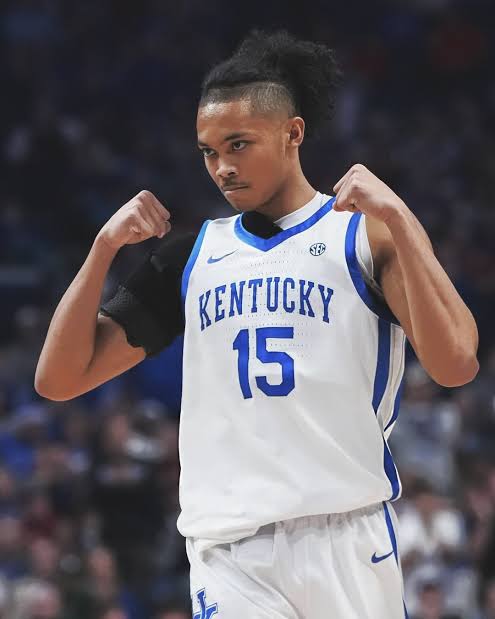
The silence didn’t last long—but what came next was louder than anyone expected. Just hours after Kentucky’s painful NCAA Tournament exit, the program was hit with another wave of uncertainty as its standout point guard made a decision that feels far more final than routine. For fans still hoping this was just a moment of frustration, the message now seems unmistakably clear: this isn’t just a temporary move… it’s one that could quietly mark the end of an era.
In the immediate aftermath of Kentucky’s NCAA Tournament loss, emotions were already running high. The Wildcats, a program built on expectations of deep March runs and championship contention, had once again fallen short of the standard that defines them. Disappointment filled the air, questions swirled about what went wrong, and attention quickly shifted toward what comes next.
But before those questions could even begin to settle, a new storyline took center stage—one that may ultimately prove even more impactful than the loss itself.
Kentucky’s starting point guard, a player who had become a central figure in the team’s identity, officially entered the transfer portal. On the surface, it’s a move that has become increasingly common in today’s college basketball landscape. Players explore options, test the waters, and sometimes return. But this situation feels different. The timing, the context, and the tone surrounding the decision all point toward something deeper—something more definitive.
For a fan base that has grown accustomed to roster turnover in the modern era, this one still hits differently.
A Decision That Feels Bigger Than the Moment
The transfer portal has changed the way college basketball operates. What was once rare is now routine, and roster continuity has become more difficult to maintain than ever. Players now have the flexibility to move freely, seek better opportunities, and reshape their careers on their own terms.
And yet, not all portal entries are created equal.
Some are strategic. Others are exploratory. But then there are the ones that send a message—and this feels like one of them.
The decision to enter the portal immediately after a crushing NCAA Tournament loss suggests more than just frustration. It hints at a level of clarity, a sense that the next chapter is already taking shape. While nothing is ever truly official until a new destination is announced, the signals here are hard to ignore.
For Kentucky fans holding onto hope that this might simply be a pause before a return, the reality may be much harsher.
Why This Move Feels So Final
There are several factors that make this situation stand out—and none of them point toward an easy return.
First is the timing. Entering the transfer portal so quickly after the season ends often indicates that the decision was not made impulsively. These moves are typically discussed, evaluated, and planned well in advance. By the time the announcement becomes public, the player usually has a clear sense of direction.
Second is the evolving landscape of college basketball. With NIL opportunities, immediate eligibility, and increased exposure, players have more incentive than ever to explore new environments. A fresh start can mean a bigger role, a different system, or even a better platform to showcase their skills.
Third is the emotional weight of the season’s ending. NCAA Tournament losses, especially for programs like Kentucky, carry a different kind of impact. They don’t just end a season—they often force reflection, reassessment, and difficult decisions about the future.
Put all of that together, and the picture becomes clearer. This isn’t just a reaction to one game. It’s a decision shaped by a broader vision.
What Kentucky Is Losing
Losing a starting point guard is never easy, but the impact goes beyond just numbers on a stat sheet.
At the point guard position, leadership is everything. It’s about controlling the tempo, making decisions under pressure, and setting the tone for the entire team. It’s a role that requires trust—from coaches, teammates, and fans alike.
Over the course of the season, Kentucky’s floor general had grown into that role. There were moments of brilliance, stretches of inconsistency, and everything in between—but through it all, he remained a central piece of the team’s identity.
His departure creates an immediate void.
It’s not just about replacing production—it’s about replacing presence. The rhythm of the offense, the communication on the court, and the overall flow of the game will all be affected.
For a program that already faces high expectations, this adds another layer of complexity to an already challenging offseason.
Fan Reactions: Hope vs. Reality
If there’s one thing that defines Kentucky’s fan base, it’s passion. Every move is analyzed, every decision debated, and every possibility explored.
In the hours following the announcement, reactions poured in from all directions.
Some fans remain hopeful, pointing to past situations where players entered the portal only to return. They see this as a moment of uncertainty rather than a final goodbye. In their eyes, nothing is official until it’s official.
But others are reading between the lines—and they don’t like what they see.
To them, this feels different. The language, the timing, the overall context—it all suggests that this isn’t just a temporary step. It’s a transition.
And that divide between hope and reality is what makes this moment so tense.
Because deep down, even the most optimistic fans can sense it: this might be the beginning of the end.
The Bigger Picture: A Changing Era in College Basketball
This situation is not unique to Kentucky. Across the country, programs are dealing with similar challenges as the transfer portal continues to reshape the sport.
Roster stability is no longer guaranteed. Player loyalty looks different. And coaches must constantly adapt to a system where change is the only constant.
For Kentucky, a program steeped in tradition, this shift has been particularly noticeable. The Wildcats have long relied on elite talent and high expectations, but even they are not immune to the realities of the modern game.
The transfer portal has created a new kind of pressure—one that extends beyond wins and losses.
Now, it’s about retention. It’s about relationships. It’s about convincing players that staying is the best option.
And in this case, that battle may already be lost.
What Happens Next?
With the decision now public, the focus shifts to what comes next—for both the player and the program.
For the player, the opportunities will be plentiful. A starting point guard from a high-profile program is always in demand, and interest from other schools is almost guaranteed. The next step will likely come quickly, and when it does, it will provide even more clarity about the intentions behind this move.
For Kentucky, the path forward is less certain.
Replacing a key player is never easy, but it’s part of the job in today’s college basketball landscape. The coaching staff will need to explore options—whether through recruiting, the transfer portal, or internal development.
But beyond the roster moves, there’s a larger question looming:
What does this say about the program’s current direction?
Final Thoughts
In a sport defined by constant change, some moments still manage to stand out—and this is one of them.
This isn’t just another transfer portal entry. It’s a statement. A signal. A turning point that could have lasting implications for both the player and the program.
For Kentucky fans, the reality is difficult to accept. Hope still lingers, as it always does. But the signs are becoming harder to ignore.
HE’S GONE.
Maybe not officially. Not yet. But in every way that matters, the message has already been sent.
And as the dust settles and the next chapter begins, one thing is clear:
This decision didn’t just close a door—it may have locked it for good.




