


In the ever-evolving world of college basketball, where tradition meets transformation and every major program operates under a microscope, few developments capture attention quite like a high-profile coaching vacancy at a blue-blood institution. So when the University of North Carolina made the stunning decision to move on from Hubert Davis, it didn’t just send shockwaves through Chapel Hill—it ignited a nationwide conversation about who might be next to lead one of the sport’s most iconic programs.
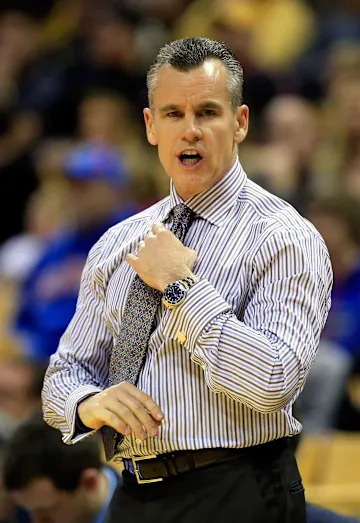
Almost immediately, one name began to surface with increasing frequency: Billy Donovan.
The current head coach of the Chicago Bulls and a two-time national champion at the University of Florida, Donovan represents a rare blend of professional experience and collegiate dominance. His résumé is not just impressive—it’s tailor-made for a program like North Carolina. And yet, when asked directly about the speculation linking him to the job, Donovan’s response was anything but revealing.
Measured. Controlled. Focused.
But perhaps most importantly—carefully incomplete.
“My main focus is on these guys and this new team,” Donovan said, emphasizing his commitment to the Bulls as they prepared for a matchup against the Philadelphia 76ers. “I understand that there’s stuff out there, and I understand that there is going to be certain speculation. But, I have to concentrate on this group, and really, my focus is on what we’re doing here in Chicago.”
On the surface, it’s exactly what you would expect from a seasoned coach navigating midseason distractions. It’s professional. Respectful. Grounded in the present.
But in the world of coaching searches—especially one involving a program as prestigious as North Carolina—what isn’t said often matters just as much as what is.
And Donovan didn’t say no.
That omission has become the focal point of intense speculation.
Because in moments like this, denials are easy. Coaches issue them all the time when they want to shut down rumors quickly and definitively. A simple “I’m not interested” or “I’m committed long-term” can close the door on speculation in an instant.
Donovan chose not to do that.
Instead, he acknowledged the noise, reaffirmed his current responsibilities, and left the future… open.
That subtle distinction is what has fans, analysts, and insiders reading between the lines.
To understand why Donovan’s name carries so much weight in this conversation, you have to go back to his time in college basketball—specifically, his tenure at the University of Florida. There, Donovan didn’t just build a successful program—he built a powerhouse.
Under his leadership, Florida captured back-to-back national championships in 2006 and 2007, an achievement that cemented his place among the elite coaches in the sport. His teams were known for their discipline, unselfish play, and ability to rise to the moment when it mattered most. Beyond the titles, Donovan led the Gators to multiple Final Four appearances and consistently kept them in the national conversation.
He wasn’t just winning—he was building a culture.
And that’s exactly what a program like North Carolina values.
After transitioning to the NBA in 2015 with the Oklahoma City Thunder, Donovan proved he could adapt his coaching style to a completely different level of the game. Managing professional athletes, navigating longer seasons, and adjusting to the strategic nuances of the NBA, he continued to demonstrate the same steady leadership that defined his college career.
Now with the Chicago Bulls, Donovan has once again found himself in a position where expectations are high and scrutiny is constant. Yet through it all, he has maintained a reputation for composure and professionalism—qualities that were on full display in his recent comments.
But while Donovan’s résumé makes him an attractive candidate, the college basketball landscape he would be returning to is vastly different from the one he left behind.
Name, Image, and Likeness (NIL) deals have fundamentally changed the way programs operate. Players are now compensated, recruiting has become more complex, and the transfer portal has introduced a level of roster fluidity that was previously unimaginable. Coaches are no longer just strategists and mentors—they are also talent managers navigating an increasingly dynamic ecosystem.
Donovan acknowledged this shift.
“Over the years, I’ve had a lot of college guys reach out to talk to me,” he said. “It’s different in dealing with players who are being paid now. I also think the cycle of the NBA today is totally different than the cycle of college.”
It’s a telling statement.
On one hand, it reflects an awareness of how much the game has changed. On the other, it suggests a level of curiosity—an openness to understanding and potentially engaging with this new reality.
And that brings the conversation back to North Carolina.
Despite the challenges of the modern era, UNC remains one of the most powerful brands in college basketball. With strong NIL backing, national recruiting reach, and a history that includes legends like Dean Smith and Roy Williams, the program offers a platform that few others can match.
For a coach like Donovan, the appeal is obvious.
The question is whether the timing is right.
From a professional standpoint, leaving the NBA for college basketball is not a decision to be taken lightly. The two environments are fundamentally different—not just in style of play, but in lifestyle, expectations, and daily responsibilities. The NBA offers stability in certain areas, while college basketball demands relentless recruiting and year-round program management.
Yet for some coaches, the pull of the college game never fully fades.
There’s something unique about building a program, developing young players, and competing for championships in a tournament setting that captures the imagination in a way the NBA cannot replicate.
Donovan has experienced that at the highest level.
He knows what it takes to win in March. He understands the pressure, the preparation, the precision required to navigate the NCAA Tournament. And perhaps most importantly, he knows what it means to lead a program with championship expectations.
That’s why his name continues to surface.
But again, it’s not just about what he has accomplished—it’s about what he didn’t say.
At no point did Donovan dismiss the idea of returning to college basketball. He didn’t downplay the significance of the UNC job. He didn’t close the door.
Instead, he focused on the present while leaving the future undefined.
In the world of sports, that kind of response is rarely accidental.
It reflects a careful balance between professionalism and possibility.
For North Carolina, the coaching search represents more than just a hiring decision—it’s a defining moment for the program’s future. After moving on from Hubert Davis, the university must identify a leader who can restore consistency, adapt to the modern landscape, and uphold the legacy that has been built over decades.
Donovan fits that profile in many ways.
He brings credibility. Experience. A proven track record of success. And perhaps most importantly, the ability to command respect at every level of the game.
But whether he ultimately becomes a serious candidate—or even the choice—remains to be seen.
For now, the story is not about a decision that has been made.
It’s about a possibility that hasn’t been denied.
And in a situation like this, that can be just as powerful.
As the speculation continues, every word—or lack thereof—will be analyzed. Every comment will be scrutinized. Every signal, no matter how subtle, will be interpreted.
Because when it comes to a job like North Carolina, nothing happens in a vacuum.
And sometimes, the most revealing answer… is the one that isn’t given.
Billy Donovan spoke.
But what he didn’t say?
That’s what has everyone paying attention.




