


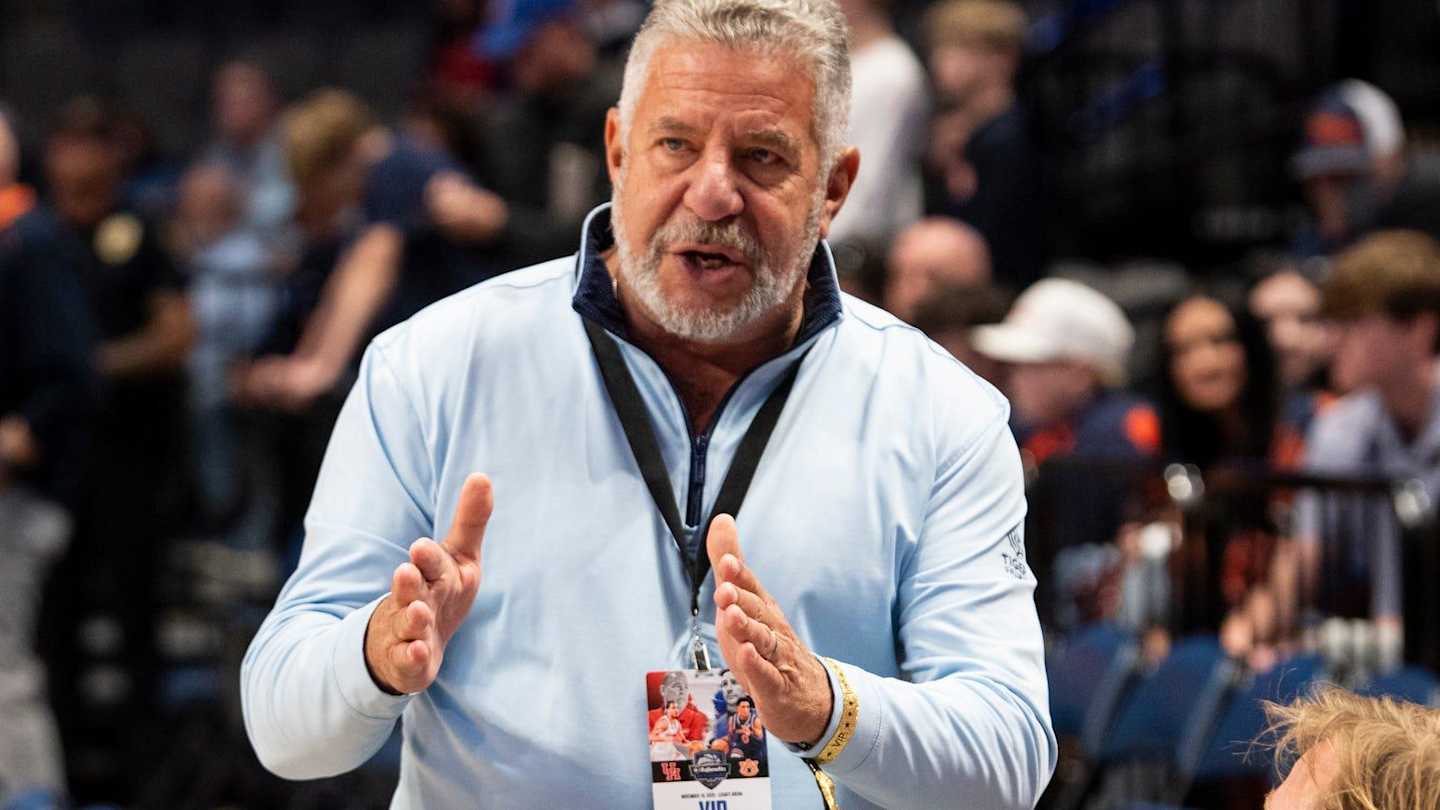
The University of North Carolina basketball program finds itself at a defining moment—one that could either restore its historic dominance or send it spiraling into uncertainty. Following the dismissal of Hubert Davis, the Tar Heels are searching for a new leader to carry forward a legacy built by icons like Roy Williams. But amid the speculation, one name has stirred both intrigue and concern: Bruce Pearl.
At 66, Pearl is no stranger to success—or controversy. Currently serving as a CBS Sports analyst and ambassador for Auburn University, he remains one of the most recognizable figures in college basketball. Yet, despite his résumé, there appears to be hesitation in Chapel Hill about bringing him in. And that hesitation says a lot about the direction UNC wants to take.
Some insiders and analysts fear that hiring Pearl could mirror the kind of unexpected turbulence seen in other high-profile coaching situations—most notably comparisons being drawn to Bill Belichick. While Belichick’s legacy in football is undeniable, concerns about off-field distractions and internal dynamics have made such comparisons a cautionary tale rather than a compliment.
Critics argue that Pearl’s past could bring unnecessary baggage to a program that prides itself on tradition, discipline, and a clean image. His history includes NCAA violations during his time with the University of Tennessee and earlier controversy linked to his tenure involving the University of Iowa. For a school like UNC, where reputation is as valuable as wins, that history cannot be ignored.
Nick Delahanty of Keeping It Heel didn’t hold back, warning that hiring Pearl could “set the program back 10 years.” That’s a bold claim, but it reflects a broader concern: UNC isn’t just looking for a coach who can win games—they want someone who fits the culture, represents stability, and builds for the future without distractions.
And that’s where the Belichick comparison gains traction—not because of identical circumstances, but because of the underlying fear of bringing in a larger-than-life personality whose presence might overshadow the program itself.
Still, dismissing Pearl outright may be premature.
Let’s not forget what Bruce Pearl brings to the table. He is, without question, one of the most dynamic recruiters in college basketball. His energy, charisma, and ability to connect with players have consistently translated into competitive teams. At Auburn, he didn’t just win—he transformed the program. He led the Tigers to a Final Four appearance, elevating them from relative obscurity to national relevance.
That kind of impact doesn’t happen by accident.
Pearl also thrives under pressure. His coaching style is intense, passionate, and unapologetically bold. For some programs, that’s exactly what’s needed to reignite a winning culture. UNC, coming off a period of inconsistency, could arguably benefit from that spark.
However, the modern college basketball landscape has changed. It’s no longer just about X’s and O’s—it’s about image, NIL dynamics, media scrutiny, and institutional alignment. Pearl’s outspoken nature, including moments where he’s “overspoken” on national broadcasts, raises questions about how he would navigate this evolving environment under the microscope of Chapel Hill.
Meanwhile, other coaching candidates like Nate Oats and Todd Golden have reportedly not gained traction in UNC’s search, possibly due to similar concerns about fit or baggage. This suggests that UNC is being extremely selective—perhaps even cautious to a fault.
But caution can be a double-edged sword.
In trying to avoid risk, programs sometimes pass on transformational hires. Pearl, for all his flaws, is undeniably transformational. The question UNC must answer is simple: do they want safe stability, or are they willing to embrace calculated risk for potentially greater reward?
There’s also a personal dimension to consider. Pearl’s son, Steven Pearl, is already embedded within Auburn’s system. Any move involving Bruce could reignite conversations about nepotism, though supporters argue that Steven has earned his place through merit. Still, optics matter—especially at a program under constant national scrutiny.
Interestingly, some believe Pearl’s best move might not be Chapel Hill at all. A return to Auburn—where he rebuilt his reputation and earned widespread respect—could offer a more natural continuation of his legacy. The connection with the fanbase, the familiarity with the program, and the unfinished business all make that scenario compelling.
Yet, in college basketball, opportunities like UNC don’t come often.
For Pearl, it could be a chance at redemption on the grandest stage. For UNC, it could be a gamble that either restores their dominance or complicates their identity.
In the end, this isn’t just about Bruce Pearl. It’s about what UNC basketball wants to be in its next chapter. A program rooted in tradition but unafraid of bold moves? Or one that prioritizes stability, even if it means passing on a proven winner?
The decision will echo far beyond Chapel Hill—and whichever path they choose, one thing is certain: the stakes couldn’t be higher.




