


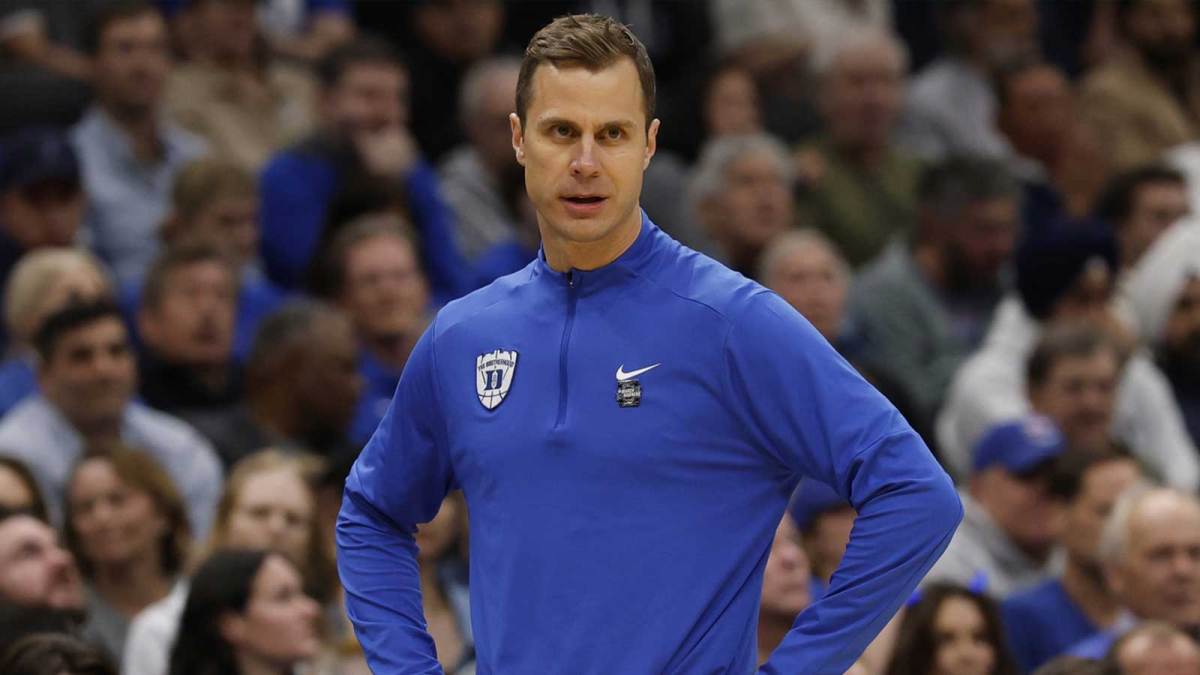
Duke’s dream of returning to the Final Four didn’t just slip away—it shattered in the most dramatic and painful fashion imaginable. What looked like a commanding, nearly insurmountable lead turned into a nightmare ending, as UConn delivered a crushing final blow with a three-pointer at the buzzer. In a matter of seconds, celebration turned into disbelief, and hope gave way to frustration. But as the dust settled, it wasn’t just the loss that dominated the conversation—it was the man on the sidelines.
Head coach Jon Scheyer, once praised as the natural successor to Duke’s legendary leadership, now finds himself at the center of intense criticism. The Blue Devils had built a 19-point lead, showcasing dominance, composure, and control. Yet somehow, that advantage evaporated. The collapse wasn’t gradual—it was glaring. Possession by possession, the momentum shifted until Duke found itself vulnerable in the final seconds.
The game’s final moment will be replayed countless times: UConn’s Braylon Mullins rising up and knocking down a clutch three-pointer with just 0.3 seconds remaining. It was a dagger that didn’t just end the game—it ignited a wave of criticism that quickly spread across social media and sports commentary platforms.
For many analysts and fans, the loss wasn’t just about one shot. It was about a pattern. Over the past few seasons, questions have quietly lingered about Scheyer’s ability to close out big games. Now, those whispers have turned into loud, unavoidable scrutiny.
Critics were quick to highlight a troubling trend: Duke’s repeated inability to hold onto significant leads in high-stakes tournament games. Whether it was a nine-point advantage, a double-digit cushion, or even a near 20-point lead, the outcome has often been the same—missed opportunities and early exits. This latest defeat only reinforced the narrative that something isn’t clicking when it matters most.
What makes the criticism even sharper is the context surrounding Duke’s recruiting success. The program continues to attract top-tier talent year after year, consistently bringing in elite prospects expected to compete at the highest level. On paper, Duke remains one of the most stacked teams in college basketball. But for some observers, that raises an uncomfortable question: if the talent is there, why aren’t the results matching expectations?
The frustration isn’t just about losing—it’s about how the loss unfolded. Late-game decision-making has become a focal point of the debate. In the final moments against UConn, many believed Duke had multiple safer options. They could have slowed the pace, protected possession, or used a timeout to reset and organize. Instead, what unfolded appeared rushed and disjointed, ultimately giving UConn the opening it needed.
To critics, those moments reflect deeper issues—game management, situational awareness, and adjustments under pressure. It’s not just about strategy; it’s about composure when everything is on the line.
Still, it’s important to acknowledge that Scheyer is relatively early in his head coaching career, especially at a program with expectations as massive as Duke’s. Taking over such a storied program comes with immense pressure, and every decision is magnified. Success is expected, not celebrated—and failure is dissected from every angle.
Scheyer himself didn’t shy away from the emotional weight of the loss. In his postgame remarks, he struggled to find the words, clearly shaken by the outcome. His disappointment was evident, not just for himself but for his players, who had battled hard throughout the season to put themselves in that position.
“I could not be more disappointed,” he admitted, his voice reflecting the rawness of the moment. “I don’t have the words.”
That honesty may resonate with some, but in the world of elite college basketball, empathy is often overshadowed by expectation. Duke isn’t just another program—it’s a powerhouse with a legacy built on championships, consistency, and clutch performances. Anything short of that standard invites scrutiny.
Yet, amid the criticism, there’s another perspective worth considering. Scheyer has already achieved significant milestones, including delivering one of the program’s strongest records in recent years. He has proven he can recruit, develop talent, and lead a team deep into the tournament. Those are not small accomplishments.
The challenge now is evolution. Great coaches aren’t defined by avoiding failure—they’re defined by how they respond to it. For Scheyer, this moment could become a turning point. The questions surrounding late-game execution, defensive adjustments, and composure under pressure will need clear answers moving forward.
Duke fans, while frustrated, remain deeply invested. That passion is part of what makes the program so powerful—but it also means the spotlight will only grow brighter. Every game, every decision, every outcome will continue to be examined.
In the end, this loss will be remembered not just for its dramatic finish, but for what it represents: a program at a crossroads and a coach facing his biggest test yet. Jon Scheyer’s response in the coming seasons will determine whether this moment becomes a defining setback—or the catalyst for a stronger, more resilient era of Duke basketball.




