


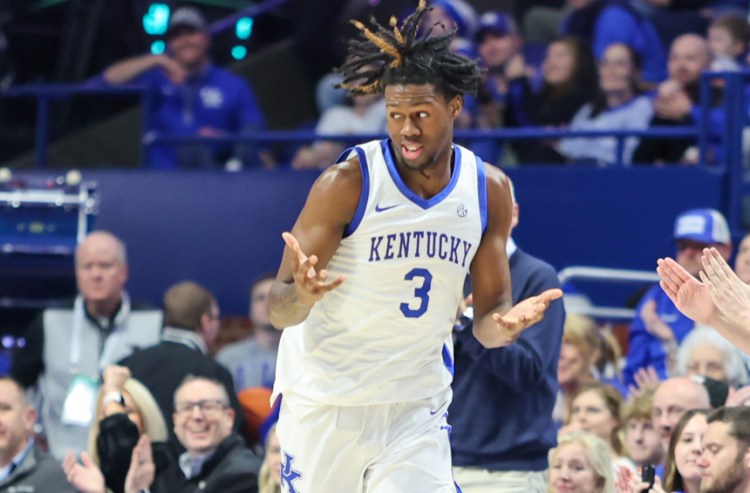
Kentucky Wildcats guard Kam Williams has quickly become one of the most intriguing and talked-about figures in the SEC as the program enters a pivotal offseason. After an impressive—and ultimately inspiring—freshman season capped by a grueling battle back from injury, Williams now finds himself at the center of uncertainty regarding his future with the Wildcats.
According to comments from his father, Greg Williams Sr., that future may hinge on clarity about his role should he return to Lexington.
Williams’ journey this past season embodied both promise and adversity. The 6-foot-8 wing showed flashes of becoming a go-to perimeter threat and defensive presence early in SEC play, albeit still developing his confidence and rhythm with Kentucky’s system. But then, on January 21 in a hard-fought game, the sophomore suffered a broken foot—an injury that could have derailed his season entirely. Yet instead of stepping aside, Williams aggressively worked through rehab so he could return for the postseason. His willingness to fight through pain and fight for the team not only turned heads in Big Blue Nation, it earned admiration from teammates, coaches, and the media alike.
That determined comeback ultimately saw Williams contribute at both ends of the floor—showing his value as a shooter, defender, and all-around competitor when Kentucky needed it most, in both the SEC Tournament and NCAA Tournament. He hit key 3-pointers, defended multiple positions with his length, and reminded the Wildcats and their fanbase that when healthy, his combination of size and shooting is something very few opposing teams can easily counter. Williams finished his season averaging six points per game, shooting an efficient 44.9 percent from the field and 35.9 percent from beyond the arc. In fact, he hit a 3-pointer in 12 of his final 14 games, including one in each of Kentucky’s NCAA Tournament contests—a strong finish that only added to optimism about his future impact.
But now, entering the offseason, Williams’ status with the Wildcats is far from certain.
Waiting on Role, Not Rumors
Speaking to media, Greg Williams Sr. offered a candid assessment of where his son stands as roster decisions loom.
“Kam is just waiting to see what his role is going to be,” Williams Sr. said. “Once you’re on the team, you never know exactly what direction they’re going the following year.” That comment underscores that the guard is not making his decision in a vacuum—he wants a clear picture of how he would be used next season, how much he would be counted on, and where he fits into Coach Mark Pope’s plans.
Williams Sr. also expressed his son’s affection for the program: “He said he loves Kentucky. This is where he wants to be. I’m just looking to hear that everything’s a done deal and this is where he’ll be.”
That kind of statement is significant for several reasons. Firstly, it dispels any notion that Williams is unhappy with the institution or morally detached from the Wildcats’ community. He’s not quietly angling for a move or expressing frustration with staff or coaching; instead, he’s asking soberly and logically about his future role—a genuine concern for any young player who is growing into his game.
Secondly, by having his father speak publicly, there’s a clear signal being sent that those close to him are involved, attentive, and willing to influence the narrative in a positive way. Williams Sr. is not threatening a transfer or hinting at discontent—he’s highlighting the practical considerations any good player would have: minutes, responsibility, and long-term development.
What Williams Has Done and What He Could Be
Williams’ statistics may not jump off the page in the way some stars do, but context matters. In his first year in a blue-blood program filled with competition for minutes, Williams was still discovering his rhythm when he suffered injury. Yet his shooting efficiency, defensive versatility, and late-season consistency suggest a player who could be a cornerstone for next season’s lineup.
Before the injury, Williams was becoming more aggressive offensively—and when he returned, his 3-point shooting in 12 of his final 14 games proved he could consistently punish defenses. At 6-foot-8 with a strong frame and a high basketball IQ, his size alone moves defensive rotations for opposing teams, creating openings not just for himself but for Kentucky’s other scorers.
What’s more, his defensive length makes him valuable, particularly in Coach Pope’s scheme, which emphasizes versatile defenders who can switch and guard multiple positions. This is increasingly valuable in an era where spread offenses and adaptable wings are proliferating across college basketball.
Add to this his journey from transferring into Kentucky, where he first made his mark as a highly regarded recruit and consistently developed his skills, and you see a player whose confidence and ability have only grown since arriving in Lexington.
Transfer Portal Atmosphere and Kentucky’s Offseason
The timing of these discussions couldn’t be more critical. The NCAA transfer portal has opened—and with it, Kentucky faces not only decisions about who will leave but also strategic choices about recruiting and retention. The portal creates an environment where players can rapidly change schools, seek better opportunities, or chase playing time elsewhere. In this climate, having core players commit to staying is vital.
At the same time, Kentucky’s roster is evolving. Departures have created both challenges and opportunities—holes in experience that must be filled, but openings that allow returning players like Williams to step into more prominent roles. Coaching staff changes and strategic planning for next season will also play into Williams’ decision-making process, giving him a chance to evaluate how his development aligns with the program’s direction.
Fanbase Reactions and Big Blue Nation Sentiment
Within Big Blue Nation, the conversation around Williams is mixed, balanced between optimism about his potential and realism about the uncertainties that remain.
Some fans remember his pivotal plays—including timely threes and critical defensive stops—and argue he could be a foundational piece going forward. Discussions on forums and social platforms show many supporters eager to have him back, citing his athleticism, size, and shooting ability that fits Kentucky’s evolving style.
Others, though supportive, acknowledge the role uncertainty could complicate matters. With the transfer portal offering freedom of movement, some wonder if Williams might explore other opportunities if he doesn’t feel fully embraced or if he believes he could develop quicker elsewhere.
But what stands out most from fan commentary is a broad respect for his work ethic—particularly his courageous return from injury. That narrative alone endeared him to many, beyond simple stat lines or highlight reels. It transformed him into someone seen as battle-tested and resilient—qualities that don’t always show up in the box score but matter immensely for team chemistry and leadership.
What Comes Next
As Kentucky prepares for the offseason—including official coaching evaluations, player meetings, and strategic roster planning—the next few weeks are pivotal for Williams.
His future may hinge on a few key questions:
What will his projected role be within Pope’s rotation if he returns?
How does he fit with returning scorers and newly recruited players?
Does he see himself growing more in Lexington’s program or seeking a larger role elsewhere?
Williams Sr.’s comments underscore the importance of answers to these questions. They suggest that, for now, Kentucky remains the hopeful destination—not just another stop on a transfer carousel, but the place Williams wants to be. But for that to become reality, clear communication and a defined role will be essential.
And while nothing is yet official, the tone around Williams’ situation—from his father’s confidence to his own performance arc—leans toward cautious optimism for Wildcats fans. If he does return, Kentucky would not merely be retaining a shooter—they would be bringing back a player whose intensity, resilience, and positional versatility could make him a key contributor for a team aiming to return to national prominence.
In a time of flux across college basketball, with transfer markets and roster shakeups reshaping teams daily, Kam Williams’ decision may not only impact his own future—it might just signal the direction of Kentucky basketball’s next season.




