


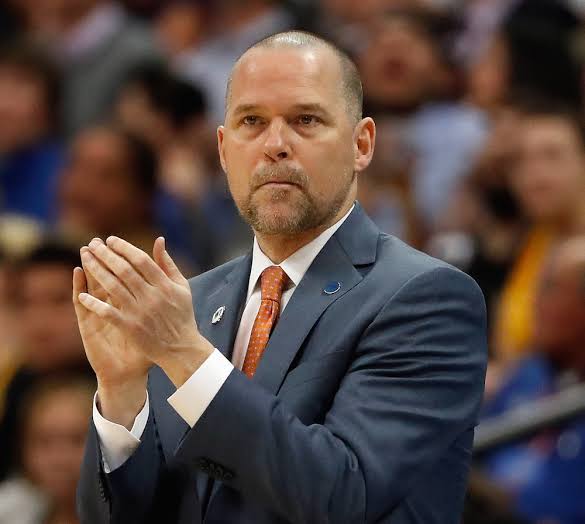
When news broke that North Carolina was moving toward hiring Michael Malone as its next head basketball coach, the immediate reaction across the college basketball world was a mix of shock, curiosity, and skepticism. After all, this is a program steeped in tradition, one that has historically leaned on college-experienced coaches to carry its legacy forward.
But beneath the surface of this bold and unconventional move lies a deeper story—one that isn’t just about coaching philosophy or on-court strategy. It’s about money. It’s about timing. And most importantly, it’s about a calculated decision that could quietly reshape the future of one of college basketball’s most iconic programs.
🏀 A Stunning Hire That Raised Eyebrows
The decision to pursue Malone immediately stood out for one key reason: he is not a traditional college coach. Known for his success in the NBA, Malone has built a reputation as a disciplined, defensive-minded leader capable of guiding teams to the highest level of competition.
But college basketball is a completely different environment.
Recruiting, NIL negotiations, transfer portal management, and player development at the collegiate level require a different set of tools. For many, the idea of UNC turning to an NBA coach with no recent college head coaching experience felt like a gamble—perhaps even a risky one.
Yet, as more details emerged, it became clear that this wasn’t just a bold hire.
It was a strategic one.
💰 The Financial Reality Behind Coaching Searches
To understand why the Malone hire makes so much sense financially, it’s important to examine how expensive coaching searches have become in modern college basketball.
Top-tier coaches rarely come cheap. In fact, many of the candidates linked to the UNC job carried staggering buyout clauses—some exceeding $10 million. Names like Mark Byington and Grant McCasland were reportedly among those with significant financial hurdles attached.
Hiring one of these coaches wouldn’t just involve negotiating a salary. It would require:
Paying massive buyouts to their current schools
Structuring long-term contracts with guaranteed money
Allocating additional resources for staff and infrastructure
In total, the cost of hiring a traditional candidate could easily escalate into tens of millions of dollars.
The Malone Advantage: No Buyout, Immediate Flexibility
This is where Michael Malone changes everything.
Unlike college coaches tied to contracts with hefty buyouts, Malone comes from the NBA—a space where his transition to the college game does not require UNC to pay another program for his release.
The result?
Millions of dollars saved instantly
This financial flexibility is not just a bonus—it’s a game-changer.
As noted by college basketball analyst Jon Rothstein, the timing of the hire is crucial. With the transfer portal opening and recruiting battles intensifying, UNC needed to act quickly. Malone presented a rare opportunity: a high-level coach without the financial barriers that typically slow down or complicate such decisions.
Redirecting the Money: A Hidden Strategy Emerges
Saving money on a coaching buyout is one thing.
But what UNC plans to do with that money is where the real story begins.
Instead of spending millions just to secure a coach, the Tar Heels now have the opportunity to reinvest those funds into areas that directly impact winning in today’s college basketball landscape:
NIL (Name, Image, Likeness)
The rise of NIL has fundamentally changed recruiting. Programs with strong financial backing can now offer players lucrative opportunities, making them more attractive destinations.
With millions saved, UNC can:
Compete for top-tier recruits
Retain key players
Build a roster capable of contending at the highest level
Transfer Portal Strategy
The transfer portal has become one of the most important tools for roster building.
Instead of relying solely on incoming freshmen, programs now use the portal to:
Add experienced players
Fill immediate gaps
Rebuild quickly after departures
UNC’s financial flexibility allows it to be aggressive in the portal—targeting impact players who can contribute right away.
Program Infrastructure
Beyond players, the modern game demands investment in:
Coaching staff
Analytics departments
Player development resources
By saving on the buyout, UNC can strengthen its entire basketball ecosystem.
A Shift in Philosophy
The decision to hire Malone—and the financial strategy behind it—signals a broader shift in how UNC approaches basketball.
For decades, the program has been defined by tradition. But in today’s rapidly evolving landscape, tradition alone is not enough.
This move suggests that UNC is embracing a more modern mindset:
Prioritizing flexibility over familiarity
Investing in players as much as coaches
Adapting to the realities of NIL and the transfer portal
It’s a bold departure from the past—but one that may be necessary for future success.
The Risk Factor
Of course, no major decision comes without risk.
Hiring an NBA coach introduces several uncertainties:
Can Malone adapt to recruiting?
Will his system translate to the college game?
How will players respond to his coaching style?
At the same time, reallocating funds toward NIL and roster building is not a guaranteed formula for success. Competition is fierce, and every program is looking for an edge.
But in many ways, the risk is part of the strategy.
UNC is betting that the combination of elite coaching and enhanced financial resources will create a winning formula.
Immediate Impact on the Roster
The effects of this strategy are already being felt.
Reports of players entering the transfer portal highlight the turbulence that often accompanies major coaching changes. While departures can be challenging, they also create opportunities.
With additional financial resources, UNC can:
Replace outgoing players with high-level talent
Build a roster tailored to Malone’s system
Accelerate the transition into a new era
In today’s college basketball environment, roster turnover is not just expected—it’s part of the process.
What This Means for the Future
Looking ahead, the implications of this move are significant.
If successful, UNC could:
Set a new precedent for hiring NBA coaches at the college level
Redefine how programs allocate resources
Gain a competitive edge in recruiting and roster building
If it fails, however, the decision will be scrutinized as a costly gamble that strayed too far from tradition.
Either way, the stakes are enormous.
Final Thoughts: More Than Just a Hire
At first glance, the hiring of Michael Malone may seem like a simple coaching decision.
But in reality, it represents something much bigger.
It’s a financial strategy.
It’s a philosophical shift.
And it’s a bold statement about the future of college basketball.
By saving millions on a buyout, UNC has given itself the flexibility to compete in a new era—one defined by NIL, the transfer portal, and rapid change.
And as the North Carolina Tar Heels men’s basketball move forward, one thing is clear:
This wasn’t just about hiring a coach
It was about building a new blueprint for success
Whether that blueprint leads to championships or challenges remains to be seen.
But one thing is certain—the decision has already changed everything.




