


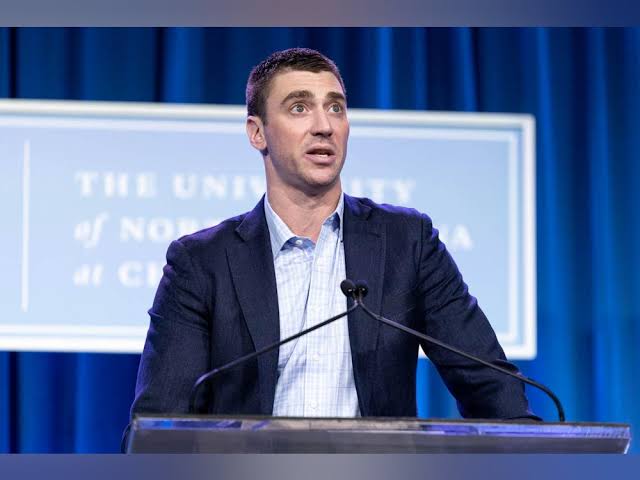
The moment North Carolina Tar Heels men’s basketball made the stunning decision to bring in NBA championship-winning coach Michael Malone, the college basketball world didn’t just take notice—it erupted. For a program steeped in tradition, excellence, and an identity built over decades, this wasn’t just another coaching hire. It was a seismic shift.
And when a voice like Tyler Hansbrough speaks on such a moment, people listen.
Hansbrough isn’t just another former player offering commentary. He is Carolina basketball—embodying the grit, passion, and relentless energy that defined an era under Roy Williams. So when he made his feelings clear about Malone’s arrival in Chapel Hill, it sent ripples across the sport.
This is more than a reaction. It’s a signal about where UNC is headed—and whether the program is embracing evolution or risking its identity.
A Program at a Crossroads
For decades, North Carolina has stood as one of college basketball’s gold standards. From Michael Jordan to Hansbrough himself, the Tar Heels have built a legacy rooted in player development, fast-paced offense, and a deep connection to the college game.
But recent seasons have raised uncomfortable questions.
Despite flashes of brilliance under Hubert Davis, inconsistency and underperformance have left fans restless. The transfer portal era, NIL dynamics, and changing recruiting landscapes have only intensified the pressure.
So when UNC turned to Malone—a coach fresh off leading the Denver Nuggets to an NBA title—it was clear the program wasn’t just making a hire.
It was making a statement.
Who Is Michael Malone—and Why This Hire Matters
Michael Malone is widely respected in NBA circles for his defensive mindset, player accountability, and ability to build a cohesive team culture. His crowning achievement came when he guided the Nuggets, led by Nikola Jokic, to their first NBA championship.
But the question looming over Chapel Hill is simple:
Can NBA success translate to college dominance?
The college game is vastly different—recruiting teenagers, managing short-term rosters, navigating NIL deals, and developing players on a much tighter timeline.
That’s where Hansbrough’s perspective becomes invaluable.
Tyler Hansbrough’s Reaction: Respect Meets Realism
Hansbrough didn’t dismiss the hire. Far from it.
In fact, his reaction struck a tone that many fans are still trying to process—a mix of intrigue, cautious optimism, and subtle concern.
He acknowledged Malone’s pedigree, emphasizing that winning at the highest level of basketball is no small feat. Anyone who can guide a team through the grind of an NBA season and emerge as a champion commands respect.
But Hansbrough also made something clear:
UNC isn’t the NBA.
That distinction matters.
He pointed out that Carolina’s success has always been tied to its identity—fast play, unselfish offense, and a deep emotional connection between players and the program. It’s not just about X’s and O’s. It’s about culture.
And that culture is fragile.
The Identity Question
At the heart of Hansbrough’s reaction is one central concern:
Will UNC still feel like UNC?
Under legends like Dean Smith and Roy Williams, the Tar Heels built a style that was unmistakable. Players ran the floor, shared the ball, and played with a freedom that became synonymous with Carolina basketball.
Malone’s NBA system, however, leans more toward structure, half-court execution, and defensive discipline.
That’s not inherently a bad thing. In fact, it could address some of UNC’s recent weaknesses.
But it raises a critical question:
Does adapting to modern basketball mean abandoning tradition—or evolving it?
Hansbrough didn’t give a definitive answer. Instead, he challenged the idea that change alone guarantees success.
The Locker Room Factor
Another key point Hansbrough touched on is something many overlook:
Relatability.
College players are not professionals. They’re young athletes navigating academics, personal growth, and the pressures of high-level competition.
Malone has spent years coaching seasoned NBA players—many of whom are veterans with established roles and expectations.
The transition to coaching 18- to 22-year-olds isn’t just a tactical shift—it’s a philosophical one.
Hansbrough emphasized the importance of connection, noting that the best college coaches aren’t just strategists—they’re mentors.
That’s an area where Malone will face immediate scrutiny.
Recruiting in a New Era
Perhaps the biggest unknown in this entire equation is recruiting.
Unlike the NBA, where rosters are built through drafts and trades, college success hinges on convincing top talent to choose your program.
Malone’s NBA résumé could be a powerful recruiting tool. Imagine a coach walking into a living room and saying, “I’ve coached MVPs. I’ve won at the highest level.”
That carries weight.
But recruiting is also about relationships, persistence, and understanding the grassroots landscape—areas where lifelong college coaches often have an edge.
Hansbrough hinted at this challenge, suggesting that Malone’s ability to build a recruiting network quickly will be crucial.
Fan Reaction: Divided but Energized
Unsurprisingly, UNC fans are split.
Some see the hire as visionary—a bold move that could redefine the program and bring a modern edge to Chapel Hill.
Others worry it’s a gamble that could backfire, pulling the program away from the very identity that made it great.
Hansbrough’s reaction reflects both sides.
He didn’t dismiss the hire, nor did he blindly endorse it.
Instead, he did something far more valuable:
He asked the right questions.
The Bigger Picture: A Trend in College Basketball?
UNC’s decision could signal a broader shift.
As the lines between college and professional basketball continue to blur, more programs may look to NBA minds for leadership.
We’ve already seen elements of this trend, but a program like North Carolina fully embracing it? That’s different.
That’s influential.
If Malone succeeds, it could open the floodgates.
If he struggles, it could reinforce the importance of traditional college coaching paths.
What Success Looks Like for Malone at UNC
For Malone, success won’t just be measured in wins and losses.
It will be measured in how well he balances innovation with tradition.
Can he:
Maintain Carolina’s fast-paced identity while adding defensive toughness?
Connect with players on a personal level?
Build a recruiting pipeline strong enough to compete with blue-blood programs?
Embrace the culture while still leaving his mark?
Hansbrough’s reaction suggests that these are the benchmarks that matter most.
The Pressure Is Immediate
There will be no honeymoon period.
At a program like UNC, expectations are always sky-high. Fans don’t just want competitiveness—they expect championships.
And when you hire a coach with an NBA title, those expectations only grow.
Hansbrough understands this better than most.
He’s lived it.
And his reaction makes one thing clear:
Malone is stepping into one of the most demanding roles in all of sports.
Final Thoughts: A Defining Moment for UNC Basketball
The hiring of Michael Malone is more than a headline.
It’s a turning point.
And Tyler Hansbrough’s response captures the complexity of that moment perfectly.
There’s excitement. There’s uncertainty. There’s hope.
But above all, there’s a recognition that this decision will shape the future of North Carolina basketball in profound ways.
Will it usher in a new era of dominance?
Or will it serve as a cautionary tale about straying too far from tradition?
Only time will tell.
But one thing is certain:
All eyes are on Chapel Hill—and the rest of college basketball is watching closely.




