


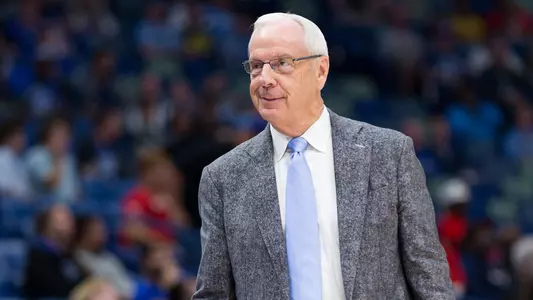
When a program as tradition-rich as the North Carolina Tar Heels makes a major decision, the ripple effects are felt across the entire college basketball landscape. But when that decision is not only bold, but also quietly backed by two of the most respected figures in the sport’s history, it transforms from a headline into a statement.
That’s exactly what has happened with the hiring of Michael Malone.
At first glance, the move raised eyebrows. An NBA lifer stepping into one of college basketball’s most tradition-driven programs? That alone was enough to spark debate. But once reports surfaced—particularly from Pete Thamel—that both Michael Jordan and Roy Williams endorsed Malone during the search process, the conversation shifted dramatically.
Because in Chapel Hill, those names carry weight.
And not just any weight—the kind that defines eras.
The Power of Endorsement in Chapel Hill
To understand why this endorsement matters so much, you have to understand the culture of the North Carolina Tar Heels.
This is not just a program—it’s a family.
For decades, North Carolina has prided itself on continuity. Coaches have come from within the system, players have returned to give back, and the program has maintained a sense of identity that few schools can match.
From Dean Smith to Roy Williams, the lineage has been clear. Even Hubert Davis, the recently departed head coach, was part of that same tree.
So when UNC went outside the “family” to hire Michael Malone, it wasn’t just a coaching decision—it was a philosophical shift.
And that’s where the endorsements come in.
If anyone could validate such a shift, it would be Michael Jordan and Roy Williams.
Why Michael Jordan’s Voice Matters
Let’s start with Michael Jordan.
Widely regarded as the greatest basketball player of all time, Jordan’s connection to North Carolina is legendary. His game-winning shot in the 1982 national championship game remains one of the most iconic moments in college basketball history.
But Jordan’s influence goes far beyond a single shot.
He represents excellence.
He represents winning.
And perhaps most importantly, he represents the standard.
So when someone like Jordan is reported to have endorsed a coaching candidate, it sends a powerful message: this is someone who understands the game at the highest level.
Jordan isn’t known for handing out praise lightly. His reputation for competitiveness and high expectations is well documented. If he sees something in Michael Malone, it’s worth paying attention to.
Roy Williams: The Guardian of Carolina Basketball
Then there’s Roy Williams.
If Jordan represents the pinnacle of player excellence, Williams represents the heart of Carolina basketball coaching.
A Hall of Fame coach with multiple national championships, Williams is deeply woven into the fabric of UNC. His opinion carries immense respect—not just within the program, but across the entire sport.
Williams understands what it takes to win at North Carolina.
He understands the expectations, the pressures, and the unique culture that defines the program.
So when he endorses a coach—especially one from outside the traditional pipeline—it speaks volumes.
It suggests that Malone isn’t just capable.
He’s compatible.
The Role of Pete Thamel in Breaking the Story
The details of Malone’s hiring process were brought to light by ESPN insider Pete Thamel, who described how the search unfolded.
According to Thamel, North Carolina initially explored other options. The program looked at more conventional candidates—coaches with deep roots in the college game.
But something changed.
In the final days of the search, UNC circled back to Michael Malone.
And this time, the momentum was undeniable.
“It came together fairly quickly,” Thamel explained. “There was some initial interest… Carolina elected to look elsewhere for a little bit. They circled back to him in the last few days, and Malone accepted the job.”
That sequence is telling.
It suggests that once the program fully evaluated its direction—and perhaps once key voices weighed in—the decision became clear.
A Coach Built for the Modern Game
So why Malone?
The answer lies in where college basketball is today—and where it’s going.
The sport has undergone a dramatic transformation in recent years. The transfer portal has created a form of annual free agency. NIL deals have introduced financial dynamics that resemble professional sports.
In many ways, college basketball is no longer purely amateur.
It’s evolving into something closer to the NBA.
And that’s exactly where Michael Malone thrives.
Proven Success with the Denver Nuggets
Malone’s resume speaks for itself.
During his tenure with the Denver Nuggets, he built a championship-winning team from the ground up, culminating in the franchise’s first NBA title in 2023.
He didn’t inherit a powerhouse.
He created one.
Under his leadership, the Nuggets developed a clear identity—one built on discipline, execution, and unselfish play. Malone became the winningest coach in franchise history and earned widespread respect across the league.
At the center of it all was Nikola Jokić, but Malone’s influence extended far beyond one superstar.
He developed role players.
He built depth.
He created a system that worked.
That ability to construct a cohesive, winning team is exactly what UNC is betting on.
Breaking from Tradition—By Design
For decades, North Carolina’s coaching hires followed a familiar pattern.
Dean Smith’s influence shaped generations
Roy Williams continued the legacy
Hubert Davis maintained the connection
It was a lineage that spanned nearly half a century.
But as Thamel pointed out, this is a different era.
“New ideas were needed.”
That’s the key.
UNC didn’t just hire Michael Malone—they chose to break from tradition.
And they did it intentionally.
The NIL Era and the “Front Office” Model
One of the most fascinating aspects of this hire is how it reflects the changing structure of college programs.
North Carolina is no longer just a team.
It’s becoming an organization.
With figures like Jim Tanner—a former NBA agent—serving in a general manager role, UNC is embracing a model that mirrors professional basketball.
In this system:
Player acquisition is strategic
Roster construction is year-to-year
Financial considerations play a role
This isn’t the old model of recruiting high school players and developing them over four years.
This is something new.
And Michael Malone is uniquely equipped to navigate it.
The Risk—and the Reward
Of course, any bold move comes with risk.
Malone has never coached at the college level.
He’ll need to adjust to:
Recruiting dynamics
NCAA regulations
A different game schedule
There’s no guarantee of immediate success.
But the potential upside is enormous.
If Malone can translate his NBA experience to the college game, North Carolina could gain a significant competitive edge.
Why the Endorsements Change Everything
This brings us back to where we started.
The endorsements from Michael Jordan and Roy Williams don’t just add credibility—they redefine the narrative.
Without them, this hire might feel like a gamble.
With them, it feels calculated.
It feels supported.
It feels like a decision made with both the past and the future in mind.
Jordan represents the pinnacle of what UNC players can become.
Williams represents the foundation of what UNC basketball has been.
Together, their backing bridges the gap between tradition and innovation.
Final Thoughts: A Defining Moment for UNC
The hiring of Michael Malone is more than a coaching change.
It’s a statement.
A statement that the North Carolina Tar Heels are ready to evolve.
A statement that they recognize the changing landscape of college basketball.
And a statement that they are willing to take risks to remain at the top.
With the backing of legends like Michael Jordan and Roy Williams, this isn’t just a bold move.
It’s a transformative one.
And in a sport defined by constant change, that might be exactly what North Carolina needs.




