


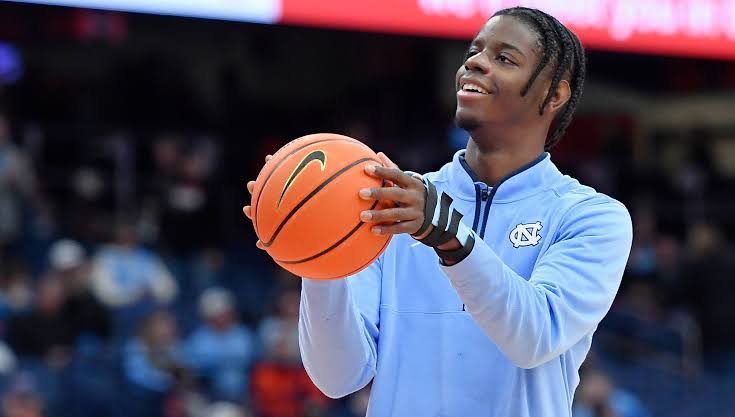
In the ever-changing world of college basketball, where the transfer portal has turned roster building into a year-round chess match, sometimes the most powerful moves don’t come from coaches, NIL deals, or official visits.
Sometimes, they come from players themselves.
And right now, one comment from Caleb Wilson is sending a wave of excitement—and speculation—through the North Carolina Tar Heels men’s basketball fanbase.
Because what seemed like a simple social media remark might actually be something much bigger:
A hint.
A pitch.
A recruiting effort in real time.
And if it works, it could completely reshape North Carolina’s future.
The Comment That Got Everyone Talking
It all started when Michael Malone was officially welcomed as the new head coach in Chapel Hill—a move that already had fans buzzing with curiosity and excitement.
A championship-winning NBA coach stepping into the college ranks?
That alone is headline-worthy.
But then came the moment that truly lit the spark.
In response to the announcement, Caleb Wilson dropped a comment that immediately caught attention:
“Derek Dixon is Jamal Murray.”
At first glance, it might seem like a bold comparison.
But in reality?
It might be something even more strategic.
Why This Comparison Matters
To understand the weight of that statement, you have to look at who Jamal Murray is—and what he represents.
Murray isn’t just a talented guard.
He’s a proven winner.
A clutch performer.
A key piece in the championship run led by Michael Malone with the Denver Nuggets.
Alongside Nikola Jokic, Murray formed one of the most dangerous duos in the league—blending shot creation, scoring, and poise under pressure.
So when Caleb Wilson compares Derek Dixon to Murray, he’s not just giving a compliment.
He’s painting a picture.
A vision.
A glimpse of what Dixon could become under Malone’s system.
A Subtle Recruitment Strategy?
Let’s be real—this wasn’t random.
Derek Dixon is currently exploring his options in the transfer portal, as many players do in today’s game.
That means he’s weighing:
Opportunities elsewhere
Potential roles
Coaching fit
Development pathways
And that’s where Wilson’s comment becomes interesting.
Because it does something powerful:
It connects Dixon’s future to Malone’s past success.
It says:
“You don’t need to leave to become great. The blueprint is already here.”
That’s not just a compliment.
That’s a pitch.
The Transfer Portal Dilemma
The modern transfer portal has changed everything.
Loyalty is no longer guaranteed.
Development paths are no longer linear.
And players are constantly evaluating their best path forward.
For Derek Dixon, this is a pivotal moment.
Stay at North Carolina and buy into a new system under an NBA champion coach?
Or explore opportunities elsewhere with a fresh start?
It’s not an easy decision.
But moments like this—comments like Wilson’s—can influence the outcome more than people realize.
The Michael Malone Factor
Let’s talk about the biggest variable in this entire situation:
Michael Malone.
His arrival changes everything.
This isn’t just another college hire.
This is a coach who:
Led a team to an NBA championship
Developed elite talent
Built a system that thrives at the highest level
For players like Derek Dixon, that matters.
Because it offers something unique:
A direct pathway to professional development.
And when you combine that with a comparison to Jamal Murray?
Now you’re not just talking about potential.
You’re talking about possibility.
Why UNC Fans Are Paying Close Attention
Tar Heel fans understand what’s at stake.
They’ve seen how quickly rosters can change.
They’ve experienced the highs of elite talent and the frustration of missed opportunities.
So when a moment like this happens—a hint, a comparison, a potential turning point—they notice.
Because they know:
If Derek Dixon returns, it’s not just another roster decision.
It’s momentum.
It’s belief.
It’s a signal that players are buying into what Michael Malone is building.
The Dream Scenario
Let’s imagine it plays out.
Dixon returns.
He embraces the system.
He develops under Malone.
And he begins to show flashes of that Murray-like potential.
What happens then?
Everything changes.
The backcourt becomes more dynamic
The offense gains a reliable creator
The team builds an identity around development and execution
And suddenly, North Carolina isn’t just rebuilding.
They’re reloading.
The Bigger Puzzle
Of course, this isn’t just about one player.
It’s about the bigger picture.
Roster construction.
Team chemistry.
Long-term vision.
Wilson’s comment—even if lighthearted—touches on all of that.
Because it highlights a key truth:
Players influence players.
In today’s game, peer recruitment is real.
And sometimes, it’s more effective than anything else.
What Happens Next?
That’s the big question.
Will Derek Dixon be convinced?
Will Malone’s vision be enough?
Will moments like this tip the scale?
No one knows for sure.
But one thing is certain:
The conversation has started.
⚠️ Final Thoughts: More Than Just a Comment
At first glance, it was just a comment.
A quick comparison.
A passing remark.
But in reality?
It might be something much bigger.
A glimpse into how players view each other.
A sign of belief in a new system.
A subtle push toward a decision that could impact an entire program.
For Caleb Wilson, it was a simple statement.
For North Carolina Tar Heels men’s basketball fans, it was a spark.
And for Derek Dixon?
It might just be something to think about.
Because in college basketball, the biggest changes don’t always come from headlines.
Sometimes…
They start with a single sentence.
“Derek Dixon is Jamal Murray.”
And if that vision becomes reality?
UNC fans might be witnessing the beginning of something special.




