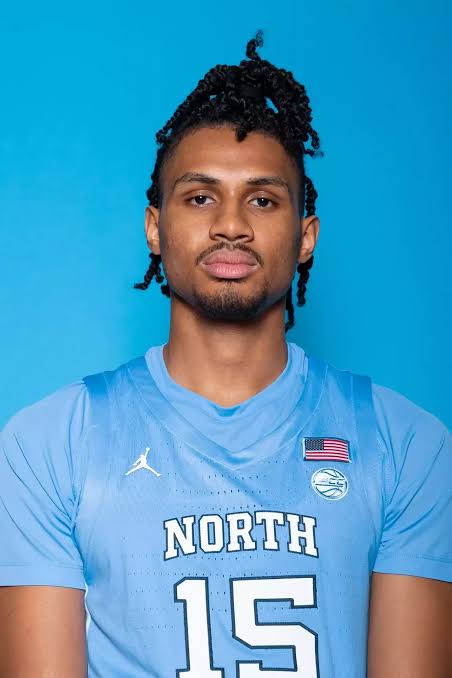
There are moments in college basketball when a single decision doesn’t just affect a roster—it reshapes expectations, restores belief, and quietly sets the stage for something much bigger. Jarin Stevenson’s decision to return to the University of North Carolina for his senior season is one of those moments. At first glance, it may look like a simple case of a player opting for continuity. But look closer, and it becomes clear: this is a defining move that could alter the trajectory of UNC basketball in ways fans are only beginning to grasp.
For a program built on legacy, identity, and championship expectations, retaining a player like Stevenson is more than just a roster win—it’s a statement. And for first-year head coach Michael Malone, it could be the foundational piece that stabilizes a team in transition while unlocking a ceiling few are currently predicting.
A Return That Means More Than Numbers
On paper, Stevenson’s junior season numbers—8.1 points per game, 4.4 rebounds, 47% shooting—might not immediately jump off the page. In an era dominated by gaudy stat lines and highlight-driven narratives, it’s easy for a player like Stevenson to be overlooked by casual observers.
But UNC fans know better—or at least, they should.
Basketball is not just about scoring averages; it’s about impact, timing, and versatility. Stevenson embodies all three. At 6-foot-10, he brings a rare combination of size, mobility, and positional flexibility that allows him to influence the game in ways that don’t always show up in the box score.
He can stretch the floor. He can defend multiple positions. He can rebound in traffic. And perhaps most importantly, he understands the rhythm of the game—when to step up, when to defer, and when to impose his presence.
That kind of player is not easily replaced. In fact, it’s often the difference between a good team and a great one.
The Late-Season Surge That Changed Everything
If there were any doubts about Stevenson’s importance, they should have been erased during the final stretch of the season.
With freshman standout Caleb Wilson sidelined due to injury, UNC needed someone to step forward—not just to fill minutes, but to elevate the team’s performance in high-pressure situations.
Stevenson answered that call.
Over the final 10 games, he averaged 10.7 points and 6.4 rebounds while shooting over 51% from the field. Those numbers tell part of the story, but they don’t fully capture the confidence, aggressiveness, and leadership he displayed during that stretch.
He wasn’t just playing well—he was playing with purpose.
His 19-point performance against Pittsburgh showcased his scoring ability. His 17-point second half against Virginia demonstrated his resilience and clutch gene. And across multiple games, his presence was reflected in the plus-minus column, where he consistently ranked among the team’s most impactful players.
This wasn’t a fluke. It was growth. It was evolution. And it was a glimpse of what he can become with another full season in Chapel Hill.
Experience You Can’t Manufacture
One of the most underrated aspects of Stevenson’s return is experience.
In today’s college basketball landscape, rosters turn over at an unprecedented rate. Players transfer, declare for the draft, or leave in search of new opportunities. Continuity has become a luxury—and a competitive advantage.
Stevenson brings that continuity.
He’s been through the grind of high-level college basketball. He’s played in meaningful games. He’s experienced both success and adversity, including a Final Four run during his time at Alabama. That kind of experience cannot be taught—it must be lived.
For a team integrating new pieces and adjusting to a new coaching staff, having a player who understands what it takes to compete at the highest level is invaluable.
He becomes a bridge between the past and the future—a stabilizing force in a locker room that will inevitably face challenges throughout the season.
The Perfect Fit for a New Era
The arrival of Michael Malone signals a new chapter for UNC basketball. With any coaching transition comes uncertainty: new systems, new philosophies, new expectations.
In that environment, players like Stevenson become even more important.
Why? Because he’s adaptable.
His versatility allows him to fit into multiple schemes. Whether Malone emphasizes spacing, defensive switching, or up-tempo play, Stevenson has the tools to contribute. He doesn’t need the offense built around him to be effective—he enhances whatever system he’s placed in.
That’s the kind of player coaches trust. The kind of player who earns minutes not just because of talent, but because of reliability.
And as Malone begins to establish his identity at UNC, having a dependable, experienced forward like Stevenson could accelerate the process significantly.
Chemistry, Continuity, and the Bigger Picture
Stevenson’s return doesn’t happen in isolation—it impacts the entire roster.
With Virginia Tech transfer Neoklis Avdalas joining the team, UNC is clearly building a roster with size, versatility, and skill. The combination of Avdalas’ perimeter abilities and Stevenson’s inside-out game creates intriguing lineup possibilities.
Add in the return of key contributors and the development of younger players, and suddenly, UNC’s roster begins to look more cohesive—and more dangerous.
Chemistry is often the hidden ingredient in successful teams. It’s built through shared experiences, trust, and familiarity. Stevenson’s decision to stay accelerates that process.
He knows the program. He understands the expectations. And he can help new players adjust more quickly.
That kind of internal leadership doesn’t just improve performance—it shapes culture.
The Intangibles That Win Games
Every team has talent. Not every team has intangibles.
Stevenson brings intangibles in abundance.
He doesn’t force the game. He plays within himself. He makes the extra pass, boxes out, rotates defensively, and does the small things that coaches emphasize but fans often overlook.
These are the plays that don’t make highlight reels—but they win games.
And when you combine those intangibles with his physical tools and growing confidence, you get a player who can impact winning in a variety of ways.
That’s why his return matters so much.
A Message to the Fans
For UNC fans, Stevenson’s decision should be a reason for excitement—not just relief.
It’s easy to get caught up in recruiting rankings, transfer portal headlines, and offseason speculation. But sometimes, the most important moves are the ones that bring stability.
Stevenson represents stability.
He represents growth.
And he represents potential—both realized and untapped.
This is a player who has already shown he can step up when it matters most. A player who has improved year after year. A player who understands what it means to wear the Carolina jersey.
And now, he has one more season to put it all together.
The Season-Changing X-Factor
Make no mistake: Stevenson is not just another returning player.
He is the X-factor.
If he builds on his late-season momentum, improves his perimeter shooting, and continues to assert himself offensively, he could become one of the most impactful forwards in the conference.
And if that happens, UNC’s ceiling rises dramatically.
Because when you have a player who can guard multiple positions, stretch the floor, rebound effectively, and contribute in clutch moments, you have a foundation for success.
That’s what Stevenson provides.
Final Thoughts: Why This Changes Everything
In a sport defined by constant change, Jarin Stevenson’s decision to stay at UNC is a reminder that continuity still matters.
It matters for team chemistry.
It matters for player development.
And it matters for winning.
For Michael Malone, it’s an opportunity to build around a player who understands the game and embraces his role. For fans, it’s a reason to believe that this team has the pieces to compete at a high level.
And for Stevenson himself, it’s a chance to define his legacy—not just as a contributor, but as a cornerstone.
The headlines may call it a “shock return.” But by the end of the season, it might be remembered as something else entirely:
The moment UNC basketball quietly positioned itself for something special.