


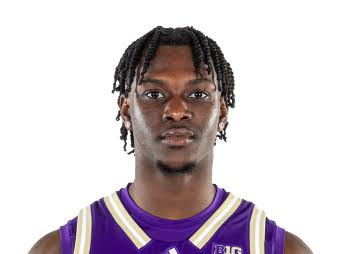
The excitement didn’t last long before the questions started pouring in.
When Zoom Diallo committed to the Kentucky Wildcats, it was supposed to be a clear win for Mark Pope—a much-needed addition to stabilize a roster in transition. A dynamic guard. A physical presence. A player capable of taking over games.
But almost immediately, a familiar and uncomfortable comparison surfaced.
Jaland Lowe.
And just like that, what should have been a moment of celebration turned into a heated debate across Big Blue Nation.
Did Kentucky just fix its biggest problem… or accidentally recreate it?
The Context: Why This Comparison Exists
To understand the concern, you have to rewind to last season.
Kentucky’s offense, at times, looked disjointed. Stagnant. Predictable.
The Wildcats struggled to consistently generate efficient half-court offense, especially against elite defenses. Spacing was an issue. Shot creation was inconsistent. And at the center of those struggles was the point guard position.
Jaland Lowe, while talented, became a lightning rod for criticism—not necessarily because he lacked ability, but because his skill set didn’t fully align with what the offense needed.
He could handle the ball. He could attack. But when defenses sagged off him and dared him to shoot, the entire structure began to collapse.
Now, with Diallo stepping into a similar role, fans can’t help but ask:
Are we about to see the same movie twice?
First Impressions: Why Diallo Feels Like a Win
Let’s be clear—Zoom Diallo is not some average pickup.
On the surface, he checks a lot of boxes.
He’s bigger than Lowe—standing at 6-foot-4 with a stronger frame. He brings physicality that Kentucky didn’t consistently have at the guard spot. He can absorb contact, finish at the rim, and control the pace.
More importantly, he thrives in one of the most important areas of modern basketball:
Pick-and-roll offense.
A True Pick-and-Roll Weapon
If you want to understand why Pope targeted Diallo, just look at the numbers.
Diallo ranked in the:
92nd percentile in pick-and-roll ball handler usage
87th percentile in points per possession
Those aren’t just good—they’re elite.
In a half-court setting, Diallo is comfortable. He reads defenses well, uses his body effectively, and gets downhill with purpose. He can finish through contact, hit midrange shots, and keep defenses on their heels.
In many ways, he’s a throwback guard—reminiscent of players who dominated before the three-point revolution fully took over.
And for a Kentucky team that struggled to create offense late in possessions, that skill set is incredibly valuable.
The Problem: Modern Basketball Demands More
But here’s where things get complicated.
Basketball isn’t played in a vacuum.
And in today’s game—especially in a conference like the SEC—spacing is everything.
Defenses are smarter. Faster. More aggressive.
If your point guard can’t consistently hit from deep, opponents will exploit it.
And that’s exactly where the concern lies.
The Shooting Numbers: A Red Flag?
Diallo’s shooting statistics are… concerning.
As a freshman:
18% from three-point range
At one point, he went multiple months without making a single three.
Even as a sophomore, with improvement:
31% from three
23 makes on 73 attempts
On paper, that’s progress.
But in reality, it’s still below the level needed to keep defenses honest.
And when your point guard isn’t a perimeter threat, everything changes.
The Domino Effect on Offense
When defenders don’t respect the shot, they sag off.
When they sag off, driving lanes disappear.
When driving lanes disappear, the entire offense slows down.
Big men face crowded paint. Wings lose spacing. Ball movement becomes less effective.
It’s a chain reaction.
And it’s exactly what Kentucky experienced last season.
That’s why the Jaland Lowe comparison keeps coming up.
Because fans have seen this before.
“Jaland Lowe 2.0”? Fair or Overreaction?
Let’s address the comparison head-on.
Is Diallo really just a repeat of Lowe?
Not exactly.
There are key differences:
Diallo is bigger and stronger
He’s more efficient in pick-and-roll situations
He has a more developed midrange game
But the core concern remains the same:
Can he shoot well enough to run a modern offense?
Until that question is answered, the comparison won’t go away.
Defensive Concerns Add Another Layer
Offense isn’t the only area under scrutiny.
Defensively, Diallo presents a mixed profile.
At 6-foot-4, he has the size to match up physically with many guards. He can hold his own against bigger players and contribute as an off-ball defender.
But when it comes to quickness and lateral movement, there are questions.
Against elite SEC point guards—players who thrive on speed and agility—Diallo could face challenges staying in front.
That puts pressure on the entire defensive system.
Help rotations become more frequent. Defensive assignments get complicated. Mistakes become more costly.
The Optimistic View: A Star in the Making
Despite the concerns, there’s a strong case for optimism.
Diallo isn’t a finished product.
He’s improving.
Going from 18% to 31% from three is a significant jump. It shows growth, adaptability, and a willingness to develop.
If he can push that number into the 35–36% range, everything changes.
Suddenly:
Defenses have to respect him
Spacing improves
His driving ability becomes even more dangerous
At that point, he’s not just solid—he’s a problem for opposing teams.
The Mark Pope Factor
Ultimately, this situation comes down to one person:
Mark Pope.
His system relies heavily on spacing, ball movement, and efficient shot creation. For it to work, the point guard position is critical.
Pope saw something in Diallo.
Something worth betting on.
Now, it’s up to him to maximize that potential.
Lessons From Last Season
If there’s one thing Kentucky learned last year, it’s this:
Hope isn’t a strategy.
You can’t assume improvement. You can’t rely on potential alone.
Everything has to translate on the court.
That’s why fans are cautious.
They’ve seen what happens when things don’t quite fit.
The Stakes Couldn’t Be Higher
This isn’t just about one player.
It’s about the direction of the program.
Pope is entering a defining season. Expectations are high. The margin for error is small.
If Diallo works out, Kentucky could take a major step forward.
If he doesn’t, the same issues could resurface.
Final Verdict: Risk or Reward?
So where does that leave us?
Zoom Diallo is both:
A potential solution
And a potential risk
He has the tools to succeed.
He has the weaknesses that could be exposed.
And right now, both realities exist at the same time.
Final Thoughts: The Answer Is Coming
In the end, debates don’t decide outcomes.
Games do.
Diallo will have every opportunity to prove himself. To silence critics. To reshape the narrative.
Or to confirm the fears.
Either way, the answer is coming.
And when it does, one thing is certain:
Big Blue Nation will be watching every move.




