


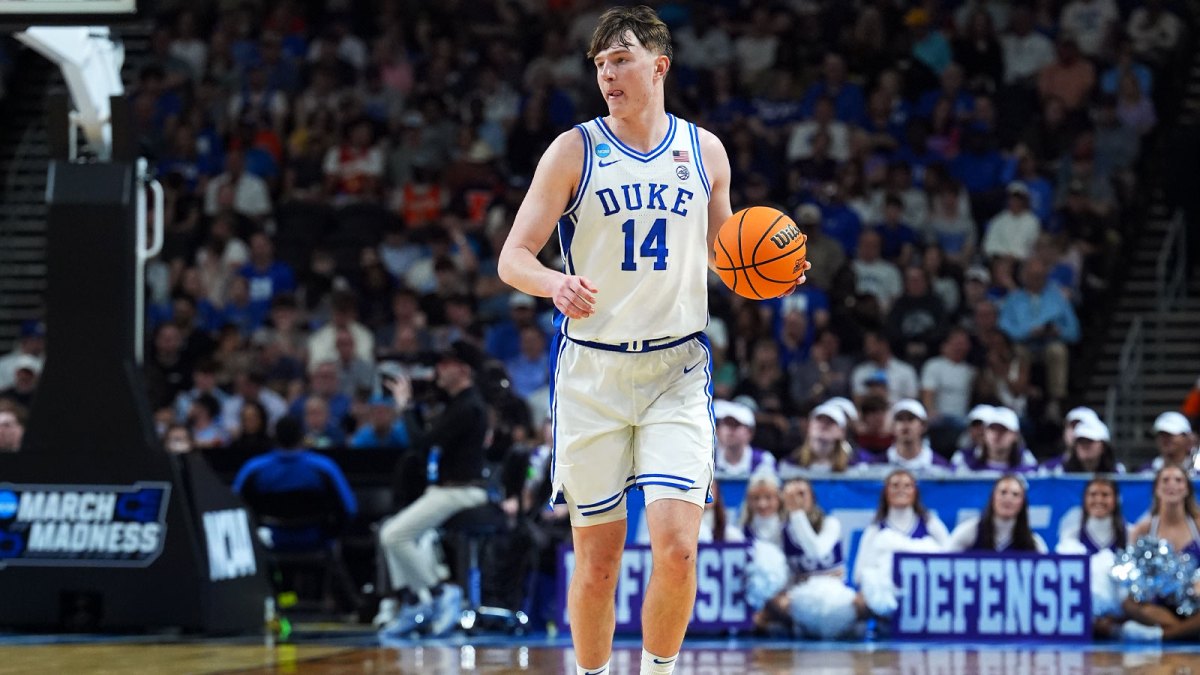
The offseason momentum for Duke Blue Devils has taken a noticeable hit, as the program continues to navigate the ever-changing landscape of the transfer portal. In a development that could reshape the team’s outlook for the upcoming season, sophomore forward Nikolas Khamenia has officially committed to UConn Huskies, dealing a significant blow to Duke’s frontcourt depth and long-term plans.
Khamenia’s departure marks the second loss for Duke in a matter of days, following guard Darren Harris’ decision to transfer to Indiana. While roster movement is nothing new in modern college basketball, losing multiple contributors in quick succession puts pressure on the coaching staff to quickly recalibrate and fill emerging gaps.
Khamenia, who entered Duke with considerable promise, was widely expected to take a meaningful leap heading into his sophomore season. Though his role fluctuated at times during his freshman campaign, flashes of his potential were evident throughout the year. His combination of size, versatility, and developing offensive skillset made him a valuable piece in Duke’s rotation and a likely breakout candidate for the 2026–27 season.
During his freshman year, Khamenia appeared in 38 games, earning five starts and averaging just over 19 minutes per contest. He posted 5.7 points, 3.3 rebounds, and 1.0 assist per game while shooting 44.4 percent from the field. His ability to stretch the floor was showcased by a respectable 34 percent from beyond the arc, and although his free-throw shooting (67.3 percent) left room for improvement, his overall efficiency hinted at a player still growing into his role.
Perhaps most encouraging for Duke fans was Khamenia’s gradual progression as the season unfolded. He recorded three games with a season-high 14 points, demonstrating his scoring upside when given extended opportunities. In high-stakes moments, including Duke’s season-ending loss in the Elite Eight to UConn, Khamenia delivered a steady performance with seven points, two rebounds, one assist, and a block in 22 minutes—ironically, against the very team he will now join.
For Duke, this loss is about more than just numbers—it’s about potential unrealized within the program. Under head coach Jon Scheyer, the Blue Devils have maintained a strong national presence, reaching the NCAA Tournament in each of the past four seasons and making a Final Four run in 2024–25. The program has built its identity around player development and continuity, but the transfer portal era continues to challenge that model.
Now entering his fifth season at the helm, Scheyer faces a new test: retooling a roster that has suddenly lost depth and versatility. Khamenia’s expected emergence would have provided stability in the frontcourt, especially as Duke aims to remain competitive at the highest level of college basketball. His departure forces the coaching staff to explore alternative options, whether through recruiting, additional transfer portal targets, or internal development.
Meanwhile, the move represents a major opportunity for Khamenia at UConn. The Huskies are coming off a national championship game appearance and remain one of the premier programs in the country. With the departure of key forward Alex Karaban, there is a clear opening for a player of Khamenia’s profile to step in and make an immediate impact.
At UConn, Khamenia is likely to benefit from a system that has consistently maximized player strengths and developed NBA-ready talent. The chance to compete for a national title while stepping into a larger role could be exactly what he needs to unlock his full potential. Given his trajectory, a breakout season in Storrs seems not only possible but increasingly probable.
For Duke fans, however, the focus now shifts to how the team responds. The transfer portal cuts both ways, and while losing talent is difficult, it also presents opportunities to reshape the roster with fresh additions. The coming weeks will be crucial as the Blue Devils look to stabilize their lineup and maintain their status as a national contender.
In today’s college basketball landscape, adaptability is everything—and Duke’s response to this setback will ultimately define its path forward.




