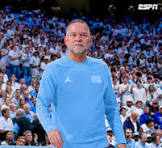
Michael Malone is stepping back into the college basketball spotlight after a remarkable 25-year journey in the National Basketball Association, bringing with him a wealth of experience, credibility, and a championship pedigree that instantly commands attention. Known for his leadership, defensive philosophy, and ability to build cohesive teams, Malone returns to a college game that looks drastically different from the one he left behind.
Over the past quarter-century, Malone established himself as one of the most respected coaches in the NBA. His tenure with the Denver Nuggets was particularly impressive, as he guided the franchise to seven consecutive playoff appearances and delivered the pinnacle achievement—a 2023 NBA championship. That title not only cemented his legacy at the professional level but also reinforced his reputation as a coach who can maximize talent and manage high-pressure situations.
Now, Malone faces a new challenge: navigating the modern landscape of college basketball. The sport has undergone a seismic shift in recent years, with the introduction of the transfer portal, NIL (Name, Image, and Likeness) opportunities, and an increasingly fluid roster environment. Unlike the more structured systems of the NBA, today’s college game requires adaptability, quick decision-making, and a deep understanding of player movement trends.
One of Malone’s biggest strengths—his ability to connect with players—could prove to be a major advantage in this new era. Having coached elite athletes at the highest level, he understands what it takes to develop talent both on and off the court. His experience managing professional personalities and egos translates well to a college environment where players are more empowered than ever before.
Roster construction is perhaps the most significant difference Malone will encounter. In today’s NCAA, building a team is no longer limited to traditional recruiting pipelines. Coaches must constantly evaluate transfer portal options, balance incoming freshmen with experienced transfers, and maintain team chemistry amid constant change. Malone’s NBA background, where roster adjustments and player acquisitions are a regular part of the job, positions him uniquely to thrive in this environment.
Additionally, Malone brings a defensive mindset that could set his program apart. Throughout his NBA career, his teams were known for their discipline, structure, and commitment on the defensive end. In a college game that often emphasizes pace and scoring, a strong defensive identity can be a decisive competitive edge. His ability to instill accountability and effort will likely resonate with players looking to elevate their game and prepare for the next level.
Another key factor in Malone’s return is his credibility with recruits. High school prospects and transfer players alike are drawn to coaches with proven success, especially those with NBA experience. Malone’s résumé speaks for itself—he has coached All-Stars, developed young talent into elite players, and guided a team to a championship. For players with professional aspirations, learning under Malone offers a direct connection to the NBA.
However, the transition won’t be without challenges. The recruiting landscape is more competitive than ever, and building relationships quickly is essential. Unlike the NBA, where rosters are relatively stable, college coaches must continuously re-recruit their own players to maintain continuity. Malone will need to adapt to these nuances while establishing a strong culture that encourages players to stay and grow within the program.
There’s also the matter of adjusting to a different pace of play and game preparation. College basketball features shorter shot clocks than in the past, varied styles across conferences, and a heavy emphasis on tournament success. Malone’s strategic acumen will be tested as he adapts his systems to fit the college game while maintaining the principles that made him successful in the NBA.
Despite these challenges, there is a strong sense of optimism surrounding Malone’s return. His leadership style, built on communication, discipline, and trust, aligns well with what modern college programs need. Players are looking for coaches who can guide them not just as athletes but as individuals navigating a complex and evolving sports landscape.
Ultimately, Malone’s comeback represents more than just a coaching change—it signals a blending of professional-level expertise with the dynamic energy of college basketball. If he can successfully merge his NBA experience with the demands of the modern NCAA, he has the potential to quickly transform his program into a contender.
As the new season approaches, all eyes will be on Malone to see how he adapts, innovates, and leads in this new chapter. One thing is certain: with his track record and determination, he is not returning to simply participate—he is coming back to win.