


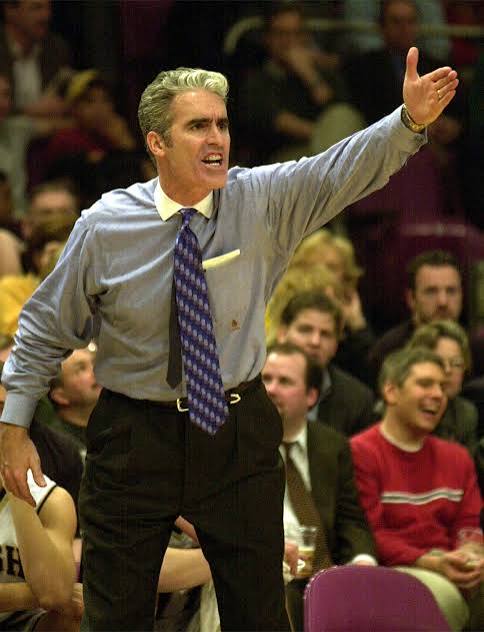
When a program like North Carolina Tar Heels men’s basketball makes a bold move, the ripple effects are felt far beyond Chapel Hill. The decision to bring in Michael Malone—a seasoned NBA champion coach—signals more than just a change in leadership. It represents a philosophical shift, a calculated risk, and perhaps the beginning of a new era in college basketball.
But with that opportunity comes immense pressure.
And no one understands that pressure better than Matt Doherty, a man who has lived the highs and lows of leading one of the most tradition-rich programs in the sport. His message to Malone—“embrace history, but don’t be paralyzed by it”—is simple on the surface, yet deeply profound when you unpack what it truly means.
This is not just advice. It is a warning, a blueprint, and a reality check all rolled into one.
The Weight of Carolina Blue
To coach at North Carolina is to step into a legacy that few programs in sports can match. The banners hanging in the Dean Smith Center are not just decorations; they are expectations. They tell a story of dominance, excellence, and a standard that refuses to be lowered.
From Dean Smith to Roy Williams, the Tar Heels have been guided by figures who didn’t just win games—they built cultures. They established principles that defined not only how the team played, but what it represented.
For Malone, stepping into this environment is unlike anything he has experienced before.
In the NBA, success is measured differently. There is pressure, of course, but it is often tied to front office decisions, roster construction, and long-term planning. In college basketball—especially at a place like UNC—the expectations are immediate and relentless.
You are not just building a team.
You are protecting a legacy.
An Outsider With Insider Expectations
One of the most intriguing aspects of Malone’s arrival is that he comes in as an outsider. Unlike many of his predecessors, he does not have direct ties to the Carolina family. That alone makes his position unique—and challenging.
Yet, in today’s evolving basketball landscape, that outsider perspective might actually be an advantage.
Malone brings with him a wealth of NBA experience, including the ability to manage high-level talent, navigate complex locker room dynamics, and implement systems that translate to winning at the highest level. His resume speaks for itself.
But at UNC, a strong resume is just the beginning.
The real test is how well he can adapt his approach to fit the culture of college basketball—and more specifically, the culture of Carolina basketball.
That’s where Doherty’s advice becomes critical.
Embrace It, But Don’t Be Consumed
“Embrace history, but don’t be paralyzed by it.”
Those words carry a dual meaning.
On one hand, Malone must respect the traditions that have made UNC what it is. Ignoring them would be a mistake. Players, fans, and alumni expect a certain identity—one built on teamwork, discipline, and unselfish play.
On the other hand, he cannot allow that history to dictate every decision he makes.
Trying to replicate the past often leads to stagnation. The game has changed. The players have changed. The environment has changed. What worked decades ago may not work today.
Malone’s challenge is to find the balance.
To honor the past while building something new.
To carry the torch without being burned by it.
The Modern Challenges of College Basketball
If taking over at UNC wasn’t already difficult enough, Malone is stepping into a college basketball landscape that is more complicated than ever.
The rise of NIL (Name, Image, and Likeness) deals has transformed recruiting into a marketplace. Players are no longer just choosing schools—they are evaluating financial opportunities, branding potential, and career pathways.
The transfer portal has added another layer of complexity, turning roster management into a year-round puzzle.
And perhaps most importantly, the traditional power dynamics between coaches and players have shifted.
Today’s athletes have more leverage, more options, and more expectations.
For Malone, this is both a challenge and an opportunity.
His NBA background gives him a unique perspective on player development and professional preparation. He understands what it takes to succeed at the next level, and that knowledge could be invaluable in attracting top talent.
But he must also learn to navigate the nuances of the college game—something that even experienced college coaches are still trying to figure out.
Building Relationships in a New Era
One of the qualities that stands out most about Malone is his reputation as a “player’s coach.” In an environment where relationships matter more than ever, that could be his greatest strength.
As Doherty pointed out, success in college basketball is not just about strategy—it’s about connection.
Players need to feel seen, understood, and valued.
They need to trust that their coach is invested in their development, both on and off the court.
Malone’s ability to build those relationships will be crucial in establishing a strong foundation for the program.
It starts with communication.
With listening.
With creating an environment where players can thrive.
The Core Principles That Never Change
Despite all the changes in the game, some things remain constant.
Doherty emphasized three simple principles that have defined UNC basketball for generations: play hard, play smart, play together.
These are not just slogans.
They are standards.
For Malone, anchoring his program around these values could provide the stability needed to navigate an ever-changing landscape.
No matter how the game evolves, effort, intelligence, and teamwork will always matter.
And at a place like UNC, they are non-negotiable.
The Pressure to Win—Now
Let’s not pretend otherwise: Malone will be judged by one thing above all else.
Winning.
At North Carolina, making the NCAA Tournament is not enough. Competing for championships is the expectation.
Anything less invites scrutiny.
And the pressure will only intensify as the season progresses.
Fans will analyze every decision.
Media will dissect every performance.
And comparisons to past greats will be inevitable.
This is the reality of the job.
The question is how Malone responds to it.
A New Blueprint for Success
What makes this situation so fascinating is that it could redefine what success looks like in college basketball.
If Malone thrives, it could open the door for more NBA coaches to make the jump to the college level.
It could accelerate the trend toward a more professional model of college athletics.
And it could position UNC as a leader in that transformation.
But if it doesn’t work, it will serve as a cautionary tale.
A reminder that not every great NBA coach can succeed in the college game.
The stakes are that high.
Legacy in the Making
For Malone, this is more than just another coaching job.
It is an opportunity to leave a lasting legacy.
To prove that he can succeed in a completely different environment.
To take one of the most iconic programs in the sport and guide it into a new era.
That is both a privilege and a responsibility.
And it all starts with understanding what Doherty was trying to say.
Conclusion
The journey ahead for Michael Malone will not be easy.
He will face challenges unlike any he has encountered before.
He will be tested in ways that go beyond X’s and O’s.
But he will also have the chance to do something special.
To bridge the gap between past and present.
To honor tradition while embracing innovation.
To build a program that reflects both where UNC has been and where it is going.
And as he takes on that challenge, the words of Matt Doherty will remain as relevant as ever:
Embrace history.
But don’t let it define you.
Because in the end, the future of Carolina basketball will not be written by what came before.
It will be written by what comes next.




