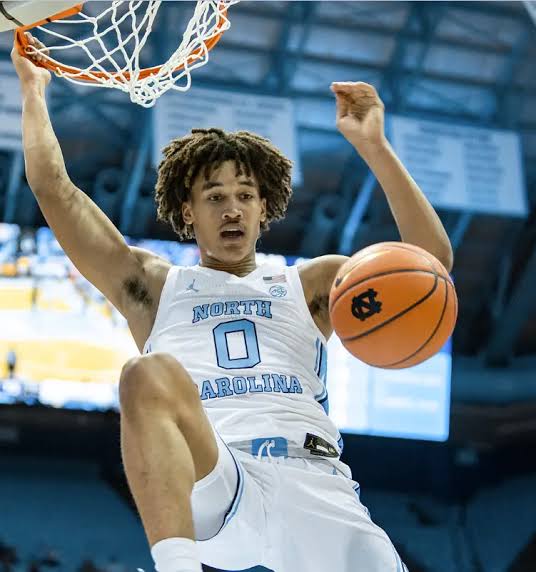
A shocking power shift may be unfolding in Chapel Hill. As Seth Trimble’s UNC future appears to fade, Michael Malone’s bold and ruthless roster overhaul is rapidly reshaping Tar Heels basketball—potentially changing the program forever and sending shockwaves across college basketball.
For decades, the University of North Carolina has stood as one of the most stable and tradition-rich programs in college basketball. From Dean Smith to Roy Williams, the Tar Heels have long represented continuity, culture, and a commitment to player development rooted in identity rather than chaos. But now, something very different appears to be brewing—and if the growing whispers turn into reality, it could mark one of the most dramatic philosophical shifts in the program’s modern history.
At the center of this storm is Seth Trimble, a player once viewed as a key piece of UNC’s evolving backcourt. Known for his defensive intensity, athleticism, and flashes of offensive upside, Trimble represented the type of guard that thrives in the Tar Heels system: tough, unselfish, and built for big moments. Yet, recent developments suggest his future in Chapel Hill may be far from secure.
While there has been no official announcement, speculation surrounding Trimble’s potential departure—whether through the transfer portal or reduced role—has intensified. In today’s college basketball landscape, such movement is no longer shocking. But in this case, it signals something deeper: a possible shift in roster philosophy that could redefine how UNC builds its team moving forward.
And that’s where Michael Malone enters the conversation.
Malone, currently known for his success in the NBA, has built a reputation as a demanding, no-nonsense coach who prioritizes accountability, defensive discipline, and system buy-in above all else. His approach is often described as “ruthless” not in personality, but in standards—players either meet expectations or they don’t play. There is little room for sentimentality.
Now imagine that mindset being injected into a program like North Carolina.
Even the suggestion of Malone’s influence—whether direct or indirect—represents a stark contrast to UNC’s traditional identity. The Tar Heels have historically valued continuity, loyalty, and player growth over time. A Malone-style overhaul would likely prioritize immediate results, roster fluidity, and aggressive talent evaluation.
That kind of shift doesn’t happen quietly.
If Trimble is indeed on the way out, it could be one of the first visible signs of this transformation. Not necessarily because of any failure on his part, but because he may not fit the evolving blueprint. In a system undergoing rapid change, even talented players can find themselves on the outside looking in.
This raises a critical question: what exactly is UNC becoming?
College basketball itself has changed dramatically in recent years. The transfer portal, NIL deals, and increased player mobility have turned roster building into something closer to professional free agency. Programs that adapt quickly can rise fast—but often at the cost of stability.
UNC, historically, has resisted that volatility. But resistance doesn’t always equal success in a rapidly changing environment.
If a more aggressive, results-driven model is being implemented, it could signal that the Tar Heels are ready to embrace a new era—one where tradition takes a backseat to adaptability.
For fans, this is both exciting and unsettling.
On one hand, a bold overhaul could re-energize the program, attract high-level talent, and position UNC as a dominant force in the modern landscape. On the other hand, it risks eroding the very identity that has made the Tar Heels iconic.
Losing a player like Trimble—if it happens—would not just be about roster depth. It would represent a philosophical departure from the idea of developing players over multiple years within a stable system.
And make no mistake: fans notice these things.
Across social media and fan forums, reactions have already begun to split. Some supporters welcome the idea of a more aggressive approach, believing that college basketball’s new era demands bold decisions. Others worry that chasing short-term success could come at the expense of long-term culture.
Both perspectives carry weight.
The potential involvement—or influence—of someone like Malone only amplifies the stakes. His track record speaks for itself, but translating an NBA coaching philosophy to the college level is no simple task. Managing young athletes, navigating recruitment, and maintaining program identity require a different kind of balance.
Still, the appeal is obvious.
A Malone-style system could bring defensive toughness, clear accountability, and a professional-level structure that appeals to elite prospects. In an era where players are increasingly focused on NBA readiness, that could be a powerful recruiting tool.
But it also comes with risks.
College players are not professionals. They require development, patience, and an environment that fosters growth—not just performance. Striking the right balance between discipline and development would be critical.
As for Trimble, his situation remains one of the most intriguing subplots in this unfolding story.
If he stays, it could signal that the program still values continuity and believes in his role moving forward. If he leaves, it may confirm that a deeper transformation is underway.
Either way, his name has become symbolic of something larger than just one player’s future.
It represents a crossroads.
UNC basketball is standing at a moment where it must decide what it wants to be in the next decade. Will it hold onto its traditional identity, or will it evolve into something more aggressive, more fluid, and perhaps more unpredictable?
There may not be a clear right or wrong answer.
But there will be consequences.
Because in college basketball, identity matters. It shapes recruiting, fan support, and ultimately, success.
If the Tar Heels are indeed entering a new era—one defined by bold decisions and rapid change—it won’t just impact one season. It could redefine the program for years to come.
And that’s what makes this moment so compelling.
Right now, much of this remains speculation. There are no official confirmations, no finalized moves, no definitive statements.
But sometimes, the most important shifts begin quietly.
A rumor here. A player decision there. A philosophical adjustment behind the scenes.
Then suddenly, everything changes.
Whether this “bombshell” becomes reality or fades as offseason noise, one thing is clear:
People are paying attention.
Because when a program like North Carolina even hints at transformation, the entire college basketball world listens.
And if the pieces fall into place the way some believe they might, this won’t just be a roster update.