


The North Carolina Tar Heels men’s basketball are facing an unexpected challenge in their offseason rebuild after losing a key transfer portal addition. Forward Maxim Logue, who had previously committed to join the program, will no longer be heading to Chapel Hill. The development leaves a noticeable gap in the Tar Heels’ frontcourt rotation and forces the coaching staff to reassess their depth heading into the upcoming season.
Logue’s commitment, announced on April 21, initially appeared to be a solid addition to North Carolina’s roster. After spending last season with Florida Atlantic, he brought experience, efficiency, and size—qualities that are always valuable in the physically demanding ACC. His decision to step away from the program, however, shifts the narrative and places greater emphasis on the players who remain.
Head coach Michael Malone still has a structured roster to work with despite the setback. The Tar Heels currently feature four transfer portal additions, three incoming high school recruits, and three returning players. While those numbers suggest stability on paper, the loss of a frontcourt piece like Logue impacts rotation flexibility, especially against bigger and more physical opponents.
Even so, North Carolina is far from short on talent. One of the biggest reasons for optimism lies in the presence of international standout Sayon Keita. Widely regarded as one of the most intriguing young big men entering college basketball, Keita brings size, athleticism, and a high ceiling. His ability to protect the rim and contribute offensively could quickly make him a cornerstone of UNC’s frontcourt.
Alongside him is Jarin Stevenson, who returns after a promising season in which he showcased versatility and consistency. Stevenson proved capable of contributing both as a starter and as a sixth man, giving the coaching staff valuable flexibility. His familiarity with the system and ability to stretch the floor could help offset the loss of Logue’s interior presence.
Another name to watch is transfer addition Cade Bennerman, who arrives from Northwestern. Bennerman is expected to add depth and competitiveness to the frontcourt rotation. While he may not replicate Logue’s exact role, his skill set offers a different dimension that could complement Keita and Stevenson effectively.
Before his departure, Logue showed flashes of efficiency and productivity in limited minutes. Standing at 6-foot-9, he averaged 4.8 points and 3.1 rebounds per game while shooting an impressive 67.4% from the field. His ability to convert high-percentage shots made him a reliable option off the bench. Over the course of 28 games, he averaged just over 11 minutes, indicating there was still room for growth and expanded responsibility.
Some of his standout performances highlighted his potential impact. Against Charlotte, Logue delivered a strong all-around effort with 16 points, 10 rebounds, and three steals—showing he could contribute on both ends of the floor. He followed that up with a 15-point, eight-rebound performance against Saint Mary’s, reinforcing his ability to step up when given extended minutes.
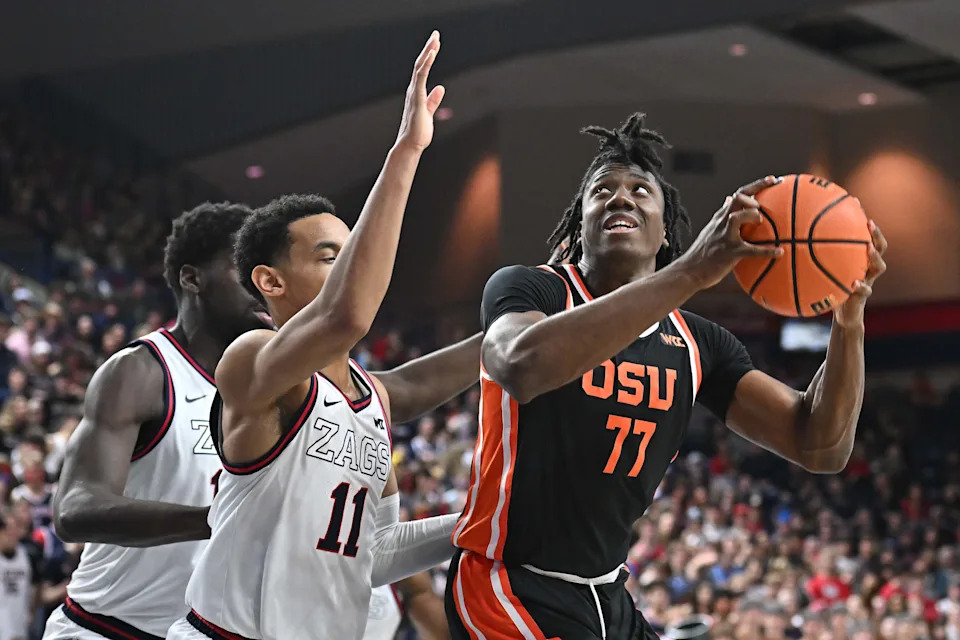
Prior to his time at Florida Atlantic, Logue also spent the 2024–25 season at Oregon State, where he saw limited action but gained valuable experience. Though his role there was smaller, averaging 6.6 minutes across 21 games, it contributed to his development and readiness to compete at a higher level.
For North Carolina, the focus now shifts from what was lost to what remains—and what can still be built. Roster changes are a natural part of modern college basketball, especially in the era of the transfer portal. Programs that succeed are often those that adapt quickly and maximize the talent available to them.
Coach Malone and his staff will likely explore internal adjustments, potentially giving younger players more opportunities to step into meaningful roles. There is also the possibility of pursuing additional late transfer options, depending on availability and fit.
Despite the uncertainty, the Tar Heels remain in a strong position. With a mix of returning experience, promising युवा talent, and strategic additions, the team still has the tools to compete at a high level. The key will be how quickly the group can develop chemistry and redefine its identity without Logue in the rotation.
In the end, while the loss of a player like Maxim Logue is not insignificant, it also opens the door for others to rise. For North Carolina, this moment represents both a challenge and an opportunity—one that could ultimately shape the trajectory of their season in unexpected ways.




