


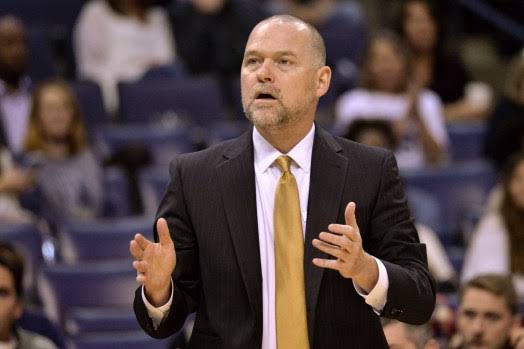
There’s a quiet tension building in Chapel Hill — the kind that doesn’t explode overnight but lingers, grows, and eventually demands answers.
On the surface, things look… stable.
The roster is taking shape. The starting five appears to be in place. The frantic days of transfer portal chaos have slowed, and there’s a sense that **Michael Malone has executed a plan — not perfectly, but with intention.
But if you look closer?
This isn’t a roster that screams certainty.
It whispers possibility… and uncertainty in equal measure.
A Portal Haul That Raises Eyebrows — For Better and Worse
Let’s start with the basics.
North Carolina brought in four key transfer additions:
Terrence Brown
Matt Able
Neoklis Avdalas
Cade Bennerman
At one point, the class included another name — Maxim Logue — but his late exit reshaped the narrative slightly and left a small but noticeable gap in the frontcourt.
Still, when you evaluate the class as a whole, the immediate reaction isn’t negative.
It’s… complicated.
Because while each player brings something valuable to the table, none arrive as a surefire, program-altering star.
And at a place like North Carolina, that matters.
The Grade: Why a B- Feels Both Fair… and Frustrating
Depending on where you look, UNC’s transfer class has received mixed reviews.
Some outlets rank it among the top five in the country. Others place it closer to the middle of the pack.
So why does a B- grade feel like the most honest evaluation?
Because this class sits right in that uncomfortable middle ground:
Too talented to criticize harshly
Too flawed to fully trust
It’s a group filled with upside — but also filled with “ifs.”
And in college basketball, “ifs” can define a season.
Malone’s Vision: Length, Versatility, and Playmaking
If there’s one thing that stands out about Malone’s approach, it’s this:
He knows exactly what he wants.
This isn’t a random collection of players. It’s a carefully constructed roster built around specific principles:
Length across every position
Multiple ball-handlers
Versatility in offensive creation
In theory, it’s a modern blueprint.
Imagine a lineup where nearly every player can:
Handle the ball
Initiate offense
Attack off the dribble
That’s difficult to defend.
That’s unpredictable.
That’s dangerous.
And at the center of that vision?
One very intriguing piece.
The X-Factor: Neoklis Avdalas
At 6-foot-9, Neoklis Avdalas isn’t just another wing.
He’s a point forward — the kind of player who can blur positional lines and unlock an entirely different style of offense.
In flashes, he looks special.
His ability to:
Create off the bounce
See the floor
Initiate plays
…makes him the kind of player who can elevate everyone around him.
But here’s the catch.
The numbers don’t fully support the hype — at least not yet.
46% effective field goal percentage
Roughly 30% from three
High turnover tendencies
Those aren’t deal-breakers.
But they are warning signs.
Because for Avdalas to truly unlock Malone’s system, he doesn’t just need to be good.
He needs to be efficient.
The Spacing Problem Nobody Can Ignore
This is where things get tricky.
For all the talk about versatility and playmaking, there’s a glaring issue lurking beneath the surface:
Spacing.
Modern basketball demands it.
You need shooters. You need floor spacing. You need defenders to respect the perimeter.
And right now?
UNC’s lineup raises real questions.
Avdalas: Inconsistent shooter
Brown: Low three-point volume
Frontcourt: Limited proven spacing
That’s not a recipe for offensive fluidity.
It’s a potential bottleneck.
Terrence Brown: Production vs Efficiency
If there’s one player who could tilt the balance, it’s Terrence Brown.
On paper, his numbers jump off the page:
Nearly 20 points per game
Aggressive downhill scoring
Ability to pressure defenses
That’s exactly what UNC needed.
But again…
There’s a “but.”
His efficiency metrics raise concern:
48.6% effective field goal percentage (below average)
Very low three-point attempt rate
In simple terms?
He scores — but not always efficiently.
And against elite competition, that distinction becomes critical.
Matt Able: The Glue Piece That Might Matter Most
While others bring flash, Matt Able brings balance.
He’s not the headline name.
He’s not the high-usage scorer.
But he might be the most important piece in making this lineup work.
Why?
Because he fits.
Defensive versatility
Floor spacing potential
Size in the backcourt
He’s the type of player who doesn’t need the ball to impact the game.
And on a team with multiple creators?
That’s invaluable.
The Frontcourt Concern: Size Without Strength
Then there’s the frontcourt.
On paper, it looks intriguing.
Length. Size. Mobility.
But physically?
It’s a concern.
Take Cade Bennerman — a 7-footer listed at just 205 pounds.
Or Sayon Keita, another long but relatively light big.
This creates a potential issue:
Can UNC handle physical SEC/ACC-style interior play?
Because length is great.
But strength wins battles in the paint.
And right now, UNC might be lacking that edge.
The European Shift: A Strategic Pivot
One of the most interesting developments is Malone’s apparent shift toward international recruiting.
With his attention now overseas, it signals something important:
He’s not done building.
But he’s building differently.
Instead of chasing the final pieces in the transfer portal, he’s looking for:
Untapped potential
Unique skill sets
Long-term development pieces
It’s a bold approach.
And one that could either:
Pay off brilliantly
Or leave gaps in the short term
A Team Built on “Ifs”
At the end of the day, this roster can be summarized in one word:
Conditional.
If Avdalas improves his shooting
If Brown becomes more efficient
If the frontcourt holds up physically
If the spacing issues get resolved
If. If. If.
That’s a lot to ask.
But it’s not impossible.
The Ceiling vs The Floor
This is what makes UNC one of the most fascinating teams heading into the season.
Ceiling:
Dynamic offense
Versatile lineups
Difficult to defend
Top-tier ACC contender
Floor:
Poor spacing
Inefficient scoring
Turnover issues
Inconsistent results
That gap?
It’s massive.
And it will define everything.
Final Verdict: A Calculated Gamble
So where does that leave us?
Michael Malone didn’t play it safe.
He didn’t chase the obvious stars.
He didn’t build a conventional roster.
Instead, he made a bet.
A bet on:
Versatility over specialization
Development over proven dominance
Fit over flash
And now?
That bet will be tested.
Because in college basketball, you don’t get graded in May.
You get graded in March.
Closing Thought: The Calm Before the Storm
Right now, things feel quiet.
The roster looks set.
The moves are mostly done.
But don’t mistake quiet for certainty.
Because beneath the surface, this UNC team is one of the biggest question marks — and potentially one of the biggest surprises — in the country.
And when the season begins?
We’ll finally find out whether this “B-” haul was:
A missed opportunity…
Or the foundation of something far more dangerous than anyone expected.




