


Something feels like it’s quietly building beneath the surface in Lexington — not loud enough to dominate headlines just yet, but impossible to ignore if you’ve been paying attention. What started as mild concern has slowly turned into frustration… and now, for some, it’s edging toward something much bigger. Because at Kentucky, expectations don’t wait — and when momentum stalls, the conversation can shift faster than anyone expects.
It’s getting tense around Kentucky basketball. Not chaotic. Not completely off the rails. But tense enough that the tone surrounding the program has noticeably changed
A year ago, there was patience. There was belief. There was a sense that Mark Pope was building something sustainable — something that just needed time to fully take shape. Now? That patience is wearing thin in certain corners of the fan base, and the reason isn’t complicated.
It’s the roster.
In modern college basketball, roster construction is everything. You can talk about culture, coaching philosophy, and long-term vision all you want, but if the talent doesn’t stack up — especially at a place like Kentucky — the noise will come quickly.
And right now, that noise is getting louder.
The Root of the Frustration
Let’s be clear: Mark Pope hasn’t failed.
A Sweet 16 appearance and a Round of 32 finish in his first two seasons is respectable by almost any standard. At most programs, that would buy you time, goodwill, and room to keep building.
But this isn’t most programs.
This is Kentucky — where banners define success, where every offseason is expected to produce impact players, and where the transfer portal has become a critical battleground. And that’s where the frustration is centered.
Kentucky’s recent transfer-portal activity hasn’t generated much excitement. There haven’t been many headline-grabbing additions. More concerning for fans, there have been departures — players the program would have preferred to keep.
That combination creates a dangerous narrative: losing talent while failing to replace it with clear upgrades.
Fair or not, perception matters. And right now, the perception is that Kentucky isn’t winning the offseason.
Why This Matters More Than Ever
In today’s landscape, offseason momentum often dictates in-season expectations.
Programs that dominate the portal generate buzz, attract attention, and enter the season with built-in confidence. Programs that don’t? They face questions before the first game is even played.
For Kentucky, that’s a problem.
With one of the strongest brands in college basketball and significant NIL backing, the expectation isn’t just to compete — it’s to dominate. Fans aren’t just looking for solid contributors; they’re expecting difference-makers, players who can shift the balance of power.
So when those names don’t arrive, the reaction is predictable.
And that’s where the conversation starts to shift from roster concerns to something bigger: leadership.
The Reality of Year 3 Pressure
Year 3 is often the defining point for a head coach.
Year 1 is about adjustment.
Year 2 is about progress.
Year 3 is about proof.
For Mark Pope, that moment is approaching quickly.
If Kentucky enters the season without clear momentum — or worse, struggles early — the pressure could escalate rapidly. And at a place with Kentucky’s history, once that pressure reaches a certain level, difficult conversations follow.
That doesn’t mean a change is imminent. But it does mean the possibility can’t be ignored.
And if that possibility becomes reality, Kentucky won’t just look for a replacement — they’ll look for a solution.
Candidate #1: Mo Williams — The Wild Card With Real Appeal
If Kentucky wanted to make an unexpected move while maintaining continuity, Mo Williams could emerge as a fascinating option.
At first glance, it might feel like a leap. Promoting an assistant — especially one still establishing himself as a head coach — carries risk. But this isn’t a random name.
Williams brings credibility that immediately resonates with players. An NBA champion with deep SEC roots, he understands both the player perspective and the expectations that come with high-level basketball.
His previous head coaching experience at Jackson State may not have produced eye-popping results overall, but context matters. Within his conference, there were signs of structure, competitiveness, and growth.
More importantly, Williams offers something Kentucky could use right now: energy.
He connects with players. He understands modern recruiting dynamics. And in an era where relationships often determine roster success, that matters more than ever.
Would he be the safe choice? No.
But would he be a strategic one if Kentucky wanted to reset the tone without completely tearing things down? Absolutely.
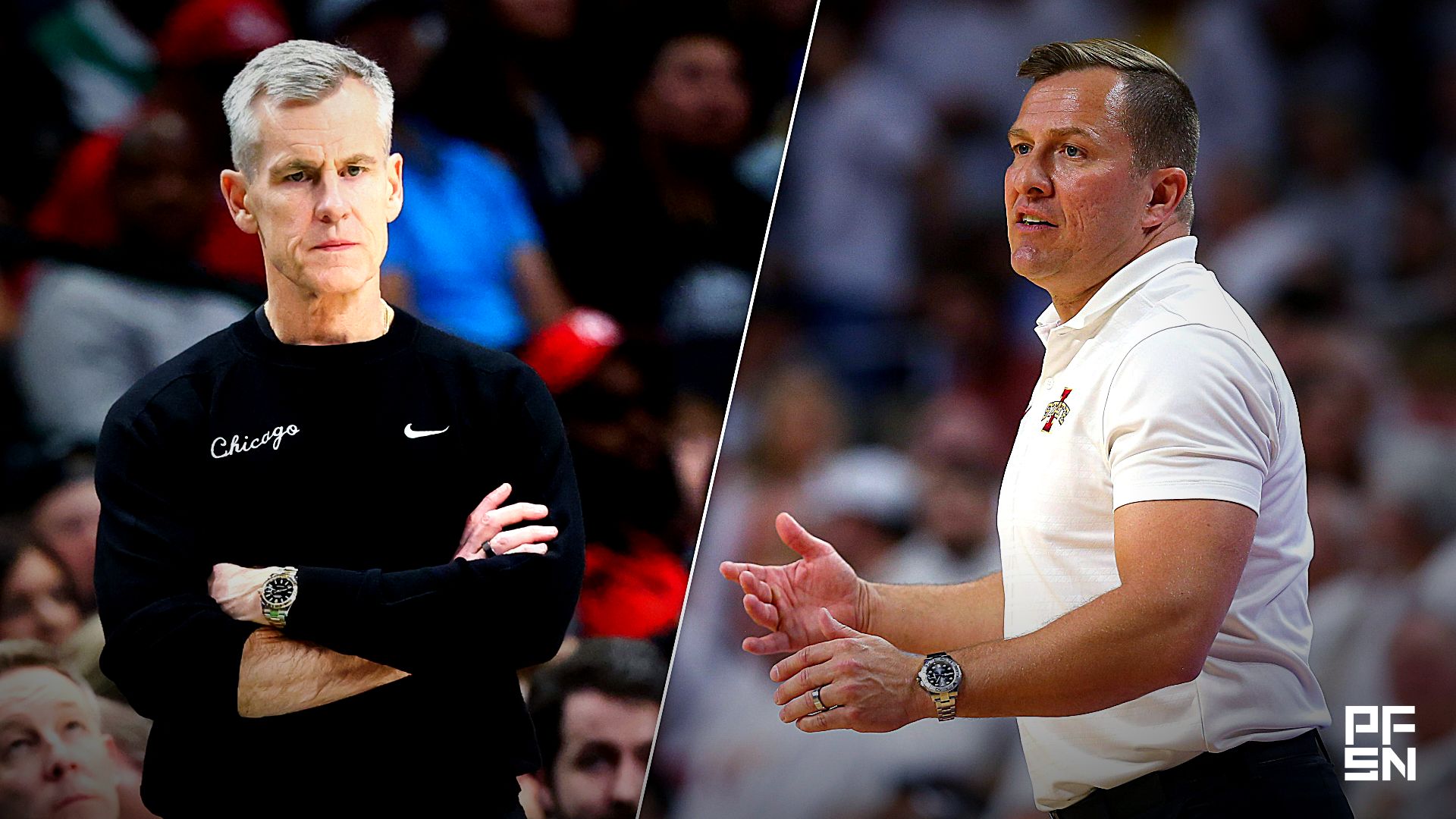
Candidate #2: T.J. Otzelberger — The Builder
If Kentucky decides to prioritize structure and sustainability, T.J. Otzelberger becomes one of the most intriguing names on the board.
At Iowa State, he’s built something that’s both consistent and difficult to replicate: a program defined by toughness, discipline, and defensive intensity.
His teams don’t beat themselves. They compete on every possession. They impose identity.
And perhaps most importantly, they win in a way that translates.
Otzelberger has also shown a clear understanding of the modern college basketball landscape. He’s navigated the transfer portal effectively, managed roster turnover, and maintained competitiveness despite constant change.
That’s not easy.
For Kentucky, the appeal is obvious. Give a coach like that elite resources, top-tier facilities, and stronger recruiting pipelines, and the ceiling becomes incredibly high.
But there’s a catch.
Otzelberger is comfortable. He’s winning. And he’s locked into a long-term deal.
Convincing him to leave would require more than opportunity — it would require a compelling vision.
Candidate #3: Billy Donovan — The Statement Move
If Kentucky wants to send a message — not just to fans, but to the entire college basketball world — Billy Donovan is the name that does it.
Few coaches bring his combination of pedigree and credibility.
Two national championships at Florida.
Extensive NBA experience.
A reputation that commands respect at every level of the game.
Donovan wouldn’t just be a hire. He’d be a statement.
He represents instant legitimacy, immediate expectations, and a clear signal that Kentucky is serious about returning to the top.
But with that comes complexity.
Would Donovan leave the NBA for a return to college basketball? Would the timing align? Would he be interested in stepping back into the demands of recruiting, NIL negotiations, and constant roster turnover?
Those questions don’t have easy answers.
But if Kentucky is willing to think big, this is what thinking big looks like.
Candidate #4: Bruce Pearl — The Culture Shifter
Bruce Pearl might be the most polarizing — and fascinating — option on this list.
He’s bold. He’s energetic. And he embodies the kind of personality that thrives in high-pressure environments.
At Auburn, he built a program that wasn’t just competitive — it was relevant. He turned them into a consistent threat, capable of competing with anyone.
And he did it with style.
Pearl’s teams play fast, aggressive, and with emotion. They reflect his personality, and that identity is something Kentucky has arguably been searching for.
He’s also proven he can navigate the modern era of college basketball. Recruiting, transfer portal strategy, roster management — he’s done it all successfully.
The biggest question is longevity.
At 66, Pearl wouldn’t be a long-term solution. But that might not be the goal.
If Kentucky wants to stabilize the program, reestablish its identity, and buy time to find the next long-term leader, Pearl could be the perfect bridge.
Of course, there’s also the question of whether he’d even be interested in returning to coaching after stepping away.
But if he is?
That’s a conversation worth having.
The Bigger Picture
All of this — the speculation, the candidate lists, the growing frustration — points to one simple truth:
Kentucky basketball is at a crossroads.
Not a breaking point. Not a crisis. But a moment where direction matters more than ever.
Mark Pope still has time to change the narrative. A strong finish to the offseason, unexpected roster additions, or early-season success could quiet the noise quickly.
But if that doesn’t happen?
The conversation will only grow louder.
And when that happens, Kentucky won’t just be looking for answers — they’ll be looking for impact.
Because at a program of this magnitude, standing still isn’t an option.
Something will give.
The only question is when… and what comes next.
Original report via Pro Football Network




