


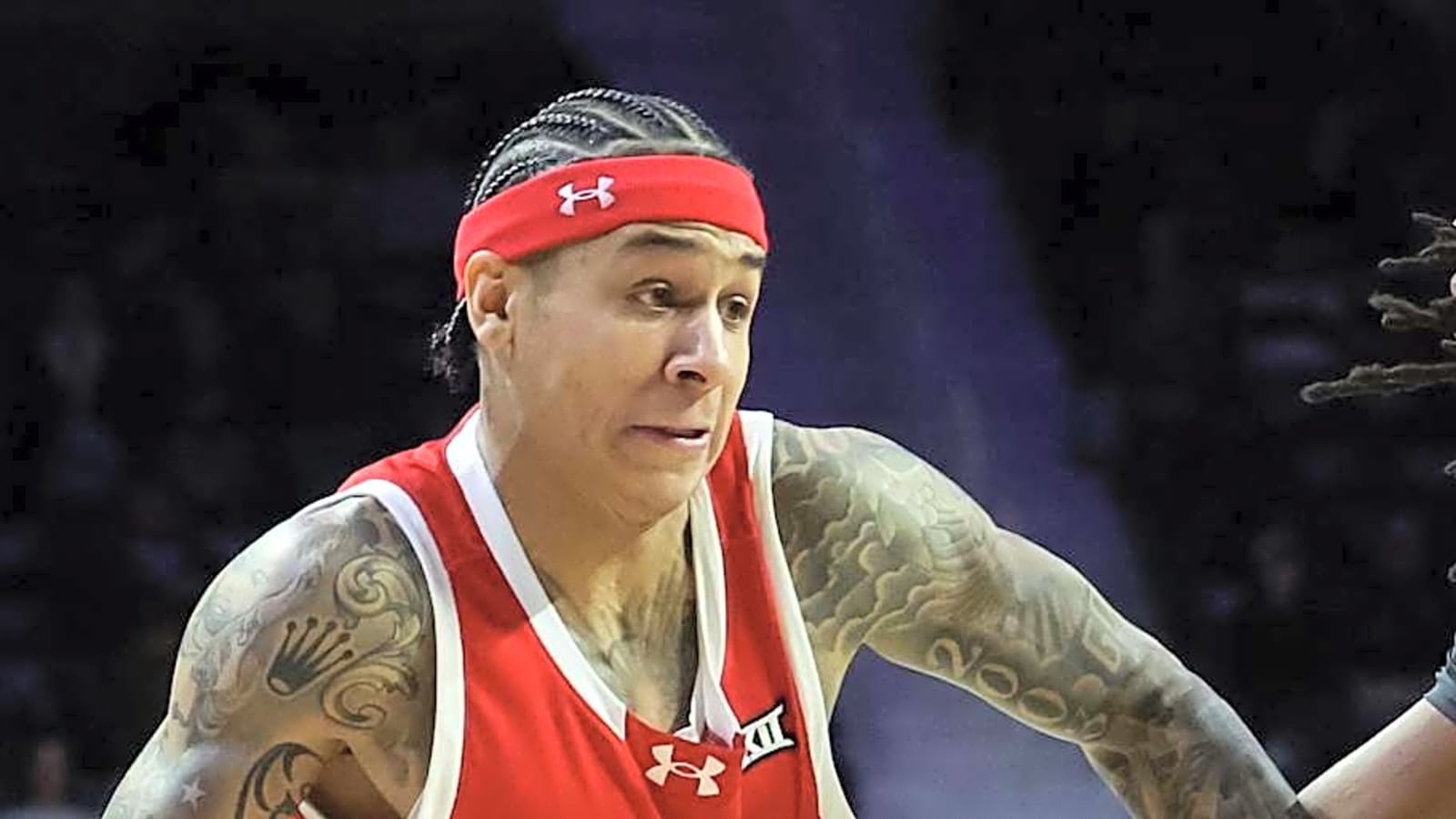
Terrence Brown’s arrival at North Carolina comes with a level of intrigue that goes beyond basic stat-sheet production.
After a highly productive stint at Utah, the 6-foot-3 guard now steps into a completely different environment—one that could elevate his game in ways that weren’t possible before.
With a new head coach reshaping the program and a deeper roster surrounding him, Brown’s ceiling is drawing serious attention.
At Utah, Brown was the focal point of the offense. Nearly every defensive game plan was built around slowing him down, yet he still managed to average close to 20 points per game.
That kind of output under constant pressure says a lot about his scoring instincts and resilience. Now, moving into a system where he won’t be the only offensive threat could unlock a more efficient version of his game.
One of the biggest advantages Brown will have at UNC is the presence of a well-rounded supporting cast. Unlike his previous situation, he won’t be forced to create every shot under heavy defensive attention.
Instead, he’ll operate within a balanced offense that features multiple scoring options. That shift alone could dramatically improve his shot quality.
Neoklis Avdalas is expected to play a key role in facilitating the offense, which should take some of the ball-handling pressure off Brown.
This allows him to work more off the ball—coming off screens, cutting into open space, and attacking defenses that are already stretched. It’s a role that often leads to higher efficiency, especially for guards with strong scoring instincts.
Another factor working in Brown’s favor is spacing. With more capable shooters and offensive threats on the floor, defenses won’t be able to collapse on him as easily. This creates driving lanes and cleaner looks from mid-range and beyond the arc. Even a small improvement in his three-point shooting could make him significantly more dangerous.
While his scoring average might dip slightly, that shouldn’t be viewed negatively. In fact, a slight reduction in volume paired with better efficiency is often a sign of growth. Brown won’t need to force shots late in possessions or carry the offensive burden every night. Instead, he can pick his spots more strategically.
The transition from the Big 12 to the ACC also presents an interesting dynamic. The Big 12 is widely regarded as one of the toughest, most physical conferences in college basketball.
Competing in that environment has already tested Brown against elite defenders and high-level competition. That experience should translate well.
Although the ACC features powerhouse programs at the top, there is less overall depth compared to the Big 12.
This could work to Brown’s advantage, giving him more opportunities to exploit mismatches and take control of games when needed. His experience against tougher defensive schemes may make certain matchups feel more manageable.
Coaching will also play a critical role in shaping Brown’s impact. Michael Malone’s system is expected to emphasize structure, spacing, and smart shot selection. That kind of framework can help refine Brown’s decision-making and maximize his strengths while minimizing inefficiencies.
Rather than relying on isolation-heavy possessions, Malone’s offense will likely incorporate more movement and designed actions. This means Brown will get opportunities in rhythm—catch-and-shoot situations, cuts to the basket, and transition play. These are all areas where efficiency tends to increase.
Brown’s versatility is another reason his ceiling is so high. He can handle the ball, create his own shot, and contribute as a secondary playmaker. In a more balanced system, those skills become even more valuable because they can be deployed in different ways depending on the matchup.
Defensively, Brown also has room to grow within a structured system. With less offensive burden, he can expend more energy on that end of the floor. Improved defensive consistency would further elevate his overall impact and make him a more complete player.
The biggest swing factor in Brown’s development will likely be his three-point shooting. At 32.7 percent, he’s already a respectable shooter, but there’s clear room for improvement. If he can push that number closer to the high-30s, it would force defenses to guard him much tighter, opening up the rest of his offensive game.
Even if that leap doesn’t fully materialize, the system around him should still generate better looks. Cleaner shots, less defensive pressure, and smarter offensive sets all point toward improved efficiency. That’s often the difference between a good scorer and a truly elite one.
Ultimately, Terrence Brown’s move to UNC places him in an ideal situation for growth. He’s no longer carrying an entire offense on his shoulders, but he still has the talent and experience to be a major contributor. With the right balance of freedom and structure, his game could reach a new level.
If everything clicks—improved shooting, better spacing, and effective coaching—Brown has the potential to become one of the most impactful guards in the conference. His ceiling isn’t just high; it’s the kind that could redefine expectations for what he brings to the court next season.




