In the ever-evolving world of college basketball, where rosters can flip overnight and a single commitment can reshape a season, North Carolina finds itself at the center of another high-stakes pursuit. This time, it’s not just about adding depth—it’s about landing a potential defensive anchor who could define the identity of a new era in Chapel Hill.
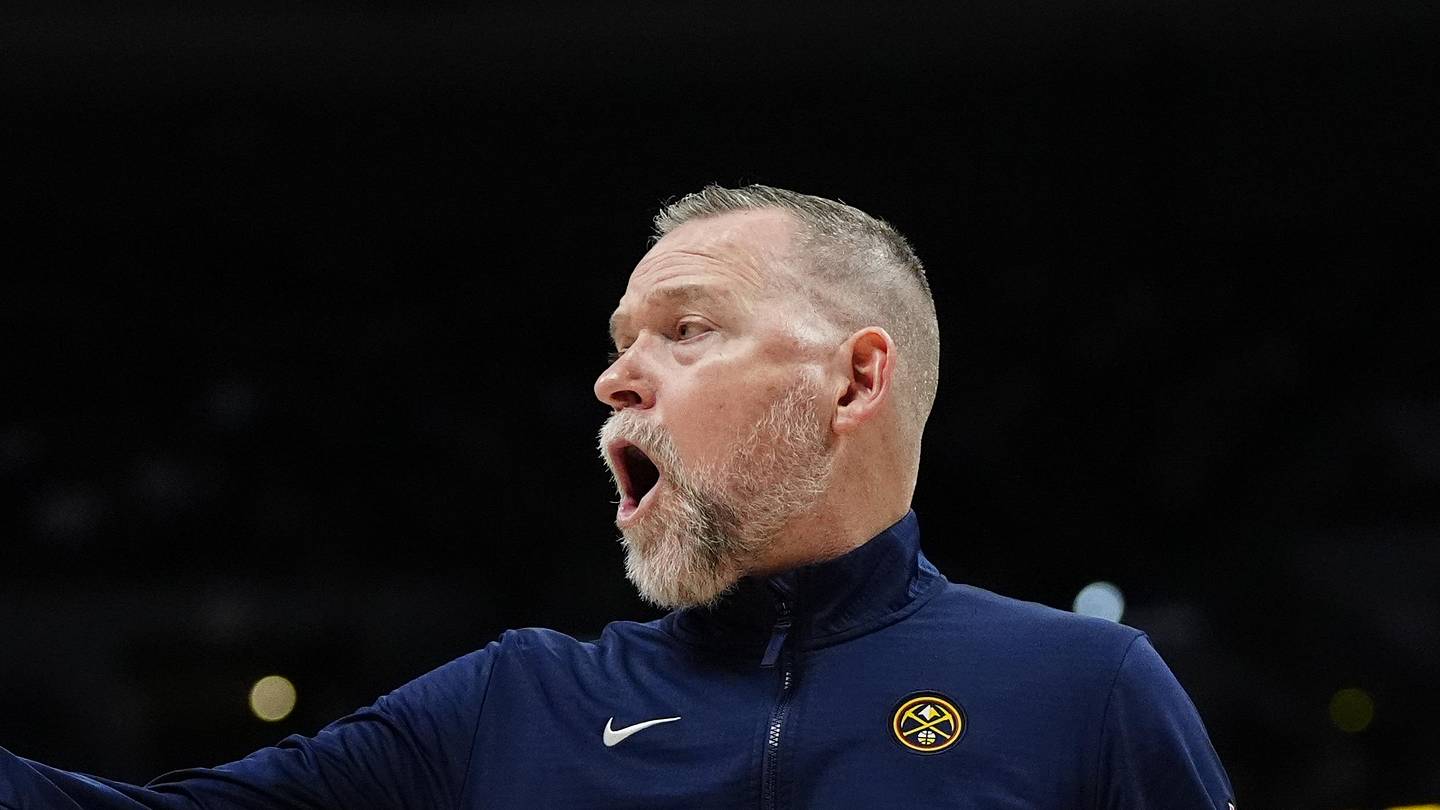
At the heart of it all is Devin Williams, a 6-foot-10 forward out of Florida Atlantic Owls, whose name has quickly become one of the most talked-about in the 2026 transfer portal. And leading the charge to bring him in is none other than Mike Malone, the former NBA championship-winning coach now tasked with rebuilding the proud tradition of North Carolina Tar Heels.
But this is no simple recruitment. It’s a battle. A high-intensity, high-stakes race against some of the most competitive programs in the country—programs that know exactly what a player like Williams can bring.
A Defensive Force Few Can Ignore
In today’s game, where offense often steals the spotlight, truly elite defenders are rare—and incredibly valuable. Devin Williams fits that mold perfectly.
Standing at 6-foot-10 with length, timing, and instincts that can’t be taught, Williams has built his reputation as one of the premier rim protectors in college basketball. His 11.1% block rate places him among the nation’s best, and finishing in the top three in blocks last season only reinforces his defensive dominance.
But numbers only tell part of the story.
Williams changes games. He alters shots, deters drives, and forces opponents to rethink their entire offensive approach. Guards hesitate when attacking the paint. Big men struggle to find space. Entire schemes get disrupted simply by his presence.
For a rebuilding team like North Carolina, that kind of impact isn’t just helpful—it’s transformative.
Mike Malone’s Vision for UNC
When Mike Malone arrived in Chapel Hill, he didn’t inherit a finished product. He walked into a program in transition, with questions surrounding roster depth, identity, and direction.
But Malone didn’t hesitate.
Drawing from his experience with the Denver Nuggets—where he led the franchise to an NBA championship—he brought with him a clear philosophy: build a team that can defend, adapt, and compete at the highest level.
And that philosophy starts with players like Devin Williams.
Malone understands that while offensive firepower can win games, defense wins consistency. It builds a foundation. It creates a culture. And it gives teams a chance to compete even when shots aren’t falling.
Landing Williams wouldn’t just fill a roster spot—it would signal a shift in how North Carolina plans to compete moving forward.
The Competition: A Crowded Field of Contenders
Of course, North Carolina isn’t the only program that sees Williams’ value.
Several high-profile schools have entered the race, including Arizona Wildcats, Virginia Tech Hokies, and Oklahoma Sooners.
Each brings its own appeal.
Arizona, for instance, has a strong track record of developing big men and is currently looking to fill a major gap with the departure of Koa Peat to the NBA Draft. That opening could offer Williams immediate playing time and a defined role.
Virginia Tech offers a system that emphasizes versatility and spacing—an environment where a player like Williams could expand his offensive game while maintaining his defensive identity.
Oklahoma, meanwhile, presents a competitive Big 12 environment that consistently produces high-level talent and intense matchups.
And then there’s North Carolina—a program with history, prestige, and now, a coach determined to prove something.
The Visit That Could Shift Everything
Reports indicate that Williams is set to visit Arizona, a move that has naturally raised questions about where he might be leaning.
Visits matter.
They provide players with a chance to see the campus, meet the coaching staff, understand the system, and envision their future. A strong visit can change everything. It can turn interest into commitment.
For North Carolina, that means the pressure is on.
Malone and his staff must make a compelling case—not just about playing time or development, but about vision. About how Williams fits into something bigger. About how he can be a cornerstone, not just another piece.
Breaking Down Williams’ Game
While his defense gets most of the attention, Williams is far from one-dimensional.
Last season, he averaged 7.5 points, 5.2 rebounds, 1.3 assists, and 2.6 blocks per game. Those numbers reflect a player who contributes across the board, even if he’s not the primary scoring option.
Offensively, there’s room to grow—but that’s part of the appeal.
As a sophomore, Williams still has significant upside. His footwork, touch around the rim, and ability to read defenses can all improve with the right coaching. And in a system that emphasizes development, those improvements could come quickly.
For teams like North Carolina, that combination of current impact and future potential is exactly what you look for.
Building the Roster: What UNC Has So Far
Since taking over, Malone has been aggressive in reshaping the roster.
He’s already secured commitments from several key transfers, including guards Terence Brown, Matt Able, and Neoklis Avdalas, as well as forward Cade Bennerman.
Each addition serves a purpose.
Brown brings scoring. Able adds versatility. Avdalas provides size and shooting on the wing. Bennerman offers frontcourt depth.
But even with those pieces in place, there’s still a missing element—a defensive anchor.
That’s where Williams comes in.
The Potential Frontcourt Dynamic
If Williams commits to North Carolina, it would create an intriguing frontcourt situation.
He would likely compete with Cade Bennerman for minutes, though their skill sets could also complement each other. Bennerman, a seven-footer, provides size and presence, while Williams brings elite defensive instincts and mobility.
Malone could experiment with different lineups—playing Bennerman at center and Williams at power forward, creating a formidable defensive duo.
That kind of flexibility is invaluable.
It allows for adjustments based on matchups, game flow, and opponent tendencies. And in a conference as competitive as the ACC, adaptability can make all the difference.
The Stakes: More Than Just One Player
While this recruitment centers on Devin Williams, its implications go far beyond a single player.
For Mike Malone, it’s about momentum.
Landing a high-profile transfer would validate his approach, reinforce his vision, and send a message to future recruits that North Carolina is a destination worth considering.
For the program, it’s about identity.
Are the Tar Heels rebuilding… or reloading?
Are they a team in transition… or a team on the rise?
The answer may depend, in part, on how this recruitment unfolds.
The Uncertainty Factor
Of course, nothing is guaranteed.
Williams has options. Strong ones.
And with each passing day, the pressure builds—not just for him to make a decision, but for programs to position themselves as the best fit.
North Carolina’s pitch is compelling, but it comes with uncertainties. A new coach. A new system. A roster still taking shape.
For some players, that’s a risk.
For others, it’s an opportunity.
Final Thoughts: A Defining Moment
As the 2026 transfer portal continues to unfold, few storylines carry as much intrigue as this one.
A proven coach looking to rebuild.
A rising defensive star weighing his options.
A group of elite programs battling for a game-changing addition.
It’s the kind of scenario that defines offseasons—and shapes seasons to come.
For North Carolina, the pursuit of Devin Williams isn’t just about filling a need.
It’s about making a statement.
And whether that statement ends in celebration or frustration remains to be seen.
But one thing is certain:
All eyes are watching.