


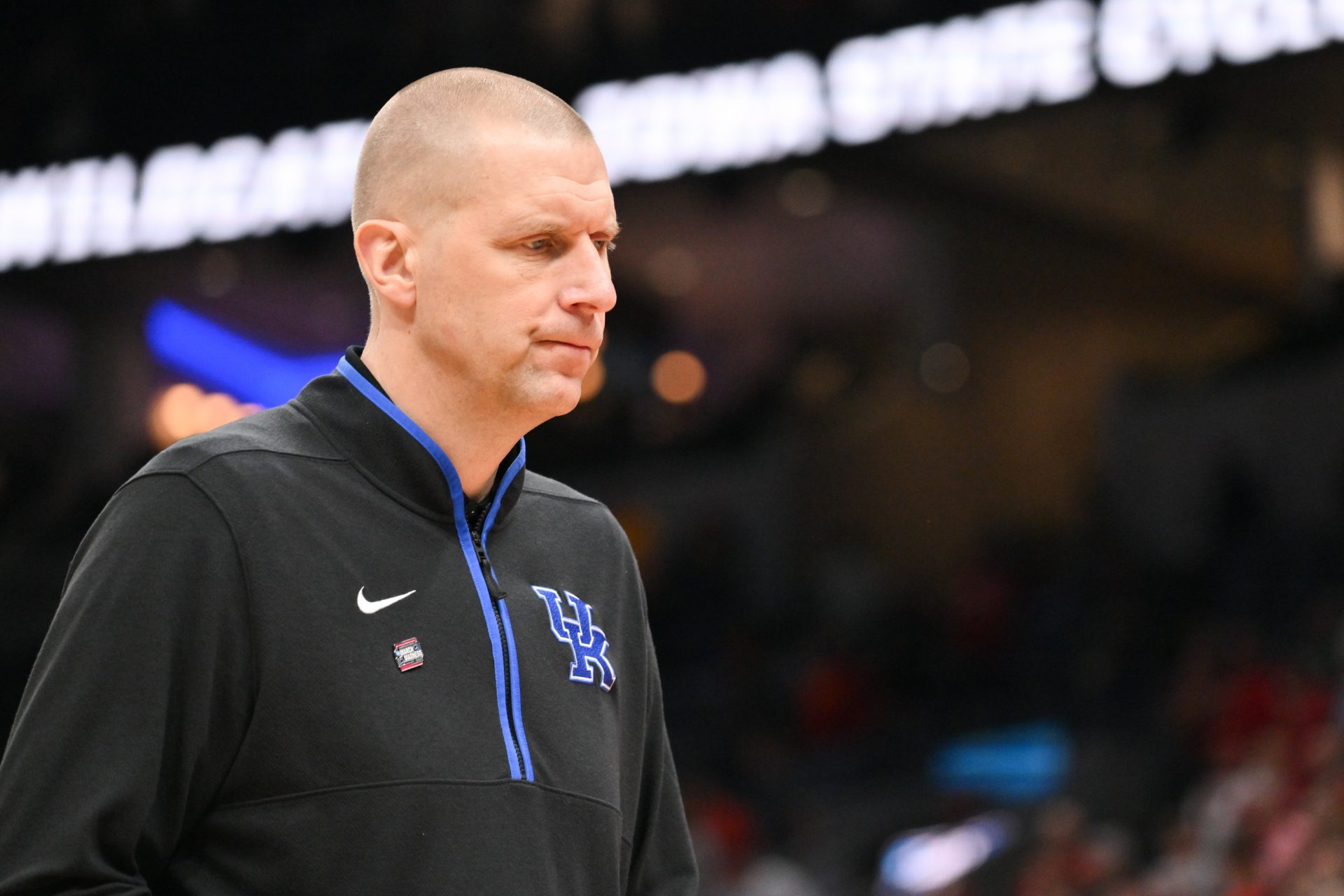
The pressure surrounding Mark Pope and the Kentucky Wildcats continues to grow as fans desperately wait for the program’s long-awaited return to national championship glory. Kentucky last captured an NCAA title in 2012, and despite several talented rosters since then, the Wildcats have repeatedly fallen short on the sport’s biggest stage.
The once-dominant powerhouse reached the national championship game in 2014 and made a Final Four appearance in 2015, but deep tournament success has become increasingly rare. In recent years, the frustration has intensified with shocking NCAA Tournament exits, including losses to Saint Peter’s in 2022 and Oakland in 2024 — defeats that sent shockwaves through the college basketball world.
Many fans hoped a coaching change from John Calipari to Mark Pope would immediately restore Kentucky to elite status. However, the challenges facing modern college basketball programs are far more complicated than simply changing the voice on the sidelines.
During a recent appearance on the “Run It Back” segment, Kentucky legend Dan Issel delivered a brutally honest assessment of why the Wildcats have struggled to reclaim their throne in the NIL era.
“Well, a couple of reasons, Lou. I think number one with NIL, you know, we can’t cheat like we used to,” Issel joked bluntly. “I was hoping Boogie was on the show because we need more, we need him to kick in more NIL money and help us out a little bit.”
While Issel’s comments were partly humorous, they also reflected a major shift in the landscape of college athletics. NIL — short for Name, Image, and Likeness — has transformed recruiting and roster-building across the nation. Traditional blue-blood programs can no longer rely solely on history, banners, and prestige to attract elite talent. Financial opportunities, roster flexibility, and transfer portal movement now play a massive role in where players decide to compete.
Issel explained that parity in college basketball has dramatically increased because of those changes.
“But I think the landscape of college basketball with the transfer portal and with NIL has really, really changed,” Issel continued. “And it has brought a lot of equality to college basketball. And when you used to count on Kentucky and North Carolina and Duke and Kansas being at the very top, I don’t think that’s going to happen anymore.”
That statement perfectly captures the modern challenge facing programs like Kentucky. In previous eras, elite recruits almost automatically gravitated toward the sport’s most historic brands. Now, schools with aggressive NIL collectives and transfer portal success can compete with anyone in the country.
For Mark Pope, the adjustment period has been anything but easy.
The Wildcats have aggressively pursued top-tier talent this offseason, but several major recruiting battles have not gone their way. One of the most disappointing developments came when Kentucky failed to land Brazilian center prospect Marcio Santos.
Pope and his staff reportedly traveled to Israel to meet with the talented big man, who played this past season for Maccabi Tel Aviv. Santos averaged 6.9 points per game in limited minutes and was viewed as a potential frontcourt solution for Kentucky’s roster needs.
Despite the strong push from Pope, Santos ultimately chose to commit to the LSU Tigers and head coach Will Wade instead.
That loss only added to concerns surrounding Kentucky’s offseason momentum. The Wildcats have already missed on multiple transfer portal targets, leaving Pope searching for answers as roster construction continues.
Complicating matters further is the growing influence of the NBA Draft process. Many college programs, including Kentucky, are now forced to wait until the NBA withdrawal deadline before fully understanding which players may still be available. Several prospects testing professional waters could ultimately return to school if they do not receive favorable draft projections.
For Kentucky, patience may now become the most important strategy available.
Even with the setbacks, Pope remains determined to rebuild the Wildcats into a championship contender. His energy, connection with the fan base, and offensive vision have generated optimism, but the realities of modern recruiting continue to present enormous obstacles.
The NIL era has undeniably reshaped college basketball. Smaller programs now possess opportunities to compete for elite players, experienced transfers can instantly transform rosters, and traditional powers no longer enjoy automatic advantages.
Kentucky fans may not want to hear it, but Dan Issel’s comments highlighted an uncomfortable truth: success in today’s college basketball world requires far more than tradition alone.
For Mark Pope and the Wildcats, the challenge now is finding a way to adapt quickly enough to return one of college basketball’s most iconic programs back to championship relevance.




