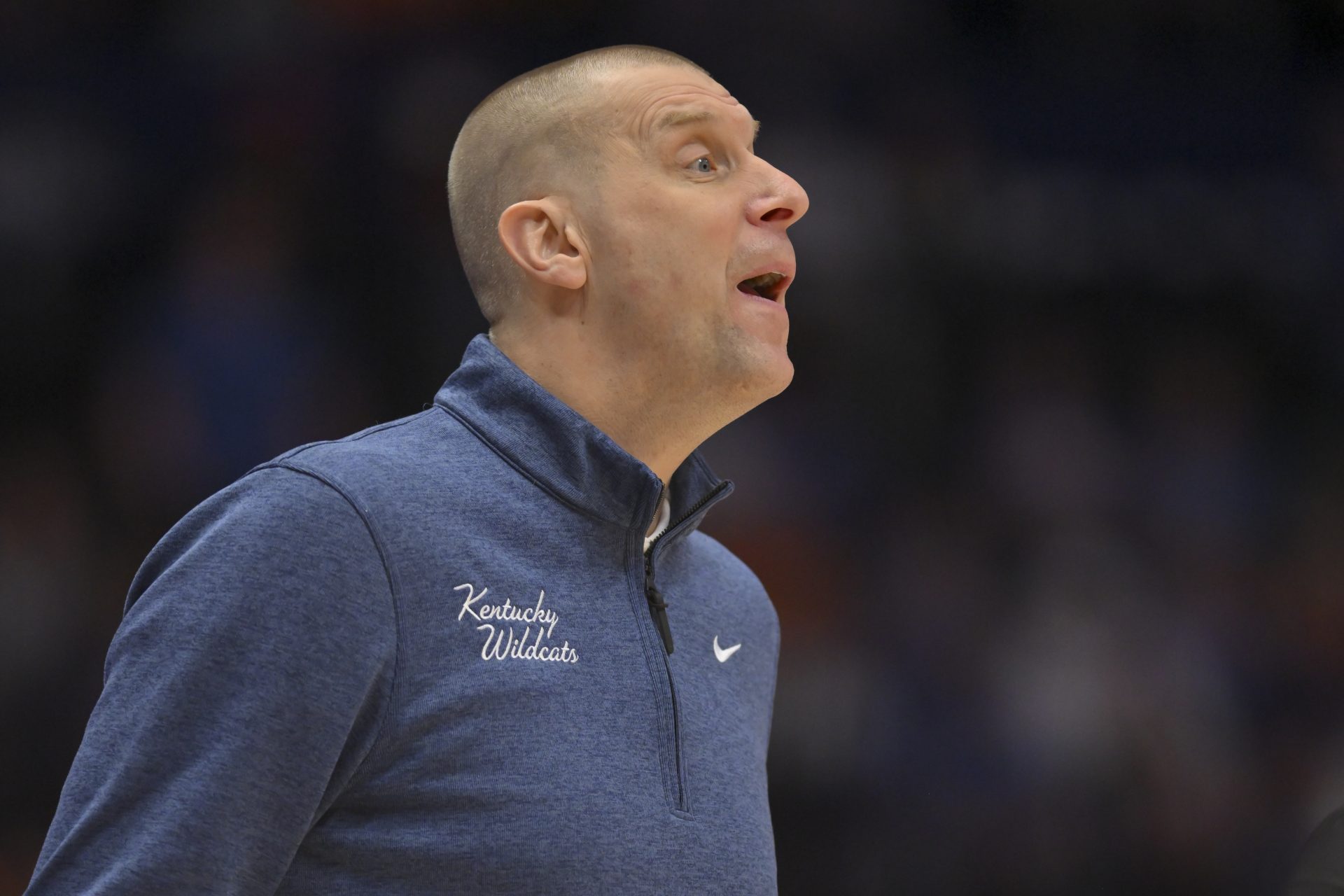
One of the biggest questions surrounding the Kentucky Wildcats basketball program this offseason has finally been answered. For months, fans across Big Blue Nation have debated whether head coach Mark Pope would follow the growing national trend of hiring a dedicated general manager to help navigate the increasingly complicated world of college basketball.
Programs across the country have embraced the GM model as NIL opportunities, transfer portal movement, salary structures, and roster construction continue to evolve at a rapid pace. Many Kentucky fans believed the Wildcats needed a single high-profile executive to help stabilize recruiting efforts and manage the business side of the program.
But on Friday, Pope revealed a very different vision for Kentucky basketball’s future.
Rather than hiring one traditional general manager, Kentucky is building what Pope described as a “comprehensive general management team,” a collaborative structure designed to divide responsibilities among several specialists instead of placing everything on one individual.
Speaking directly to Big Blue Nation in a video Q&A session, Pope explained that college basketball is changing too quickly for programs to rely on outdated organizational models.
“In this ever-changing, dynamic college basketball environment, everybody is trying a different solution,” Pope said. “For us, instead of hiring a singular GM, we’ve gone with a more comprehensive general management team.”
The approach immediately sparked major conversation among Kentucky fans and college basketball analysts alike. While some supporters were hoping for a splashy GM hire similar to moves made by other powerhouse programs, Pope believes Kentucky’s strategy could ultimately create a stronger and more efficient system.
According to Pope, the Wildcats have already assembled four key figures who will collectively handle the responsibilities commonly associated with a college basketball general manager.
Keegan Brown will reportedly serve as Kentucky’s expert in data analysis and roster construction. In today’s era of analytics-driven basketball, that role could become one of the most important pieces of the program. Brown’s responsibilities will involve evaluating player fit, studying advanced metrics, and helping Kentucky identify talent that matches Pope’s preferred style of play.
Meanwhile, Nick Robinson will oversee salary cap management, an area that has become increasingly critical in the NIL era. While college basketball technically does not operate under a professional salary cap system, programs are now balancing NIL budgets, roster spending, and financial allocation strategies similar to professional organizations.
Kevin Sargent will handle compliance and contract-related responsibilities, ensuring Kentucky remains organized and protected amid constantly shifting NCAA regulations and NIL guidelines.
The fourth key figure is Kim Shelton, who will work as the JMI liaison while focusing heavily on NIL partnerships and corporate sponsorship opportunities. With NIL continuing to reshape recruiting battles nationwide, Shelton’s role could prove vital in helping Kentucky remain competitive against elite programs aggressively investing in player marketing and endorsement opportunities.
Together, the four-person structure represents Pope’s belief that modern college basketball requires specialization rather than centralized control.
In theory, the setup makes plenty of sense.
Instead of asking one general manager to juggle recruiting coordination, NIL negotiations, analytics, contracts, compliance, and sponsorship relationships all at once, Kentucky is assigning each responsibility to someone with focused expertise. Pope then serves as the central decision-maker connecting all departments together.
For a program with Kentucky’s expectations, resources, and national spotlight, the strategy could eventually become one of the most innovative structures in college basketball.
Still, many Kentucky fans remain skeptical.
The Wildcats experienced recruiting frustrations this offseason, and some supporters believe the lack of a traditional GM contributed to missed opportunities in high school recruiting and transfer portal pursuits. Critics argue that several competing programs have become more aggressive, organized, and efficient in roster building while Kentucky continues adapting to the new era.
As a result, portions of Big Blue Nation wanted Pope to make a bold statement by bringing in a proven basketball executive with a recognizable national reputation.
Instead, Pope doubled down on collaboration and internal structure.
The success or failure of this strategy will ultimately depend on results.
If Kentucky begins winning major recruiting battles, dominating the transfer portal, and building championship-caliber rosters, Pope’s system could quickly become a model other programs attempt to copy. The specialized-team concept could allow Kentucky to maximize efficiency while avoiding the limitations of placing too much responsibility on one individual.
On the other hand, if recruiting struggles continue or roster management issues persist, criticism surrounding the decision will only intensify.
There is also enormous pressure on Pope entering the upcoming season. Coaching at Kentucky comes with championship expectations every single year, and fans expect the Wildcats to remain among the sport’s elite programs regardless of how much college basketball changes.
Pope understands that reality.
That is why his comments Friday were significant. Rather than making excuses or avoiding the conversation, he openly addressed the concerns surrounding Kentucky’s front office structure and explained exactly how the program plans to move forward.
Now, the focus shifts from strategy to execution.
Kentucky fans will closely watch whether this four-person management team can help Pope assemble a roster capable of competing for SEC titles, deep NCAA Tournament runs, and eventually another national championship banner inside Rupp Arena.
For now, Pope is betting that innovation, collaboration, and specialization will give Kentucky an edge in the rapidly evolving college basketball landscape.
And if his vision succeeds, the Wildcats may end up ahead of the curve instead of behind it.