


For years, Kentucky basketball operated with a simple reality: if talent was available, the Wildcats were expected to land in the middle of the fight for it. The logo carried weight. The fanbase carried pressure. And the national spotlight practically guaranteed that every offseason move would become headline news across college basketball.
But the modern era of the sport is changing faster than many programs expected.
NIL deals, transfer portal chaos, player agents, roster retention battles, recruiting analytics, contract negotiations, and nonstop tampering concerns have transformed college basketball into something that increasingly resembles a professional sports league. Programs are no longer just recruiting high school stars and coaching games. They are now managing year-round roster construction operations that require organization, structure, relationships, and massive front-office coordination.
That’s why a growing number of powerhouse programs have started building NBA-style systems around their coaching staffs. General managers, player personnel directors, recruiting analysts, NIL strategists, and roster management specialists are becoming essential pieces of championship-level operations.
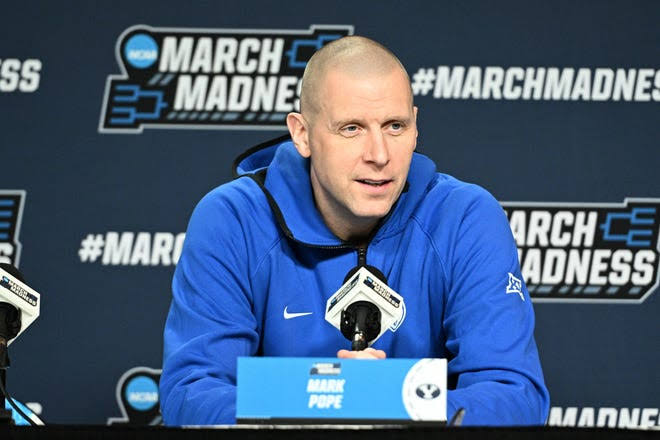
And now, according to recent insider analysis, one major concern surrounding Kentucky head coach Mark Pope is beginning to surface louder than ever:
Some believe he may be trying to do too much himself.
The criticism intensified after insiders suggested Pope has been “stubborn” regarding the idea of embracing a true front-office structure — specifically the growing belief that Kentucky urgently needs a dedicated general manager to help navigate the new era of college basketball.
At first glance, the criticism may sound exaggerated. After all, Pope has worked relentlessly to rebuild Kentucky’s roster and restore excitement around the program. He inherited enormous pressure after replacing John Calipari and immediately faced the impossible task of satisfying one of the most demanding fanbases in sports.
But beneath the surface, analysts and insiders are beginning to wonder whether Kentucky’s long-term ceiling could be limited if Pope continues trying to operate without the kind of organizational support many elite programs now consider mandatory.
And if that concern proves accurate, the Wildcats may be approaching a crossroads far bigger than fans initially realized.
The modern college basketball world has completely changed
Ten years ago, a college basketball head coach could still control nearly every major aspect of the program personally. Recruiting relationships mattered most. Player development mattered most. Winning games covered up nearly everything else.
That world barely exists anymore.
Today’s elite coaches are essentially running multimillion-dollar sports organizations. NIL negotiations alone can consume massive portions of an offseason. Transfer portal recruiting has become a nonstop, year-round operation requiring constant communication, evaluation, and financial planning.
Meanwhile, roster retention has become almost as difficult as recruiting itself.
Programs now need people specifically assigned to monitor portal movement, maintain relationships with players and representatives, coordinate NIL opportunities, analyze roster fit, track high school recruiting trends, manage collective communication, and prepare for sudden roster departures at any moment.
That’s where the general manager role has exploded across college sports.
Schools that once viewed the position as unnecessary are now aggressively investing in it because the demands have become overwhelming. In many ways, college basketball has become too big for even elite head coaches to manage entirely alone.
And that is why the Mark Pope conversation is suddenly attracting so much attention.
Why insiders believe Kentucky may be behind the curve
The criticism surrounding Kentucky is not necessarily about effort.
Nobody questions Pope’s work ethic.
Nobody questions his energy either.
If anything, many inside the basketball world admire how aggressively he attacked roster rebuilding after arriving in Lexington. He moved quickly in the portal, rebuilt relationships with the fanbase, and tried to create immediate momentum after a turbulent ending to the Calipari era.
But insiders increasingly believe Kentucky’s structure itself may need modernization.
Several powerhouse programs across the country now operate with extensive front-office systems designed to support the head coach in every aspect of roster management. Some schools have entire teams dedicated to NIL coordination and transfer evaluations.
Kentucky, however, still appears to many observers to be operating in a far more traditional manner.
That may not sound dangerous initially — until you realize how competitive the current landscape has become.
One missed portal evaluation can change a season.
One NIL negotiation failure can cost a star player.
One late reaction to roster movement can completely alter a recruiting cycle.
Margins are razor-thin now.
And insiders fear that without a true general manager helping oversee those nonstop responsibilities, Pope may eventually become stretched too thin trying to balance coaching, recruiting, fundraising, media obligations, roster management, and overall program leadership simultaneously.
The “stubborn” label is what really caught attention
Perhaps the strongest reaction from fans came from the use of one specific word:
“Stubborn.”
That term immediately sparked debate throughout Big Blue Nation because it implies something deeper than simple disagreement. It suggests some insiders believe Pope is actively resistant to fully embracing the evolving structure modern programs now require.
Of course, there is another side to that conversation too.
Some coaches genuinely prefer maintaining tighter control over every aspect of their programs. Many longtime basketball minds believe culture becomes harder to manage when too many voices enter roster decisions. Others fear front-office expansion can create confusion or internal power struggles.
Pope may simply believe Kentucky’s success should still revolve primarily around coaching relationships, development, and direct communication.
And to be fair, there are understandable reasons for that philosophy.
But critics argue the sport has already evolved beyond that point.
They believe resisting organizational modernization is no longer about preference — it is about survival.
That is why the debate is becoming louder.
Kentucky fans are already feeling the pressure
Big Blue Nation does not operate with patience.
Every roster move gets analyzed.
Every missed recruit becomes a discussion.
Every transfer portal battle turns into a social media war.
And because Kentucky remains one of the most visible brands in college basketball, every perceived weakness becomes magnified nationally.
That pressure only intensified after several offseason frustrations left fans questioning whether the Wildcats were truly maximizing their resources. Kentucky still landed major talent, but concerns about roster balance, shooting consistency, frontcourt depth, and portal strategy repeatedly surfaced throughout the offseason conversation.
Now, insider analysis suggesting the program needs a more modern front-office structure is adding another layer of anxiety.
Because fans are starting to ask an uncomfortable question:
What if Kentucky’s biggest issue isn’t recruiting effort… but organizational structure itself?
That possibility feels almost impossible for many fans to accept considering the program’s history and financial power. Kentucky should theoretically have every advantage necessary to dominate this era of college basketball.
Which is exactly why some insiders believe expectations for operational efficiency should be even higher.
The GM role is becoming impossible to ignore
Across college athletics, the general manager role is no longer viewed as optional luxury staffing.
It is becoming foundational.
Some GMs now oversee portal scouting databases, NIL budgeting, player relationship management, and long-term roster planning. Others serve as critical communication bridges between coaches, agents, collectives, and recruits.
The workload modern staffs face is staggering.
And importantly, hiring a GM does not weaken the authority of the head coach. In many cases, it actually strengthens it by allowing coaches to focus more heavily on strategy, player development, and culture-building rather than drowning in nonstop administrative chaos.
That is why many analysts believe Kentucky eventually moving toward a stronger front-office model feels inevitable.
The only question is whether Pope embraces it early enough.
Because if elite rivals continue evolving faster organizationally, the competitive gap could quietly widen beneath the surface — even if Kentucky still recruits at a high level.
Mark Pope’s vision still deserves patience
Despite the criticism, it is important to acknowledge one major reality:
Pope is still early in his Kentucky tenure.
Replacing a legendary figure like John Calipari was never going to produce instant perfection. Pope inherited massive expectations while simultaneously trying to modernize portions of the program and rebuild roster chemistry immediately.
That is extraordinarily difficult.
And unlike some national critics suggest, Kentucky’s future under Pope is far from doomed. In fact, many fans remain optimistic because of his passion, basketball intelligence, offensive creativity, and genuine connection with the fanbase.
There is still a very real chance Pope succeeds at a high level in Lexington.
But even supporters admit the sport itself is changing rapidly.
The best coaches today are not just elite basketball minds. They are elite organizational leaders capable of managing enormous infrastructures around their programs.
That is the challenge Kentucky now faces moving forward.
This conversation may only be getting started
The most fascinating part of this entire debate is that it likely will not disappear anytime soon.
If Kentucky thrives next season, Pope’s approach will receive praise.
But if roster flaws emerge, portal struggles continue, or NIL battles become public frustrations again, the pressure surrounding the GM conversation could explode even louder.
Because once fans and insiders begin questioning organizational structure, every future issue suddenly gets connected back to it.
And in today’s nonstop college basketball environment, perception matters almost as much as reality itself.
Right now, Mark Pope still has enormous support from Big Blue Nation. Fans want him to succeed. They believe in his energy and vision. They desperately want Kentucky to return fully to national-title contention.
But the sport is evolving at breakneck speed.
And according to growing insider concern, Kentucky may soon have to decide whether traditional coaching structures can still survive in a world increasingly built like professional basketball.
If the Wildcats fail to adapt quickly enough, this debate about a general manager may eventually become far bigger than anyone in Lexington originally expected.




