


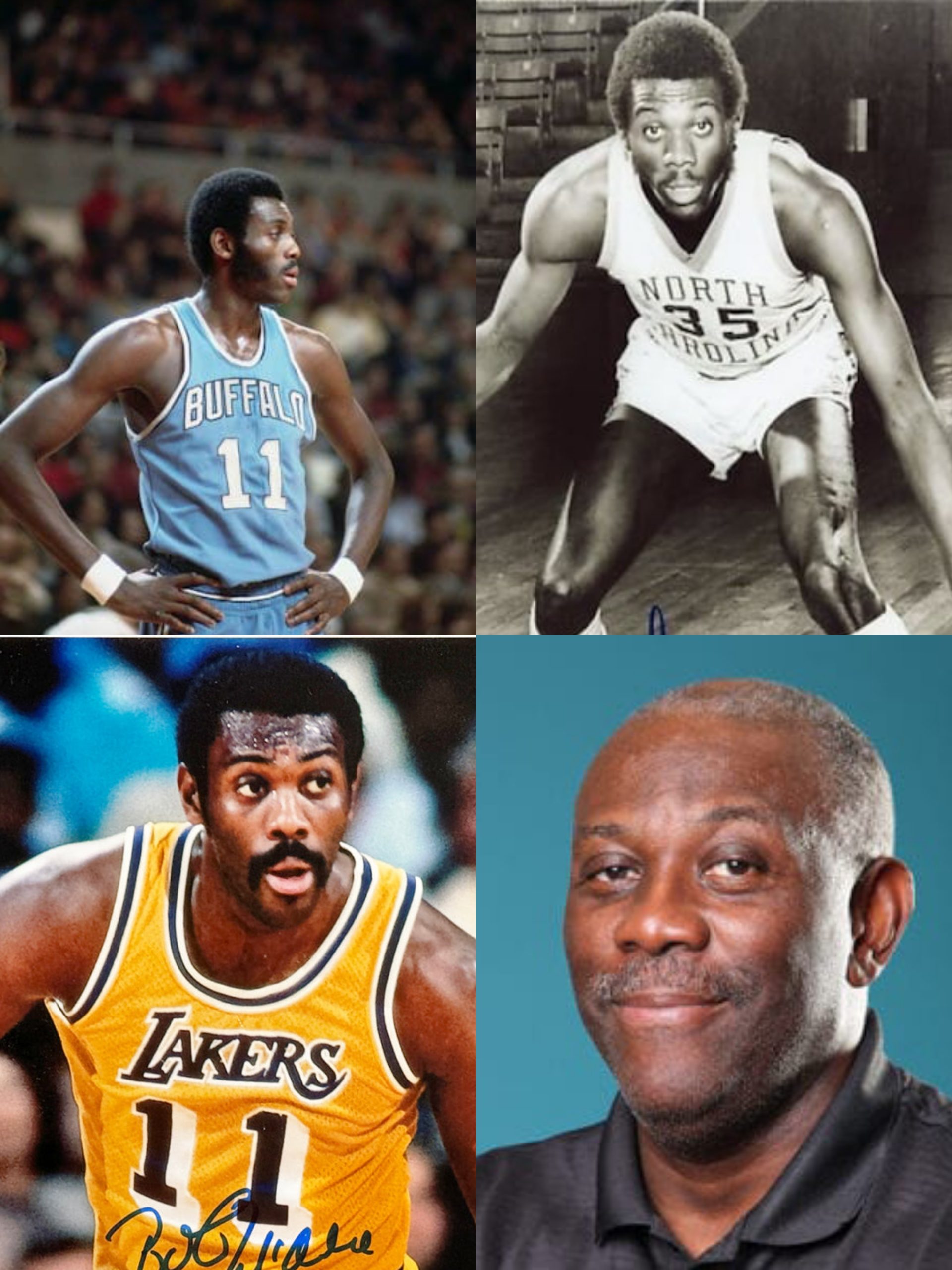
Long before the world knew Michael Jordan as the face of basketball greatness, another North Carolina Tar Heels men’s basketball star was doing things on a court that felt almost impossible to comprehend.
He only stayed in Chapel Hill for one season.
One.
Yet decades later, basketball historians still look back at his rise and wonder why his name isn’t mentioned more often when conversations turn to the most unstoppable offensive forces the game has ever produced.
That player was Bob McAdoo — the silky smooth big man whose brief time at UNC was merely the opening chapter of a career that exploded into one of the most statistically overwhelming stretches in NBA history.
And somehow, despite winning an MVP, leading the league in scoring multiple times, and redefining what a modern scoring big man could look like, McAdoo’s legacy has slowly drifted into the background of basketball history.
But for those who watched him? They remember.
And they remember just how terrifying he truly was.
The One-Year Wonder Who Changed Everything
When McAdoo arrived at North Carolina in the early 1970s, he wasn’t entering a program surrounded by the same level of national hype that would later follow Jordan, James Worthy, or Tyler Hansbrough.
But it didn’t take long for people inside Chapel Hill to realize something special was unfolding.
Standing around 6-foot-9 with extraordinary athleticism, soft shooting touch, and guard-like mobility, McAdoo looked different from almost every big man in college basketball at the time. Most centers operated close to the basket. McAdoo could score from everywhere.
In his lone season with the Tar Heels, he averaged 19.5 points and 10.1 rebounds per game, immediately becoming an All-American and one of the most feared players in the country.
Yet even those numbers somehow undersold what scouts were seeing.
He moved like a wing.
He rebounded like a traditional center.
And he scored with an effortless rhythm that made defenses look helpless.
At a time when basketball still revolved heavily around physical post play, McAdoo was already hinting at the future of the sport.
Before Stretch Bigs Were a Thing… McAdoo Was Already There
Today’s NBA is filled with versatile scoring big men who can shoot from outside, run the floor, and create offense in transition.
Back then?
That kind of player barely existed.
McAdoo was years ahead of his era.
His face-up jumper was nearly impossible to contest. His speed in transition created constant mismatches. And his ability to score in bunches made coaches completely rethink how defenses should operate against elite frontcourt players.
After leaving UNC, McAdoo entered the NBA Draft and was selected by the Buffalo Braves.
Almost immediately, the league realized it had a problem.
Rookie of the Year Was Only the Beginning
McAdoo didn’t slowly adjust to professional basketball.
He exploded into it.
He won NBA Rookie of the Year in 1973 and quickly established himself as one of the league’s most unstoppable scorers. But what happened after that remains one of the most underappreciated stretches in league history.
By just his second season, McAdoo finished second in MVP voting.
Then came 1974-75.
The season that still feels unreal when viewed through a modern lens.
McAdoo averaged:
- 34.5 points per game
- 14.1 rebounds per game
Those numbers weren’t just elite.
They were historic.
To put it in perspective, very few players in NBA history have ever averaged over 30 points and 14 rebounds across an entire season. McAdoo did it while playing with a level of offensive fluidity that looked more like a modern superstar than a 1970s center.
Night after night, he overwhelmed opponents with a scoring arsenal few players had ever possessed.
Fadeaways.
Mid-range jumpers.
Transition finishes.
Quick drives.
Putbacks.
Everything worked.
And when defenders tried to slow him down physically, he simply outran them.
The MVP Season That Deserves More Respect
McAdoo won the NBA MVP award in 1975, but even that accomplishment sometimes gets overshadowed in basketball discussions dominated by names like Kareem Abdul-Jabbar, Magic Johnson, Larry Bird, and Jordan.
Yet statistically, McAdoo’s peak belongs in elite company.
For a stretch during the mid-1970s, there may not have been a more gifted offensive player in basketball.
That’s what makes his legacy so fascinating.
He wasn’t merely good.
He was historically dominant.
And he did it in an era filled with Hall of Fame talent.
Why Doesn’t His Name Come Up More Often?
It’s one of basketball’s most interesting debates.
Why has McAdoo become somewhat forgotten compared to other legends of the game?
Part of it comes down to timing.
The NBA of the 1970s often gets overshadowed by the cultural explosion that arrived in the 1980s with Magic, Bird, and eventually Jordan. McAdoo’s brilliance happened right before the league’s television boom transformed superstars into worldwide icons.
Another factor was team success.
Despite McAdoo’s incredible individual numbers with the Braves, the franchise never broke through to reach the NBA Finals. In today’s sports culture, championships often define legacy more than statistics.
Still, those who truly understand basketball history know how revolutionary McAdoo was.
He helped redefine what a scoring big man could become.
Without players like McAdoo, the blueprint for modern offensive stars might look very different today.
Carolina Fans Still Remember
Inside the Carolina basketball community, McAdoo’s legacy remains deeply respected.
Older Tar Heel fans still talk about the elegance of his game. The smooth jumper. The impossible scoring bursts. The sense that every possession could turn into something spectacular.
And while Jordan’s shot against Georgetown became the defining image of UNC basketball history, many longtime fans insist McAdoo’s pure dominance remains unmatched in certain ways.
Because Jordan became the global icon.
But McAdoo?
McAdoo was the basketball experiment that worked before the world was fully ready for it.
A Legacy Bigger Than One Season
What makes McAdoo’s story even more remarkable is that his Carolina career lasted only one year.
Most UNC legends built their legacy over multiple seasons.
McAdoo barely had time to unpack before he became an NBA superstar.
Yet even with that brief stay, his impact on Tar Heel history remains enormous. He proved that Chapel Hill could develop transformational talent capable of reshaping the sport itself.
And decades later, his influence can still be seen across modern basketball.
Every versatile scoring big man who stretches defenses, runs the floor, and attacks offensively from multiple levels owes something to pioneers like Bob McAdoo.
The Forgotten Greatness
In an era dominated by highlight culture and endless debate shows, McAdoo’s name sometimes slips through the cracks.
But when historians revisit the numbers, the awards, and the way he changed the game, the truth becomes impossible to ignore.
For a brief moment in basketball history, Bob McAdoo wasn’t just great.
He was unstoppable.
And before Michael Jordan ever transformed North Carolina into a global basketball symbol, another Tar Heel had already shown the world what basketball greatness could truly look like.




