


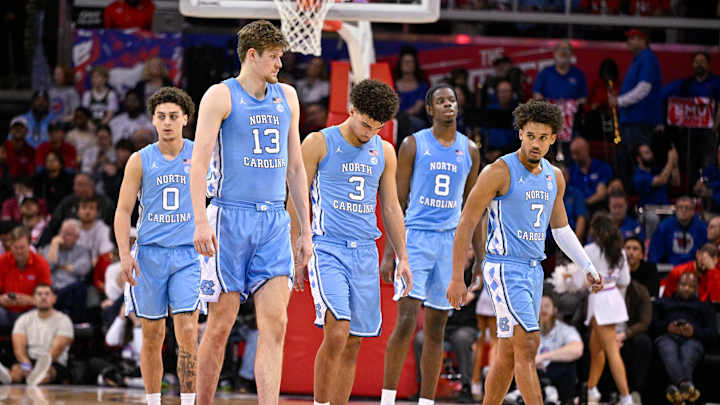
There are UNC–Duke games that feel important, and then there are UNC–Duke games that feel inevitable—the kind where history, rankings, NBA futures, and raw emotion collide so loudly that the game seems to announce itself days in advance. This one belongs firmly in the second category. The Dean E. Smith Center will be full hours before tipoff, nerves buzzing, anticipation thick, because everyone in Chapel Hill understands the truth hiding in plain sight: North Carolina can beat Duke on Saturday, but only if one specific variable swings in the Tar Heels’ favor. The margin for error is razor-thin, and the difference between glory and regret may rest on the shoulders of a player most fans won’t see on draft boards or highlight montages—yet.
UNC welcomes a top-five Duke team to Chapel Hill knowing full well what the Blue Devils bring with them: star power, discipline, physicality, and a growing confidence under Jon Scheyer that has turned recent matchups into uphill battles for Carolina. Duke has won four of the last six meetings at the Dean Dome. They are deeper, more experienced in the backcourt, and led by one of the most complete freshmen in the country. This is not a Duke team that beats itself.
Which is why North Carolina will need more than the expected brilliance of its stars. Caleb Wilson will be Caleb Wilson. Henri Veesaar will do the dirty work. Seth Trimble will defend like his life depends on it. That’s the baseline. That’s the price of admission. But this game won’t be decided by what everyone expects—it will be decided by who rises beyond expectation.
And that’s where Derek Dixon enters the conversation.
Why This Game Won’t Be Won by UNC’s Stars Alone
Start with the obvious. North Carolina’s frontcourt is the foundation of its identity. Caleb Wilson is a future lottery pick whose blend of athleticism, motor, and transition dominance makes him a nightmare matchup. Veesaar stretches the floor, rebounds out of his area, and forces opposing bigs to defend in space. Together, they give UNC a fighting chance against Duke’s size and physicality.
But Duke knows this. Everyone knows this.
Scheyer will throw multiple bodies at Wilson, daring him to score over length while cutting off easy transition lanes. Duke will crowd the paint against Veesaar’s rolls and challenge him to beat them repeatedly from deep. The Blue Devils will happily live with contested post-ups and tough two-point attempts if it means keeping UNC’s role players quiet.
That’s where this matchup tilts. Duke is comfortable betting that UNC’s guards won’t consistently beat them. North Carolina must prove that bet wrong.
Duke’s Defensive Blueprint—and Where UNC Can Crack It
Duke’s defense thrives on connectivity. The Blue Devils are elite cutters offensively, but defensively they are equally impressive at shrinking the floor. They force opponents into late-clock decisions, contested jumpers, and rushed reads. They want guards to hesitate.
Against UNC, Duke will apply pressure without gambling recklessly. They’ll switch selectively, fight over screens, and funnel ball handlers into help. The goal isn’t steals—it’s discomfort.
That approach puts an enormous burden on UNC’s guards, particularly the ones tasked with creating offense when the first option is taken away.
Seth Trimble will be physical. Jaydon Young will have moments. Kyan Evans and Jonathan Powell may stretch the floor in short bursts. But the one guard who can bend the game—who can force Duke to abandon its plan—is Derek Dixon.
Derek Dixon: The Variable Duke Can’t Fully Control
Dixon’s role this season has been fluid. He’s a true freshman, learning the speed and brutality of high-major college basketball on the fly. There have been quiet stretches, moments of hesitation, and flashes of brilliance that hint at what’s coming.
This game demands the latter.
Dixon is UNC’s primary ball handler when things bog down. He’s the guard most capable of turning defensive pressure into offensive advantage. When Dixon is aggressive, Carolina’s offense changes shape. The ball moves faster. Driving lanes open. Shooters get cleaner looks. Bigs finish instead of forcing.
When Dixon is passive, UNC becomes predictable—and Duke feasts on predictability.
The numbers tell a compelling story. In games where Dixon scores efficiently and attacks early, UNC’s offensive rating jumps noticeably. Defenses are forced to tag him on drives, opening kick-outs. Duke’s elite cutting offense thrives on defensive mistakes, but UNC can return the favor if Dixon consistently collapses the defense.
That’s the swing factor.
Why Asking This of a Freshman Is Both Risky—and Necessary
Let’s be honest: asking a freshman guard to carry significant offensive responsibility against Duke is unfair. This rivalry swallows veterans whole. Cameron Indoor and the Dean Dome have humbled All-Americans. The pressure isn’t normal pressure—it’s generational pressure.
But college basketball doesn’t wait for comfort.
UNC doesn’t have the luxury of easing Dixon into this moment. Duke’s strategy will force him into the spotlight whether he wants it or not. They will test his handle. They will crowd his vision. They will dare him to make plays late in the shot clock.
And here’s the quiet truth UNC fans should hold onto: Dixon has shown he can handle it.
He’s played well under bright lights before. He doesn’t shy away from contact. He’s willing to take shots that matter. And perhaps most importantly, he understands the stakes. Dixon doesn’t play like someone afraid of failure—he plays like someone who expects responsibility.
That matters in this rivalry.
The Ripple Effect: How Dixon Unlocks Everyone Else
If Dixon delivers, the effects will cascade through the lineup.
Caleb Wilson gets easier touches instead of contested catches.
Veesaar pops into rhythm instead of forcing mismatches.
Evans and Powell see cleaner perimeter looks.
Trimble can pick his spots instead of carrying offensive weight.
Duke’s defense thrives when it can stay home on shooters and load up on stars. Dixon is the one player capable of pulling them out of that comfort zone. If he gets downhill consistently, Duke will be forced into rotations they don’t want to make.
And once that happens, UNC becomes dangerous.
The Transition Factor
One area where UNC can hurt Duke is in transition. The Tar Heels are at their best when they’re running—when Wilson is flying down the floor, when guards are attacking before defenses are set. Duke’s halfcourt defense is elite. Their transition defense, while solid, has shown cracks.
Dixon is central to this, too.
Quick outlets. Confident pushes. Early attacks. If Dixon hesitates, Duke recovers. If he commits, Duke scrambles. Those first three seconds after a rebound could determine the tone of the game.
UNC doesn’t need Dixon to be spectacular every possession. They need him decisive.
The Mental Side of the Rivalry
Rivalry games are emotional, but they’re also psychological. Duke enters this matchup with recent success, confidence, and a sense of control. UNC enters hungry, slightly underestimated, and eager to flip the narrative.
Dixon represents that emotional fulcrum.
If he starts fast—if he scores early, if he forces Duke to adjust—the Dean Dome will respond. Energy will build. Pressure will shift. Duke, for all its composure, is still young in key spots. Momentum matters.
Conversely, if Dixon struggles early, Duke will sense blood. They will tighten the screws. And the margin for error, already thin, will disappear entirely.
What a “Big-Time Performance” Actually Looks Like
This isn’t about a box score explosion—though that wouldn’t hurt. A big-time performance from Dixon looks like this:
Aggressive drives early, even if shots don’t fall immediately
Confident decision-making against pressure
Willingness to shoot open threes without hesitation
Defensive engagement that fuels transition opportunities
Poise when Duke inevitably makes a run
If Dixon finishes with 15 points, solid efficiency, and control of tempo, UNC’s chances skyrocket. If he finishes passive, deferential, or rushed, Duke’s path becomes clear.
Why This Is the Moment That Can Define Dixon’s Season
Every season has turning points for young players. Games where something clicks. Games that accelerate development in real time. This could be that game for Dixon.
Rivalry performances linger. They shape confidence. They change how players are defended moving forward. A strong showing here wouldn’t just help UNC win—it would reshape how opponents game-plan for the Tar Heels the rest of the season.
Dixon doesn’t need to outplay Duke’s stars. He needs to outplay expectations.
Final Thought: Why UNC’s Path Runs Through Its Backcourt
UNC can win this game. Make no mistake. The pieces are there. The crowd will be there. The urgency is there.
But Duke is too good, too disciplined, and too confident to be beaten by effort alone. Someone has to bend the game.
That someone is Derek Dixon.
If he rises to the moment—if he embraces the pressure instead of surviving it—North Carolina has a real chance to send Duke home frustrated and reminded that Chapel Hill is still a place where seasons can turn.




