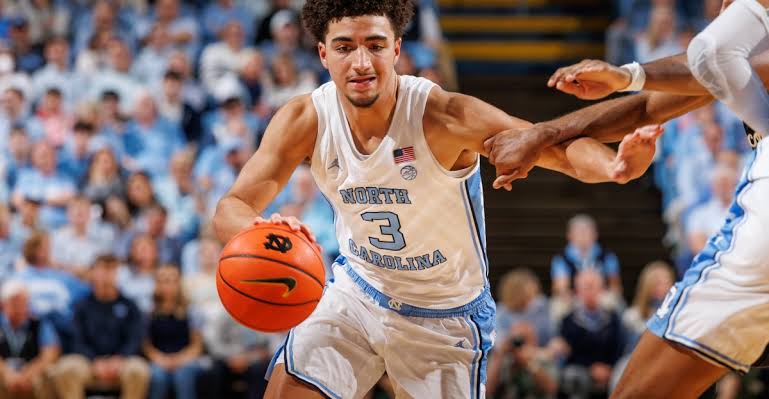
Sometimes the loudest message in a locker room isn’t shouted. It isn’t delivered in a fiery halftime speech or blasted across social media. Sometimes, it’s just two simple words — repeated quietly, consistently, almost stubbornly — until they start to mean everything. For Derek Dixon, those words are “Stay confident.” And inside the evolving world of North Carolina Tar Heels men’s basketball, that mindset may be doing more than keeping one young player steady. It may be helping shape the program’s next rise.
Confidence is an easy word to say. It’s harder to live.
At North Carolina, confidence carries weight. The jersey alone demands it. Every practice is competitive. Every drill is sharp. Every mistake is noticed. Under head coach Hubert Davis, accountability is non-negotiable. Standards are clear. Effort is expected. Growth is constant.
For a young guard like Dixon, navigating that environment requires more than talent. It requires emotional balance.
And that’s where “Stay confident” becomes more than a phrase.
The Noise That Tests Every Young Player
There’s a unique pressure that comes with stepping into a blue-blood program. You arrive with accolades. You were the star before. You dominated your level. But once you step into Chapel Hill, the playing field resets.
Suddenly, everyone was “that guy” somewhere else.
Practices become battles. Minutes are scarce. Veterans are established. Coaches demand details — foot placement, defensive angles, communication timing. The margin for error shrinks.
That environment can either shrink a player or sharpen him.
For Dixon, it sharpened him.
He understood early that his role might fluctuate. Some nights would bring extended minutes. Others would demand patience. But instead of allowing inconsistency in opportunity to affect his mindset, he anchored himself to one principle: confidence is internal.
“My teammates believe in me,” Dixon has emphasized. “The coaches believe in me. So I believe in myself.”
That belief system isn’t naïve. It’s strategic.
Confidence fuels readiness.
Learning the College Pace
The biggest adjustment from high school to college basketball isn’t always skill. It’s speed — mental and physical.
Defenders close out harder.
Rotations happen faster.
Screens hit stronger.
Scouting reports are detailed.
For Dixon, the jump required adaptation on multiple levels.
Processing speed became critical. Reads had to be quicker. Decisions had to be sharper. Defensive recovery couldn’t lag even half a second.
He quickly realized that talent alone wouldn’t carry him.
Preparation would.
Extra film sessions. Defensive reps. Conditioning. Repetition.
That’s where confidence quietly builds — not in highlights, but in habits.
Dixon didn’t chase flash. He chased improvement.
And slowly, that work began translating into trust.
Confidence in a Fluctuating Role
Perhaps the greatest test for any young player is embracing a role that changes.
College basketball seasons are long. Injuries happen. Matchups dictate substitutions. Coaches experiment. Rotations evolve.
It’s easy to feel overlooked.
Easy to press.
Easy to force plays when opportunities arise.
Dixon resisted that temptation.
Instead of pressing, he simplified.
Make the right read.
Defend with intensity.
Crash the glass.
Take open shots without hesitation.
Confidence doesn’t mean forcing action. It means trusting preparation when action comes.
That distinction matters.
Under Hubert Davis, roles are earned daily. Defensive discipline earns minutes. Communication earns trust. Energy earns opportunity.
Dixon embraced that structure rather than fighting it.
And over time, that patience became visible growth.
Defense: The Hidden Door to the Floor
When asked what he’s focused on improving, Dixon didn’t highlight scoring.
He highlighted defense and consistency.
That speaks volumes.
In a program like North Carolina, defense is the gateway. Coaches trust defenders. Teammates rely on communicators. Rotations win games just as much as shot-making.
Dixon understands that earning consistent minutes begins on that end of the floor.
Close out under control.
Fight through screens.
Stay disciplined.
Communicate early.
Defense isn’t glamorous. It doesn’t dominate headlines. But it builds credibility.
And credibility builds opportunity.
By leaning into defensive growth, Dixon signaled something important: he’s thinking long-term.
The Weight of the Jersey
Wearing North Carolina across your chest isn’t ordinary.
It carries history. Championships. Expectations. Legends.
Dixon feels that responsibility.
But instead of allowing it to overwhelm him, he treats it as fuel.
“It’s history,” he has said. “It’s responsibility.”
Responsibility means preparation.
Responsibility means consistency.
Responsibility means embracing the grind.
The Tar Heels don’t rebuild quietly. Every season matters. Every possession is evaluated. Every player contributes to the larger narrative.
Dixon sees himself as part of that story — even if he isn’t the headline yet.
Why “Stay Confident” Resonates Beyond One Player
Confidence spreads.
In a locker room navigating lineup changes, injury recoveries, and competitive conference battles, steady voices matter.
Dixon’s approach isn’t loud, but it’s stable.
Younger players notice that stability.
Veterans respect it.
Coaches trust it.
When shots don’t fall, confidence keeps mechanics intact.
When minutes fluctuate, confidence keeps preparation consistent.
When adversity hits, confidence keeps belief steady.
Those traits ripple outward.
And in February, when margins tighten and every game carries weight, emotional steadiness becomes invaluable.
Hubert Davis and the Development Blueprint
Under Hubert Davis, development is intentional.
Young players are not rushed — but they are challenged.
Davis emphasizes growth through detail. He demands accountability but encourages confidence. He pushes players to expand their games while reinforcing team-first principles.
Dixon fits that blueprint.
He doesn’t chase attention.
He doesn’t force narratives.
He embraces coaching.
That coachability accelerates growth.
When a player accepts critique without losing confidence, development multiplies.
And that balance is rare.
The Long-Term Vision
Derek Dixon may not yet be the centerpiece of North Carolina’s offense.
But foundational players often emerge gradually.
The trajectory matters more than the spotlight.
Right now, Dixon is building layers:
Defensive discipline.
Mental resilience.
Shot confidence.
Role adaptability.
Team-first leadership.
Those layers compound.
By next season — or even later this one — that steady development could position him differently within the rotation.
Confidence now becomes impact later.
Adversity as a Teacher
This season hasn’t been perfectly smooth for UNC.
Lineup shifts.
Injuries.
Tough road environments.
Conference challenges.
But those tests create growth opportunities.
For Dixon, adversity hasn’t created doubt. It’s reinforced belief.
Every competitive practice sharpens him.
Every scouting report educates him.
Every game experience builds comfort.
Confidence doesn’t ignore adversity.
It grows through it.
The Silent Leadership Trait
Leadership isn’t always vocal.
Sometimes it’s consistency.
Teammates notice who stays locked in during drills.
Who competes hard in practice.
Who keeps energy steady.
Who doesn’t sulk when minutes shrink.
Those behaviors earn respect.
Dixon’s steady confidence becomes a subtle leadership trait — even as a younger player.
It signals maturity.
It signals readiness.
It signals growth.
And growth fuels program sustainability.
The Bigger Picture for UNC
Programs like North Carolina don’t depend solely on stars.
They thrive because of depth, development, and belief.
For every headline scorer, there’s a developing contributor grinding behind the scenes.
Dixon represents that engine.
His “Stay confident” mantra isn’t flashy.
But it aligns perfectly with what sustained programs require.
Belief in the system.
Belief in preparation.
Belief in progression.
What Comes Next?
Basketball seasons shift quickly.
Roles can expand overnight.
Opportunities can appear suddenly.
Momentum can flip.
The players who benefit most are the ones who stayed ready before the spotlight arrived.
Derek Dixon is preparing for that moment — not anxiously, but confidently.
And when that opportunity arrives, whether in a crucial conference matchup or postseason stage, he’ll rely on the same two words.
Stay confident.
The Quiet Fuel Behind the Rise
Every program chasing growth needs emotional anchors.
Not just star power.
Not just highlight plays.
But mindset consistency.
Dixon’s approach — steady, coachable, confident — may not trend on social media.
But inside Chapel Hill, it matters.
Because confidence doesn’t just impact individual performance.
It stabilizes teams.
And if North Carolina’s next rise is built on resilience, adaptability, and internal belief, don’t overlook the quiet power of two simple words echoing in the locker room.
Stay confident.
For Derek Dixon, it’s more than advice.
It’s identity.
And for the Tar Heels, it might be the spark quietly building toward something bigger.