


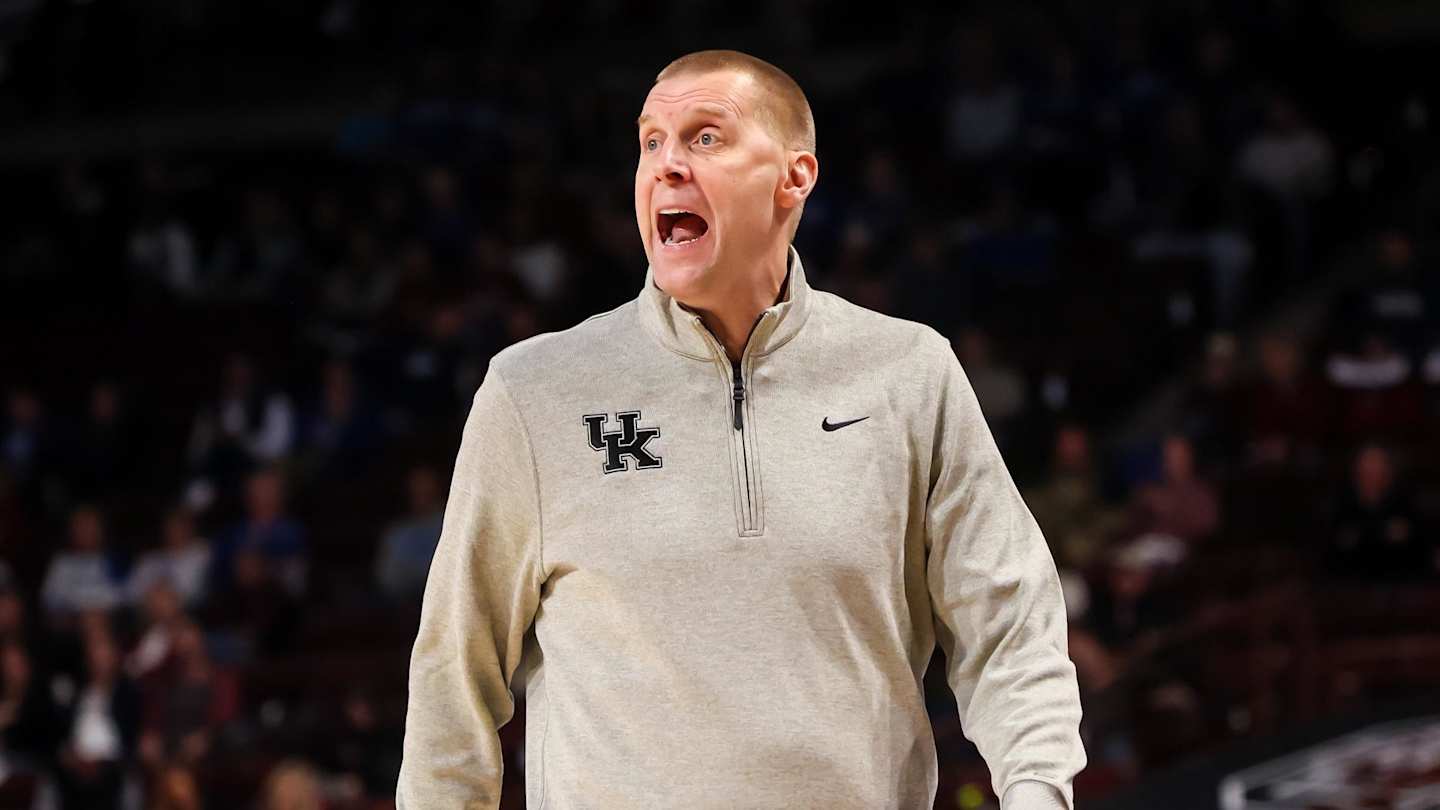
What if the future of Kentucky basketball isn’t just about five-star recruits or splashy NIL deals — but about finding the one person who can bend the modern system to perfection? When Mark Pope laughed and said he wanted someone who could “get me all the best players for zero dollars,” it sounded like a punchline. But beneath the humor was something far more revealing. In an era where rosters reportedly cost tens of millions and the transfer portal moves faster than ever, Pope’s comment might not just be witty — it might be a window into Kentucky’s next big evolution.
At face value, the quote is playful. No major college program is actually assembling a championship-caliber roster without financial backing in today’s NIL-driven landscape. But when Mark Pope delivered that line, he wasn’t just joking for the sake of a laugh. He was articulating a challenge — one every elite program is wrestling with in real time.
And at Kentucky Wildcats men’s basketball, the stakes are always higher.
The $22 Million Reality
Reports have circulated that Kentucky’s roster valuation in the NIL era has soared into the eight-figure range. Whether exact numbers fluctuate or not, the broader truth is undeniable: building a contender in modern college basketball requires significant resources.
The transfer portal opens doors — and raises price tags.
High-major programs across the country are investing heavily in talent acquisition, roster retention, and infrastructure. But with that spending comes scrutiny. Fans expect results. Donors expect return on investment. And coaches are expected to maximize every dollar.
So when Pope referenced going from a “$22 million roster to a zero-dollar roster,” it wasn’t fantasy. It was commentary on efficiency.
Because what he’s really searching for isn’t magic.
He’s searching for value.
The Rise of the College Basketball GM
College basketball has changed dramatically in just a few seasons. The traditional recruiting model — high school scouting, AAU relationships, long-term player development — now exists alongside NIL negotiations, portal evaluations, and financial structuring.
Enter the general manager era.
Programs across the country are adding front-office-style positions: executive director of basketball, roster management strategist, chief operations officer. The titles vary. The mission remains the same.
Find talent.
Manage resources.
Build sustainable success.
Recently, Auburn reportedly began targeting a GM hire ahead of the April 7 transfer portal window. The Indiana Hoosiers made headlines by hiring NBA executive Ryan Carr as executive director of basketball. The message is clear: the arms race isn’t slowing down.
And Pope knows it.
During his weekly radio show, he acknowledged that Kentucky is actively evaluating how this role would look in Lexington. Conversations are ongoing. Structure is being examined.
Because in today’s climate, roster construction isn’t just recruiting anymore — it’s strategy.
What Pope Really Meant
When Pope said he wants someone who can get him the best players for $0, he followed it with laughter. But his underlying point was razor sharp.
He wants someone who can:
Identify undervalued talent.
Maximize NIL efficiency.
Build relationships that transcend money.
Sell vision as effectively as cash.
It’s not about eliminating spending. It’s about eliminating waste.
There’s a difference.
Programs that overspend without cohesion often struggle. Talent alone doesn’t guarantee chemistry. Big budgets don’t guarantee buy-in. In fact, sometimes the most dangerous teams are the ones built on belief, role clarity, and shared purpose.
Pope understands that culture still wins — even in the NIL era.
Kentucky’s Unique Pressure
Kentucky isn’t just another program experimenting with modern structure. It’s one of the most visible brands in the sport.
Rupp Arena isn’t forgiving.
The fan base isn’t patient.
Expectations aren’t moderate.
When Kentucky spends, it expects banners.
So the idea of refining roster management isn’t optional — it’s necessary.
If a GM-style role can help streamline negotiations, manage portal evaluations, and allow Pope to focus more fully on coaching, then the investment makes sense.
Because ultimately, the goal isn’t saving money.
The goal is winning smarter.
The Portal Window Looms
The transfer portal opens April 7. That date matters.
Roster decisions, departures, and additions move quickly once the window begins. Having a dedicated strategist overseeing data, communication, and evaluation could be the difference between landing impact players or missing out entirely.
Other high-major programs aren’t waiting.
They’re structuring.
They’re preparing.
They’re professionalizing.
And Kentucky cannot afford to fall behind.
Balancing NIL and Identity
One of the biggest questions facing programs like Kentucky is how to balance NIL competitiveness with identity preservation.
Historically, Kentucky thrived on elite high school recruiting and NBA pipeline prestige. The brand sold itself. But in today’s climate, players have more leverage, more options, and more financial awareness.
The modern GM role may not just be about money negotiation.
It may be about storytelling.
Why Kentucky?
Why this system?
Why this staff?
Why this culture?
Because sometimes the best players don’t choose solely based on dollar amounts. They choose based on fit, exposure, development, and championship opportunity.
If Kentucky can sell all of that effectively — while managing NIL responsibly — then Pope’s “zero-dollar” joke becomes symbolic.
Symbolic of efficiency.
Symbolic of alignment.
Symbolic of maximizing value beyond numbers.
Lessons From the NBA Model
Professional sports have long embraced front-office specialization. Coaches coach. General managers build. Analysts evaluate.
College basketball is simply catching up.
The difference is that in college, relationships are even more critical. NIL collectives, donors, compliance departments, and boosters all intersect with roster construction.
A successful GM at Kentucky would need:
Talent evaluation expertise.
NIL negotiation savvy.
Relationship management skills.
Long-term vision alignment with Pope.
That’s not a small job.
It’s a transformative one.
Is Pope Signaling a Bigger Shift?
Perhaps the most intriguing aspect of his comment isn’t the humor — it’s the timing.
Programs like Auburn and Indiana are formalizing their structures. The portal is weeks away. Kentucky’s roster future is in flux.
By publicly discussing the GM concept again, Pope may be signaling openness to modernization.
And in a program where tradition often reigns supreme, modernization must be handled carefully.
But evolution is inevitable.
The sport demands it.
Culture Still Wins
Here’s what often gets lost in NIL discussions: culture still determines ceilings.
You can assemble a $22 million roster and still underperform if cohesion is absent.
You can build a balanced roster and exceed expectations if chemistry thrives.
Pope’s humor hinted at something foundational — the desire to build a team that plays for the name on the front of the jersey, not the deal behind the scenes.
If Kentucky can blend financial competitiveness with internal accountability, it becomes dangerous.
Because then the Wildcats aren’t just spending.
They’re aligning.
What Comes Next?
The coming weeks will be telling.
Will Kentucky officially announce a GM-style hire?
Will Pope redefine how the program approaches portal recruitment?
Will the Wildcats recalibrate NIL structure?
Those answers may not come immediately. But the fact that the conversation is happening publicly signals momentum.
And in modern college basketball, momentum matters.
Beyond the Joke
Sometimes coaches reveal their clearest thoughts while laughing.
Pope’s “get me all the best players for zero dollars” line was humorous — yes.
But it was also philosophical.
It captured the modern tension:
Spend aggressively.
Win consistently.
Maintain identity.
Protect culture.
Maximize efficiency.
That balancing act defines the new era.
And Kentucky, perhaps more than anyone, understands that winning in this environment requires more than tradition.
It requires structure.
It requires innovation.
It may even require a general manager capable of doing the impossible — or at least coming close enough to make the joke feel prophetic.
Final Thought
If Kentucky manages to build a championship-caliber roster while optimizing NIL strategy and streamlining decision-making, Pope’s comment will look less like comedy and more like foresight.
Because in the end, he’s not asking for free players.
He’s asking for smart construction.
He’s asking for strategic advantage.
He’s asking for someone who can find championship value without championship waste.
And if Kentucky finds that person, the Wildcats won’t just be spending millions.
They’ll be spending wisely.
And that, in today’s college basketball landscape, might be the real competitive edge.




