Revenge games are rarely about revenge alone. They’re about memory. About pride. About the uncomfortable film sessions no one wants to relive. And when Kentucky walks back onto the floor to face Vanderbilt, the scoreboard from late January won’t just be a statistic — it will be a reminder. An 80–55 reminder.
The last time these two teams met in Nashville, it wasn’t just a loss for Kentucky. It was a dismantling. From the opening tip, Vanderbilt dictated the tone — physically, emotionally, and strategically. The Wildcats weren’t simply beaten; they were bullied. And when Commodores players later admitted they believed they could out-physical Mark Pope’s squad — and then went out and proved it — the message felt louder than the final buzzer.
Now comes the rematch. And the question hanging over Lexington is simple: Has Kentucky truly changed?
The Night That Sparked Everything
There are losses, and then there are nights that linger.
Kentucky’s trip to Nashville turned into one of those nights. Vanderbilt’s 80–55 victory wasn’t built on hot shooting or lucky breaks. It was built on force. Loose balls. Second-chance points. Isolation buckets through contact. The Commodores didn’t just win — they controlled.
Even more striking was what came afterward. Vanderbilt players openly acknowledged that they believed they could overpower Kentucky. It wasn’t subtle. It wasn’t accidental. It was direct.
For a program like Kentucky, that kind of narrative travels quickly.
Inside the Wildcats’ locker room, those comments didn’t go unnoticed.
Mark Pope’s Public Calm
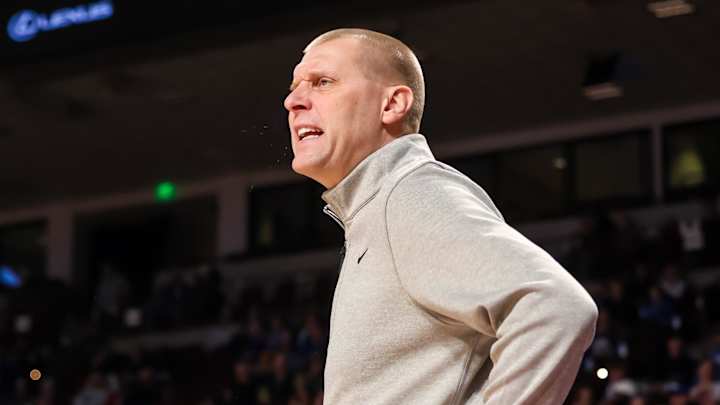
When asked about the rematch and whether his team is carrying added motivation, Mark Pope did what experienced coaches often do — he lowered the temperature.
“I know it’s boring,” Pope told reporters. “But guys, it’s every game. Every single team in this league is really, really physical. Every single team is really good. So every single game is the biggest game that we’ve ever played.”
On the surface, it’s classic coach-speak. No extra bulletin board material. No emotional fireworks.
But underneath the measured tone lies acknowledgment.
Pope didn’t dismiss what happened in Nashville. In fact, he was direct about it.
“That was not a happy night for us.”
Understatement of the month.
Physicality: The Core Issue
Pope’s analysis of that first meeting didn’t revolve around schemes or shot selection. It centered on toughness.
Vanderbilt’s guards attacked downhill. Their front line — undersized but relentless — created mismatches through effort. Isolation scorers embraced contact instead of avoiding it. And Kentucky struggled to respond.
Pope has made it clear that physical growth has been a point of emphasis since that night.
“We’re talking on it, working on it every day,” he said. “Elite-level college basketball right now is just really, really physical.”
That theme has followed Kentucky through recent matchups against South Carolina and Florida — games Pope described as “slugfests.”
The SEC isn’t forgiving. It doesn’t allow finesse-only success. And Pope believes his team is adjusting.
“I think we’ve grown a lot in that area. I think we’re making strides.”
The rematch with Vanderbilt offers a tangible test of that claim.
The Mental Shift
Physicality is visible. Mental growth is quieter.
But according to Pope, the mental side of Kentucky’s development may be even more significant.
“I think our focus has grown. We changed a lot of the ways we’re approaching practice,” Pope explained. “Our ability to channel our emotions is better.”
That statement speaks volumes.
Sometimes, humiliation can fracture a team. Other times, it sharpens one.
Kentucky appears determined to make the Nashville loss a catalyst rather than a scar.
Pope emphasized that his players now better understand the demands of the league.
“Our understanding of what it takes to compete in this league every single night is a little bit better.”
In February and March, those lessons matter.
Vanderbilt’s Confidence
From Vanderbilt’s perspective, the confidence isn’t accidental.
Their earlier victory wasn’t fluky. It was methodical.
Point guard Duke Miles orchestrated tempo. The frontcourt embraced contact. Defensive rotations forced Kentucky into contested shots.
When players later spoke about recognizing they could out-physical Kentucky, it wasn’t arrogance. It was preparation meeting execution.
And that confidence doesn’t disappear easily.
In rematches, belief can be just as powerful as strategy.
If Vanderbilt steps onto the court believing it can repeat the formula, Kentucky must prove otherwise quickly.
The Emotional Undercurrent
No matter how much Pope downplays the revenge angle, human nature is real.
Players remember.
They remember the scoreboard.
They remember the postgame comments.
They remember the feeling of walking off the floor knowing they were pushed around.
The key difference in this rematch may not be anger — it may be composure.
Kentucky doesn’t need emotional chaos. It needs controlled aggression.
Channeling that edge without letting it spiral is where maturity shows.
Pope’s emphasis on emotional control suggests he understands that balance.
Tactical Adjustments to Watch
Beyond mindset, the on-court chess match will matter.
1. Interior Response
Kentucky must establish physical presence early — boxing out, attacking the glass, finishing through contact. If Vanderbilt once again controls second-chance opportunities, the psychological edge returns immediately.
2. Tempo Control
The first game tilted into Vanderbilt’s rhythm. Kentucky may look to dictate pace more aggressively this time, especially in transition.
3. Defensive Discipline
Limiting isolation scoring opportunities will be critical. Forcing Vanderbilt into tougher perimeter looks could swing momentum.
4. Foul Management
Physical games often become whistle-dependent. Kentucky must avoid early foul trouble that disrupts rotations.
Growth Since January
Pope insists this is not the same team.
Improved practice structure.
Better emotional discipline.
Stronger physical preparation.
Those internal changes don’t always show up in headlines — but they show up in rematches.
The SEC schedule since Nashville has provided Kentucky with battle tests. Physical environments. Close finishes. Road adversity.
Experience can be a powerful teacher.
The Stakes Beyond Pride
While revenge headlines dominate, the standings matter too.
Late-season conference games influence seeding, tournament positioning, and national perception.
For Kentucky, defending home court reinforces progress. For Vanderbilt, repeating the formula strengthens legitimacy.
This isn’t just about settling a score.
It’s about trajectory.
The Coach’s Final Word
Perhaps the most telling moment came in Pope’s quiet conclusion about that first meeting:
“That was not a happy night for us.”
It wasn’t defensive. It wasn’t deflective.
It was honest.
And honesty often signals growth.
Prediction: Will Revenge Be Real?
Revenge narratives make for compelling headlines, but games are decided by execution.
If Kentucky truly has grown in physicality and mental discipline, it will show early — in box-outs, in loose-ball dives, in defensive rotations.
Expect a more controlled, composed Wildcats team. One that learned from Nashville rather than sulked over it.
Vanderbilt won’t be intimidated. Confidence from an 80–55 win doesn’t fade easily.
But home energy, emotional maturity, and tactical adjustments may tilt the edge.
Prediction: Kentucky 74, Vanderbilt 68.
Not a blowout. Not a statement demolition.
But a measured, disciplined response.
Final Thought
Revenge isn’t loud. It isn’t emotional chaos. It isn’t chest-beating.
Real revenge is growth.
Saturday won’t erase what happened in Nashville. It can’t.
But it can redefine what that loss means.
Was it a warning sign?
Or was it the turning point?
By the final buzzer, we’ll have our answer.