


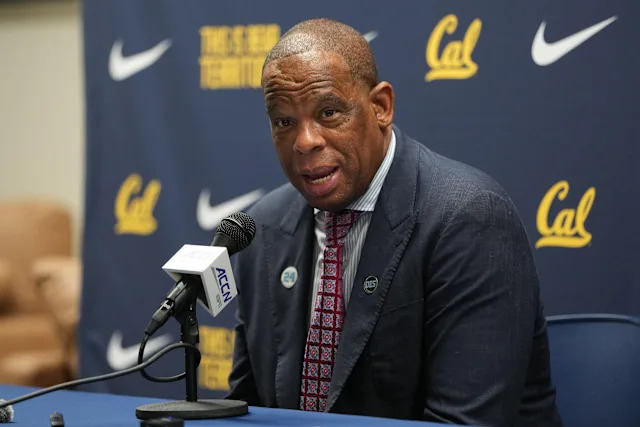
After a stunning collapse and mounting pressure, Hubert Davis finally broke his silence—but what he said has left fans more unsettled than ever, raising a question no one in Chapel Hill can ignore.
The moment didn’t just feel tense — it felt defining. In the immediate aftermath of North Carolina’s shocking loss to VCU, a game that slipped away despite a commanding late lead, all eyes turned to one man: Hubert Davis. This wasn’t just another postgame press conference. This was a moment loaded with frustration, expectation, and an undercurrent of uncertainty that had been building for weeks. And when Davis finally spoke, instead of calming the storm, many believe he may have intensified it.
At a program as historic and demanding as the North Carolina Tar Heels men’s basketball, every word matters. Every reaction is dissected. Every moment is magnified. And that’s exactly what happened here. Fans weren’t just listening for answers — they were searching for reassurance, leadership, and clarity after a collapse that felt almost unthinkable. Leading 70–56 with just over seven minutes remaining, North Carolina appeared firmly in control. Victory seemed inevitable. Then, in a matter of minutes, everything unraveled.
Missed shots. Defensive lapses. A sudden loss of composure. VCU surged, confidence shifted, and what once looked like a routine advancement turned into a stunning 82–78 defeat. It wasn’t just the loss that stung — it was how it happened. For a program built on discipline, late-game execution, and championship poise, this collapse cut deeper than most.
Naturally, the question everyone wanted answered was simple: what went wrong?
But when that question was posed to Hubert Davis, the response didn’t land the way many expected. Instead of a detailed breakdown, instead of a moment of reflection, Davis pushed back. His tone, firm and visibly frustrated, suggested that the answer should have been obvious. To some, it felt like deflection. To others, it felt like raw emotion spilling over. Either way, it instantly became the headline.
And in today’s college basketball landscape, moments like that don’t stay contained — they explode.
Within hours, clips circulated. Analysts weighed in. Fans debated. And perhaps most notably, voices like Adam Schein amplified the narrative, turning what might have been a fleeting moment into a full-blown conversation about Davis’s future. Schein didn’t mince words, questioning whether North Carolina — a program synonymous with excellence — could afford to settle for what he described as less than elite leadership.
That’s where things took a sharper turn.
Because this wasn’t just about one press conference anymore. It wasn’t even just about one game. It became about a pattern — or at least the perception of one. Back-to-back early exits in the NCAA Tournament. Inconsistencies throughout the season. Moments where the team looked dominant, followed by stretches where they looked unrecognizable. And now, a collapse that felt symbolic of those struggles.
Fair or not, the spotlight on Hubert Davis has never been brighter — or harsher.
And yet, the story isn’t nearly as simple as critics might suggest.
This is, after all, the same Hubert Davis who, in his very first season, led North Carolina to the national championship game. A remarkable run that defied expectations and reignited belief across Chapel Hill. It was a reminder of what the program could still be — and what Davis might become. He wasn’t just the successor to Roy Williams; he was a symbol of continuity, a bridge between past greatness and future potential.
That early success, however, came with a hidden cost: expectation.
At North Carolina, success isn’t appreciated in isolation — it becomes the standard. A national title appearance doesn’t buy years of patience; it raises the bar instantly. From that point forward, anything less feels like a step backward. And in the seasons since, Davis has found himself chasing not just wins, but the weight of those expectations.
To his credit, he hasn’t failed entirely. In fact, he achieved something no coach in program history had done before: winning 20 or more games in each of his first four seasons. In most programs, that would be celebrated as remarkable consistency. But in Chapel Hill, consistency without postseason success can feel incomplete.
That’s the paradox Hubert Davis is living in.
And it’s what makes this moment so pivotal.
Because when fans watched that press conference, they weren’t just reacting to what was said — they were reacting to what it represented. Was this a coach under pressure, struggling to articulate answers in a painful moment? Or was it a sign of something deeper — a disconnect, a lack of solutions, a program searching for direction?
The truth likely lies somewhere in between.
Coaching at North Carolina isn’t just a job; it’s a constant balancing act between legacy and evolution. The game has changed. The transfer portal, NIL deals, and shifting player dynamics have created a landscape that even the most experienced coaches are still navigating. Building a roster, maintaining chemistry, and sustaining success has become more complex than ever.
And yet, the expectations haven’t changed.
That’s what makes Schein’s criticism resonate with some fans. When he points to North Carolina’s resources — its brand power, its connection to the Jordan Brand, its recruiting reach — he’s highlighting the gap between potential and performance. In his view, a program with that kind of foundation should consistently compete at the highest level.
But others push back on that narrative.
They see a coach still growing, still learning, still adapting to one of the most demanding roles in sports. They see a leader who cares deeply, who understands the culture, and who has already proven he can guide a team to the brink of a championship. They argue that moments like this, as uncomfortable as they are, are part of the process — not proof of failure.
That’s what makes this debate so intense.
Because it’s not just about results — it’s about belief.
Do you believe Hubert Davis is the right coach to lead North Carolina forward? Or do you believe the program needs a different voice, a different approach, a different direction?
Right now, there’s no clear answer.
What is clear, however, is that the next chapter will be critical.
The offseason will bring decisions that could define Davis’s tenure. Roster changes. Transfer portal moves. Recruiting battles. Strategic adjustments. Every move will be scrutinized, every choice analyzed. And when next season begins, the margin for error will feel smaller than ever.
Because in college basketball, narratives can change quickly.
One deep tournament run can silence critics overnight. One breakthrough season can reshape perception entirely. And for Hubert Davis, that opportunity still exists. The same coach being questioned today could be celebrated tomorrow — if the results follow.
But until then, the questions remain.
Did his response after the loss reflect passion or pressure? Leadership or frustration? Confidence or concern?
And perhaps most importantly: did it bring clarity — or create more doubt?
As the conversation continues to unfold, one thing is certain: this moment won’t be forgotten anytime soon. Not because of what happened on the court, but because of what followed. Because sometimes, it’s not the loss itself that defines a season — it’s how you respond to it.
And right now, everyone is watching to see what Hubert Davis does next.




