


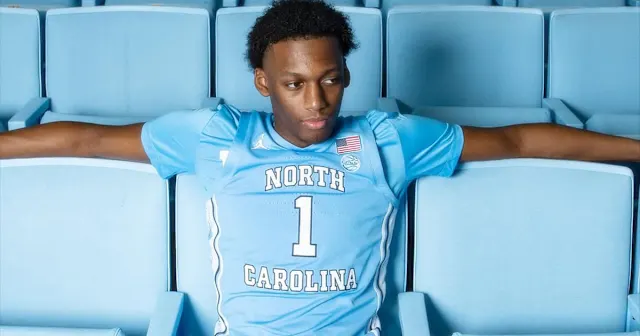
CHAPEL HILL, N.C. — In a move that has sent shockwaves through the Tar Heel fanbase, five-star point guard Dylan Mingo will no longer be heading to North Carolina Tar Heels. While the headline may suggest a sudden breakup, the deeper story reveals a calculated decision shaped by a new vision under head coach Michael Malone.
Mingo’s return visit to Chapel Hill this past weekend was expected to solidify his future with UNC. Instead, it became the turning point. Following extensive meetings with Malone and his newly assembled staff, the program made the difficult call to move in a different direction.
Multiple sources indicate that this decision wasn’t about talent—because Mingo has plenty of it. Ranked as the No. 6 overall player in the senior class and the nation’s top point guard by Rivals, his résumé speaks for itself.
From his standout performances at Long Island Lutheran to his MVP showing at the NBPA Top 100 camp, Mingo has long been viewed as a program-changing recruit.
However, this situation is less about ability and more about fit.
When Michael Malone took over in Chapel Hill, he inherited a roster and recruiting class built for a completely different system under former coach Hubert Davis. Mingo was one of the crown jewels of that previous regime, committing in February during a live appearance on First Take alongside Stephen A. Smith.
But coaching changes often come with philosophical resets—and this was no exception.
Sources close to the program suggest that Malone is prioritizing a different type of floor general—one that emphasizes defensive intensity, physicality, and system discipline over high-usage offensive creativity. While Mingo excels as a dynamic, ball-dominant playmaker, Malone’s vision appears to lean toward a more structured, NBA-style approach.
That contrast created a quiet but significant disconnect.
Adding to the complexity was timing. Mingo had not yet signed with UNC, as the NCAA spring signing period only opened on April 15. This gave both sides the flexibility to reassess without the complications of a formal release.
The second official visit—allowed due to the coaching change—was meant to align expectations. Instead, it clarified differences.
For Mingo, the opportunity to re-open his recruitment now allows him to find a program that fully embraces his style of play. Schools like Baylor, Penn State, and Washington—his original finalists—could quickly re-enter the picture, alongside several other high-major programs that had previously extended offers.
Meanwhile, UNC is doubling down on Malone’s blueprint.
Four-star forward Maximo Adams has already reaffirmed his commitment to the Tar Heels, signaling belief in the new direction. Alongside three-star guard Malloy Smith, the foundation of this recruiting class is beginning to take shape—just not in the way fans initially expected.
Still, the departure of a player like Mingo raises questions.
Was this a missed opportunity? Or a necessary reset?
For Malone, it’s clear: culture and system fit outweigh star rankings. It’s a bold stance, especially at a program where elite guard play has historically defined success. But it also signals a long-term vision rather than a short-term gamble.
For Mingo, this is not an ending—it’s a pivot. His talent ensures he will remain one of the most sought-after prospects in the country.
And for UNC fans, this moment may be remembered as the first true glimpse into the Malone era—where even five-star talent isn’t guaranteed a place unless it fits the blueprint.
One thing is certain: this decision wasn’t just about letting a player go.
It was about redefining the future of Carolina basketball.




