


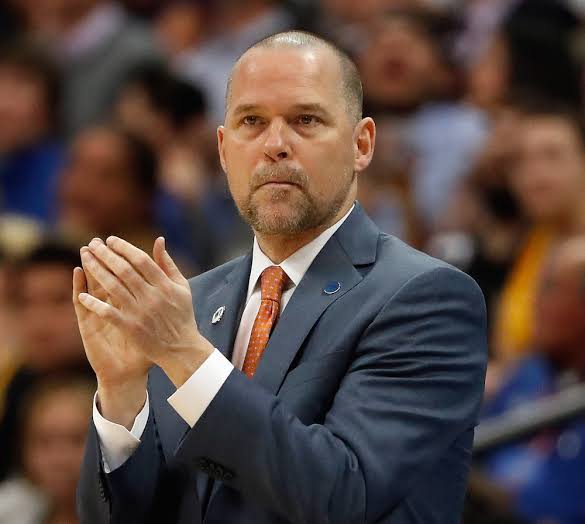
UNC SHAKE-UP? Michael Malone DUMPS Three Players, Saves $6 MILLION — And the Bigger Plan Brewing Behind the Scenes Could CHANGE EVERYTHING
The moment Michael Malone stepped onto the campus of North Carolina Tar Heels men’s basketball, it was clear that something felt… different. This wasn’t just another coaching hire. This wasn’t a continuation of tradition.
This was a disruption.
For decades, the program built by Dean Smith and elevated by Roy Williams thrived on continuity, culture, and a deep-rooted identity. But now, an NBA champion coach — an outsider by Carolina standards — has arrived with a completely different vision.
And just one week into his tenure, Malone has already made a move that is sending shockwaves across college basketball.
He didn’t just tweak the roster.
He tore into it.
A $6 MILLION STATEMENT THAT NOBODY SAW COMING
In a college basketball world now dominated by NIL deals and financial maneuvering, roster decisions are no longer just about talent — they’re about value.
And Malone just made one of the boldest value plays we’ve seen yet.
According to reports, North Carolina has wiped approximately $6 million in NIL commitments off the books by cutting ties with three players: Dylan Mingo, Kyan Evans, and Luka Bogavac.
Let that sink in.
Six million dollars — gone in an instant.
At first glance, it feels almost unthinkable. Why would any program willingly part ways with that level of talent and investment? Why walk away from a five-star guard like Mingo, who was once seen as a cornerstone piece for the future?
But here’s the truth:
This wasn’t reckless.
This was calculated.
THE END OF ONE ERA — AND THE START OF ANOTHER
Under Hubert Davis, UNC had continued to lean into the traditional blueprint — recruiting elite high school talent, developing them within the system, and maintaining the program’s historic identity.
But Malone isn’t here to preserve the past.
He’s here to rebuild the future.
And that future looks very different.
Instead of banking on raw freshman talent, Malone appears to be prioritizing something far more immediate:
Experience.
Control.
Certainty.
In today’s game, that often means turning to the transfer portal — a marketplace filled with proven college players who can step in and contribute right away.
And to compete in that market, you need resources.
A lot of them.
WHY CUTTING A FIVE-STAR LIKE DYLAN MINGO ACTUALLY MAKES SENSE
Let’s address the biggest shock of all — the departure of Dylan Mingo.
On paper, this move is the kind that would make fans panic. Five-star recruits don’t just grow on trees. They’re the lifeblood of elite programs, the future stars, the potential one-and-done lottery picks.
But Malone isn’t looking at stars.
He’s looking at fit.
A freshman guard — no matter how talented — comes with uncertainty. Can he adjust to the college game immediately? Can he lead? Can he handle pressure? Can he defend at a high level?
Those are questions Malone doesn’t want to gamble on in Year One.
Instead, he’s looking for answers he already knows.
FOLLOW THE MONEY — AND THE STRATEGY BECOMES CLEAR
Here’s where things get even more interesting.
By clearing $6 million in NIL commitments, Malone hasn’t just freed up money — he’s created flexibility.
And flexibility is power.
Suddenly, UNC can enter bidding wars for elite transfer talent. Suddenly, they can target players who are not just good — but proven.
One name already emerging in this conversation is Juke Harris, a Wake Forest transfer reportedly commanding over $3 million.
At first, that number might seem outrageous.
But when you break it down, it starts to make sense.
Would you rather spend $3 million on a freshman with no college experience…
Or $3 million on a player who has already proven he can perform at a high level?
For Malone, the answer is clear.
THE NBA MINDSET HAS ARRIVED IN COLLEGE BASKETBALL
What we’re witnessing right now isn’t just a roster adjustment.
It’s a philosophical shift.
Malone is bringing an NBA-style approach to UNC — one that prioritizes roster construction over recruiting rankings, fit over hype, and results over projections.
In the NBA, teams don’t build around potential alone. They build around proven production, chemistry, and strategic spending.
Now, that same mindset is being applied in Chapel Hill.
And it could change everything.
A HIGH-RISK, HIGH-REWARD GAMBLE
Let’s be clear — this strategy isn’t without risk.
If Malone lands the players he’s targeting, UNC could instantly become a contender. A roster filled with experienced, battle-tested players could give the Tar Heels a level of consistency that many teams lack.
But if those targets fall through?
If the big fish go elsewhere?
Then UNC could find itself in a dangerous position — having lost elite young talent without securing elite replacements.
That’s the gamble.
And Malone knows it.
THE PRESSURE IS ALREADY BUILDING
At a program like UNC, patience is limited.
Fans expect results.
Tradition demands excellence.
And when you make bold moves like this, the spotlight only gets brighter.
Malone isn’t just rebuilding a roster.
He’s redefining expectations.
And that comes with pressure unlike anything he’s faced before.
WHY THIS COULD ACTUALLY WORK
Despite the risks, there’s a compelling argument that this approach could be exactly what UNC needs.
College basketball has changed.
The old model — recruit freshmen, develop them over time — is no longer the only path to success. In fact, many of the top teams in recent years have leaned heavily on transfers and experienced players.
Malone is simply adapting faster than most.
He’s recognizing that in the NIL era, success isn’t just about who you recruit — it’s about how you build.
THE BIGGER PLAN: WHAT IS MALONE REALLY BUILDING?
This is the question everyone is asking.
What is the endgame?
Why make such aggressive moves so early?
The answer might be simpler than it seems:
Malone is trying to build a team that can win immediately.
Not in two years.
Not in three years.
Now.
And to do that, he needs players who are ready — not players who need time.
FINAL THOUGHTS: A MOMENT THAT COULD DEFINE AN ERA
In the coming months, we’ll learn whether this gamble pays off.
We’ll see whether the $6 million reset leads to a stronger, more competitive roster.
We’ll find out whether Malone’s vision can translate to college basketball success.
But one thing is already certain:
This isn’t business as usual in Chapel Hill.
This is something new.
Something bold.
Something that could either elevate UNC back to the top — or force the program into a period of painful transition.
Either way, the message has been sent loud and clear:
Michael Malone isn’t here to follow tradition.
He’s here to change it.
And if this is just the beginning…
College basketball might not be ready for what comes next.




