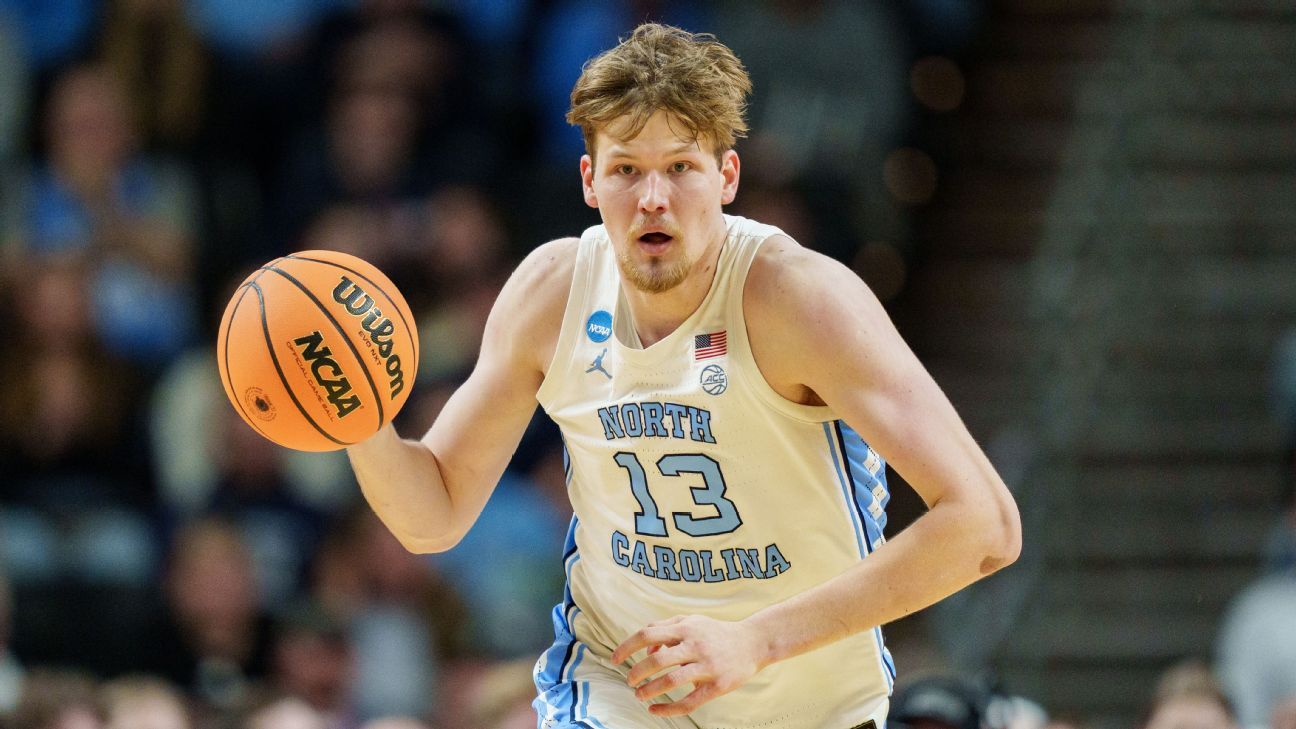
The buzz around men’s college basketball is already heating up, ,The buzz around men’s college basketball is already heating up, and few storylines are more compelling than the ongoing rebuilds among the sport’s traditional powerhouses. At the center of that conversation is the University of North Carolina, a program determined to reassert itself among the elite by aggressively reshaping its roster ahead of the 2026–27 season.
For UNC, the offseason plan is becoming increasingly clear: retain key interior presence while surrounding it with dynamic perimeter scoring. Holding onto forward Henri Veesaar remains a top priority, as his size, versatility, and interior skill set provide a strong foundation. But beyond that, the Tar Heels are zeroing in on guards and wings who can stretch the floor, create offense, and elevate the team’s overall tempo.
One of the most prominent names on UNC’s radar is Utah transfer Terrence Brown. Widely regarded as one of the more polished perimeter scorers in the transfer portal, Brown has already generated significant interest from multiple high-profile programs. He has taken visits to both North Carolina and Kansas, signaling that his recruitment is firmly in blue-blood territory. Brown’s ability to score at all three levels—driving to the rim, knocking down mid-range jumpers, and shooting from deep—makes him an ideal fit for UNC’s evolving system.
Adding a player of Brown’s caliber would immediately address one of the team’s biggest weaknesses from last season: consistent outside shooting and shot creation. UNC struggled at times to generate offense in half-court sets, often relying too heavily on interior play. Brown could change that dynamic, giving the Tar Heels a reliable go-to option on the perimeter.
Another intriguing prospect is Wake Forest transfer Juke Harris. Harris has already met with the UNC coaching staff, indicating mutual interest. However, his situation is more complex, as he is also exploring his options in the NBA Draft process. That dual path creates some uncertainty, but it also speaks to his talent level. Harris is known for his athleticism, defensive energy, and improving offensive game—traits that could make him a valuable two-way contributor at the college level or an intriguing prospect professionally.
UNC’s pursuit of Harris highlights a broader strategy: targeting players who not only bring scoring ability but also versatility and defensive upside. In today’s game, wings who can guard multiple positions and contribute offensively are highly coveted, and Harris fits that mold well.
The Tar Heels aren’t limiting their search to high-profile transfers alone. They have also reached out to NC State standouts Matt Able and Paul McNeil Jr., both of whom bring different strengths to the table. Able is known for his scoring instincts and ability to take over games, while McNeil offers a blend of athleticism and perimeter shooting that could complement UNC’s existing roster.
Casting a wide net across both the transfer portal and in-state talent pools demonstrates UNC’s urgency and intent. The coaching staff understands that competing at the highest level requires not just talent, but the right mix of skills and experience. By targeting multiple players with varying strengths, they are increasing their chances of building a balanced and competitive lineup.
This aggressive approach also reflects the broader landscape of college basketball, where roster turnover has become the norm. With the transfer portal playing a central role in team-building, programs must act quickly and decisively to secure impact players. UNC is clearly embracing that reality, positioning itself as a destination for top-tier talent looking for both exposure and opportunity.
At the same time, the Tar Heels’ recruiting efforts signal a shift in identity. While the program has long been associated with dominant big men and strong interior play, the modern game demands more perimeter-oriented strategies. Spacing, shooting, and guard play are now critical components of success, especially in deep tournament runs. UNC’s focus on perimeter scorers suggests a willingness to adapt and evolve.
The stakes are high. As one of college basketball’s most storied programs, expectations at North Carolina are always elevated. Fans and analysts alike are watching closely to see how this rebuild unfolds. Early indications suggest that the Tar Heels are not content with incremental improvement—they are aiming for a significant leap forward.
If UNC can successfully land one or more of its top targets, the impact could be immediate. A revamped roster featuring a strong interior anchor like Veesaar, combined with explosive perimeter talent, would give the team a more balanced and dangerous profile. It would also restore confidence that the program is firmly back on track.
In the ever-competitive world of college basketball, rebuilds can be unpredictable. But one thing is clear: North Carolina is making its move, and the rest of the nation is taking notice.