


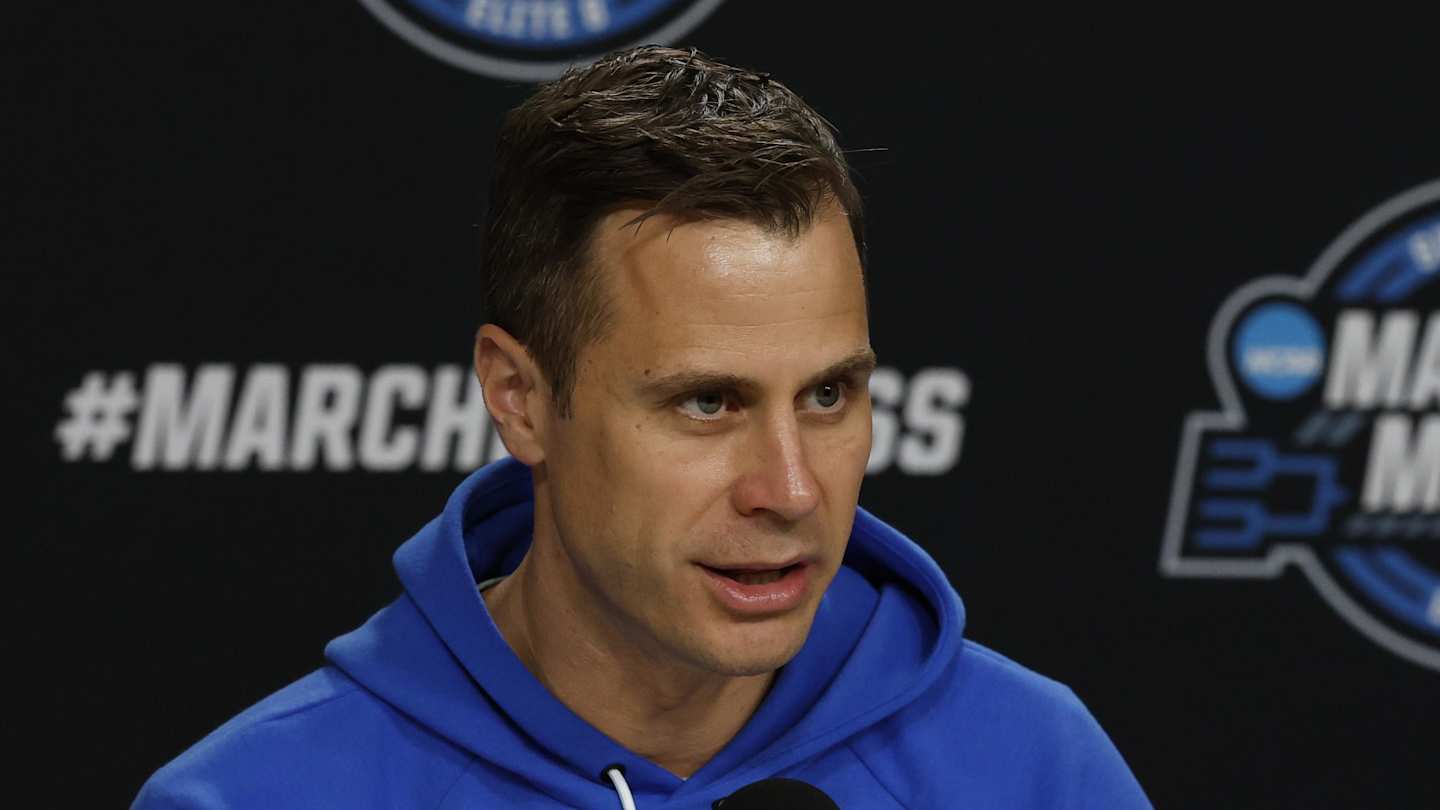
The Duke basketball program is undergoing a noticeable transformation as it builds toward the 2026–27 season. After a relatively quiet start to the NCAA Transfer Portal cycle, head coach Jon Scheyer and his staff have surged into action, assembling a roster that blends continuity, experience, and strategic portal additions.
In recent days, Duke secured the return of several key contributors, including freshman guard Cayden Boozer, redshirt freshman forward Sebastian Wilkins, junior guard Caleb Foster, and sophomore forward Patrick Ngongba. Retaining this core provides a strong foundation, ensuring familiarity within the system and continuity on both ends of the floor. In addition, the Blue Devils made impactful moves in the transfer portal, landing former Belmont forward Drew Scharnowski and former Wisconsin standout guard John Blackwell—two experienced players expected to make immediate contributions.
While the program still awaits a decision from Dame Sarr, the current roster outlook already positions Duke as a serious national title contender on paper. The combination of returning talent and seasoned transfers signals a deliberate shift in philosophy—one that reflects the evolving landscape of college basketball.
A Strategic Shift Toward Experience
For years, Duke has been synonymous with elite freshman talent. From the era of Mike Krzyzewski to the early years under Scheyer, the Blue Devils consistently relied on top-ranked recruiting classes to drive success. However, the modern era—defined by NIL opportunities and the transfer portal—has reshaped how championship teams are built.
Scheyer’s approach this offseason suggests a clear understanding of that shift. Rather than depending heavily on incoming freshmen, Duke is prioritizing veteran presence and roster continuity. This strategy mirrors recent championship trends, where experience and cohesion often outweigh raw talent alone.
A notable example comes from Michigan’s recent national championship run under Dusty May, where an all-transfer starting lineup proved that seasoned players can outperform younger, less experienced teams. Duke appears to be taking a similar path, ensuring that its roster features players who understand the college game and can execute at a high level under pressure.
Scharnowski, entering his junior season, brings versatility and maturity to the frontcourt. Blackwell, a senior guard, adds leadership, scoring ability, and composure—qualities that are invaluable in high-stakes moments. Meanwhile, returning players like Wilkins, Ngongba, and Boozer already have experience within Duke’s system, further strengthening team chemistry.
Breaking Away From Tradition
This veteran-focused model represents a significant departure from Duke’s traditional blueprint. Over the past decade, the program has consistently leaned on one-and-done freshmen to carry the scoring load and define team identity.
Recent examples highlight that trend. Players like Cameron Boozer and Cooper Flagg headlined top-ranked recruiting classes and were expected to make immediate impacts. In fact, Duke has had a freshman lead the team in scoring in seven of the past nine seasons—a testament to its reliance on elite young talent.
However, the projected lineup for next season tells a different story. A potential starting five could feature Blackwell, Foster, Sarr, Cameron Williams, and Ngongba—a group dominated by experienced players. If this projection holds, it’s possible that only one, or even zero, freshmen will start for the Blue Devils.
That scenario would be a stark contrast to what Duke fans have grown accustomed to. Even highly touted recruits like five-star point guard Deron Rippey Jr. may find themselves coming off the bench, emphasizing just how much the program’s priorities have shifted.
Adapting to a New Era
College basketball is evolving rapidly, and Duke is adapting in real time. The days of relying solely on elite recruiting classes are giving way to a more balanced approach—one that values experience, depth, and roster stability.
This doesn’t mean freshman talent is no longer important. Programs like Illinois and Arizona have shown that elite newcomers can still lead successful teams. However, those teams also featured veteran pieces who provided leadership and consistency.
Scheyer’s current strategy reflects this balance. By retaining key players, adding experienced transfers, and integrating talented freshmen into defined roles, Duke is positioning itself for sustained success in a highly competitive environment.
A Championship Mindset
Ultimately, Duke’s offseason moves send a clear message: the program is all-in on winning now. By embracing a veteran-driven roster, the Blue Devils are prioritizing readiness, resilience, and execution—qualities that often determine success in March.
The shift may feel unfamiliar, but it’s a calculated evolution rather than a departure from excellence. Duke isn’t abandoning its identity; it’s refining it to match the demands of modern college basketball.
As the 2026–27 season approaches, one thing is certain: this version of Duke will look different—but it may also be more dangerous than ever.




