


CHAPEL HILL, N.C. — The North Carolina Tar Heels men’s basketball will enter the 2026–27 season with a reshaped roster following the departure of Henri Veesaar, who has officially declared for the 2026 NBA Draft and will not return to Chapel Hill.
Veesaar’s decision, which had been anticipated in recent days, became official Friday and immediately altered the trajectory of North Carolina’s offseason planning.
The 6-foot-11 forward/center brought a rare dimension to the Tar Heels’ system with his ability to stretch the floor, shooting better than 40 percent from beyond the arc. His presence forced opposing defenses to extend, creating driving lanes and spacing opportunities that will now be more difficult to replicate.
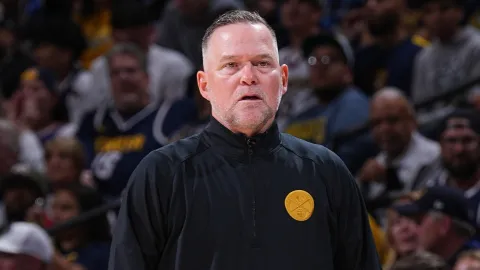
For first-year head coach Michael Malone, the timing presents both a challenge and an opportunity. Malone and his staff had already been active in the transfer portal, adding multiple pieces to address depth and versatility. However, Veesaar’s exit shifts the focus more heavily toward frontcourt stability and interior production, areas that now carry increased importance heading into the new campaign.
Despite the setback, expectations within the program remain high. North Carolina continues to assemble a roster capable of competing at the top of college basketball, though its identity may look different from what was initially envisioned.
Backcourt Foundation Taking Shape
The Tar Heels’ projected starting lineup will be anchored in the backcourt by a high-scoring transfer from the Utah Utes men’s basketball, who averaged nearly 20 points per game in his previous season. Known for his ability to create off the dribble and attack the rim, he is expected to take on primary ball-handling responsibilities.
While his perimeter shooting remains an area to watch, his athleticism and shot creation provide North Carolina with a reliable offensive initiator. Without Veesaar spacing the floor, opposing defenses may collapse more aggressively, placing added emphasis on the guard’s decision-making and ability to generate efficient looks.
Alongside him is Avdalas, a versatile 6-foot-9 guard transfer from the Virginia Tech Hokies men’s basketball. Avdalas averaged 12.1 points, 4.6 assists and 3.1 rebounds in 2025, showcasing a unique skill set for a player of his size. His combination of length and playmaking gives Malone lineup flexibility, allowing the Tar Heels to initiate offense from multiple positions.
Youth and Upside on the Wing
One of the most intriguing pieces on the roster is five-star freshman Maximo Adams, who is expected to step into a starting role at small forward. Adams enters Chapel Hill with significant expectations, bringing the ability to score at all three levels. His development will be a key factor in determining the ceiling of this group.
There had been some uncertainty surrounding the program’s recruiting class following the coaching transition, particularly after the departure of highly touted guard Dylan Mingo. However, Adams remained committed, and his fit within Malone’s system could prove critical as North Carolina looks to maintain offensive balance.
Frontcourt Adjustments Without Veesaar
The frontcourt, meanwhile, is where the impact of Veesaar’s departure will be felt most directly. Jarin Stevenson, a transfer from the Alabama Crimson Tide men’s basketball, is expected to take on a larger role at power forward. Stevenson showed flashes late last season, averaging 10.4 points and 6.4 rebounds during an expanded stretch of minutes.
His ability to contribute as a scorer and rebounder will be essential, particularly as North Carolina looks to replace Veesaar’s production by committee rather than through a single player.
At center, Maxim Logue is currently projected to step into the starting lineup. A late addition via the transfer portal, Logue was not widely linked to North Carolina before his commitment, but his arrival now carries increased significance. While he may have initially been viewed as a rotational piece, circumstances have elevated his role.
Logue’s physical presence and interior play will be important, though he does not replicate the same perimeter shooting threat that Veesaar provided. As a result, the Tar Heels may need to adjust their offensive approach, potentially placing greater emphasis on pace, transition scoring and guard-driven creation.
Looking Ahead
With roster construction still fluid, North Carolina is expected to continue evaluating options as the offseason progresses. Additional moves in the transfer portal remain possible, particularly if the staff looks to add depth in the frontcourt.
Even with the uncertainty, the program’s expectations have not shifted. Under Malone’s leadership, the Tar Heels are aiming to remain competitive on the national stage, relying on a blend of experienced transfers and high-upside young talent.
Veesaar’s departure undoubtedly changes the equation, but it also presents an opportunity for others to emerge. How quickly those pieces come together will likely determine whether North Carolina can meet its ambitions in the 2026–27 season.




