


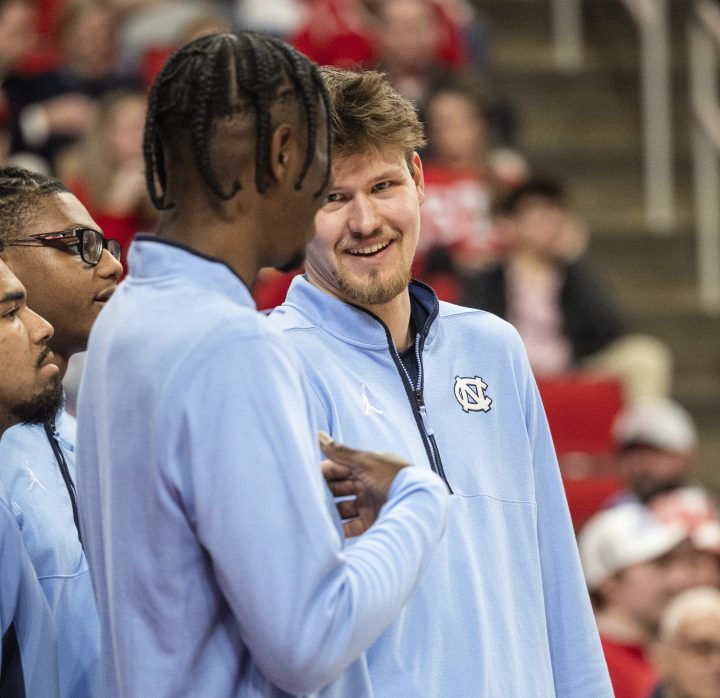
A RARE TREND RESURFACES IN CHAPEL HILL: A 54-YEAR-OLD PATTERN IS BACK—AND IT’S HAPPENING AT THE WORST POSSIBLE TIME… UNC’s Latest Early Departures Aren’t Just Rare… They Echo a Little-Known History That Could Signal a Much Bigger Shift Behind the Scenes Than Fans Realize…
CHAPEL HILL, NC — April 2026
For decades, the identity of the North Carolina Tar Heels men’s basketball program has been built on continuity, development, and patience. Unlike some of its blue-blood rivals, North Carolina has rarely been defined by one-and-done stars or sudden early departures. Instead, the Tar Heels traditionally thrived on multi-year growth, veteran leadership, and roster stability.
But now, something unusual is happening.
Something that hasn’t just occurred once—but twice in a way that’s forcing longtime observers to look back through decades of history to fully understand it.
And what they’re finding is both rare… and unsettling.
A Moment That Feels Bigger Than It Should
The recent departures of Henri Veesaar and Caleb Wilson have officially placed this offseason into a category that, until now, barely existed in North Carolina history.
Both players are leaving Chapel Hill for the NBA with eligibility remaining—and after just one season in the program.
On the surface, that may not seem shocking in today’s era of college basketball. Early exits have become common across the sport, especially among elite programs.
But at North Carolina?
It’s different.
This is only the second time in program history that two players have made such a move in the same cycle.
The last time it happened? 2019.
The Last Time… and Why This Feels Different
Back in 2019, freshmen Coby White and Nassir Little both declared early for the NBA Draft, marking a rare moment where North Carolina briefly mirrored the “one-and-done” culture more commonly associated with programs like Duke or Kentucky.
Even then, the situation felt somewhat expected. Both players arrived in Chapel Hill as highly-touted prospects with clear NBA trajectories.
But fast forward to now, and the current situation feels far less predictable—and far more disruptive.
Veesaar’s breakout season turned him into a legitimate NBA prospect almost overnight, while Wilson’s departure had long been anticipated. Together, however, their exits create a ripple effect that goes far beyond individual decisions.
Because this isn’t just about talent leaving.
It’s about timing.
A 54-Year-Old Echo
To truly grasp how unusual this is, you have to go back more than half a century.
The first instance of a Tar Heel leaving early for the NBA after a single season dates back 54 years to Bob McAdoo, who played under legendary coach Dean Smith.
At the time, such a move was groundbreaking. College players rarely left early, and the idea of a one-season star was almost unheard of.
Since then, North Carolina has seen only a small handful of players follow a similar path—names like Marvin Williams and Tony Bradley among them.
In total, the number of Tar Heels who left after just one season with eligibility remaining is astonishingly low compared to other powerhouse programs.
Which is exactly why what’s happening now feels so significant.
More Than Just a Coincidence?
The natural question becomes: is this just coincidence… or the beginning of something bigger?
College basketball is changing rapidly. NIL deals, the transfer portal, and increased NBA scouting exposure have fundamentally altered how players approach their careers. The traditional model—stay multiple years, develop, then leave—is no longer the default.
Even at a program like North Carolina, those shifts are becoming impossible to ignore.
And while two early departures don’t necessarily signal a trend, they do raise important questions:
- Is UNC beginning to attract more NBA-ready, short-term talent?
- Are player development timelines accelerating faster than before?
- Or is this simply the new reality of modern college basketball, finally catching up to Chapel Hill?
The Immediate Impact: A Roster in Flux
Beyond the historical significance, the practical impact is undeniable.
Losing two key players in one offseason—especially one as productive as Veesaar—creates major uncertainty for head coach Michael Malone and his staff.
Roster plans must be reworked. Roles must be redefined. And perhaps most importantly, the program must now replace production that cannot easily be replicated.
In previous eras, UNC could rely on experienced upperclassmen to fill those gaps.
Now, the margin for error is much smaller.
A Program at a Crossroads?
This moment doesn’t define North Carolina basketball—but it may signal a shift in how the program operates moving forward.
Will UNC lean further into recruiting elite, NBA-ready prospects, even if it means shorter tenures?
Or will it attempt to maintain its traditional identity in a landscape that’s rapidly evolving?
The answer may not come immediately.
But what’s clear is that the program is navigating a delicate balance between tradition and transformation.
Final Thoughts
History doesn’t repeat itself often in Chapel Hill—but when it does, it tends to mean something.
A pattern that began 54 years ago has resurfaced in a way few could have predicted. And while it may still be too early to call it a trend, the timing—and the implications—are impossible to ignore.
Because sometimes, the rarest moments are the ones that signal the biggest changes.
And right now, North Carolina may be standing at the edge of one.
Stay tuned as UNC’s offseason continues to unfold—and as the long-term impact of these departures becomes clearer.




