


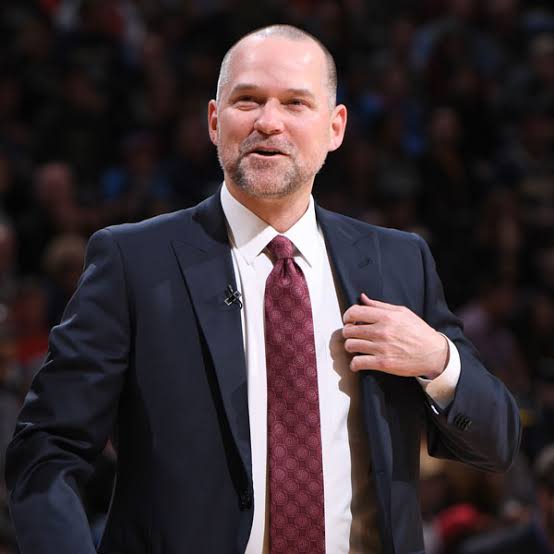
The North Carolina Tar Heels may be on the verge of one of the most dramatic transformations in modern college basketball—and if early roster moves are any indication, new head coach Michael Malone might be doing far more than simply rebuilding UNC.
He may be attempting something much bigger.
He may be recreating the blueprint that made him an NBA champion with the Denver Nuggets—only this time, in Chapel Hill.
For Tar Heels fans, ACC rivals, and the broader college basketball world, that possibility is both thrilling and terrifying.
Because if Malone successfully translates his professional system to the college game, North Carolina may not just return to national prominence.
They could become an entirely different kind of powerhouse.
From NBA Champion to College Basketball Architect
When UNC made the stunning decision to hire Malone, the move immediately captured national attention. Here was a coach who had climbed to the top of professional basketball, won an NBA title, and established himself as one of the game’s premier strategists.
But while his résumé was undeniable, the biggest question remained:
How would Malone adapt his philosophy to college basketball?
The answer may already be unfolding through roster construction.
Rather than simply chasing conventional college stars, Malone appears to be targeting size, versatility, skill, and frontcourt dominance—the very pillars that powered Denver’s championship formula.
This isn’t random recruiting.
This looks increasingly like strategic replication.
The Nuggets Blueprint: Why It Worked
To understand Malone’s possible vision for UNC, one must first examine what made Denver so dangerous.
His championship Nuggets roster was built around several core principles:
Elite Size Across Multiple Positions
Denver’s frontcourt featured:
Nikola Jokić
Aaron Gordon
Michael Porter Jr.
This trio created overwhelming mismatches with length, rebounding, scoring versatility, and defensive flexibility.
Offensive Fluidity Through Big Men
Rather than relying solely on guard play, Malone empowered large, skilled players to facilitate offense.
Defensive Physicality
Denver used size not only offensively but also to protect the rim, dominate rebounds, and wear opponents down physically.
Positionless Versatility
Players with unique skill sets blurred traditional positional lines.
Now consider what UNC’s recent moves suggest.
The parallels are hard to ignore.
UNC’s New-Look Roster: Building Big
Following the likely departure of Henri Veesaar to the NBA Draft, North Carolina could have panicked.
Instead, Malone pivoted aggressively.
Cade Bennerman: The Interior Replacement
By landing Cade Bennerman, a 7-foot transfer from Northwestern University, Malone immediately reestablished size in the paint.
Though Bennerman remains relatively unproven, his physical profile alone suggests a deliberate priority:
Control the interior.
Neoklis Avdalas: The Oversized Playmaker
UNC’s addition of Neoklis Avdalas may be even more revealing.
At 6-foot-9, Avdalas offers perimeter skill in a larger frame—exactly the type of versatile piece that modern basketball increasingly values.
His ability to handle, create, and defend multiple positions mirrors the kind of lineup flexibility Malone embraced in Denver.
Maxim Logue and Frontcourt Layering
Combined with players like Maxim Logue, the Tar Heels appear to be assembling layers of length rather than isolated size.
This is not traditional roster building.
This is structural identity building.
Is Malone Recreating Denver in Chapel Hill?
While college basketball differs dramatically from the NBA, certain universal advantages remain:
Bigger lineups can dominate smaller teams
Rebounding wins possessions
Defensive length disrupts offenses
Versatile players create matchup nightmares
Malone appears to recognize this.
Instead of merely adapting to college trends, he may be trying to impose an NBA-style roster philosophy that few college programs can match.
If successful, UNC could field lineups that:
Overwhelm opponents physically
Protect the rim at elite levels
Space the floor with larger athletes
Exploit mismatches offensively
Create defensive chaos
In short:
North Carolina could become a supersized modern basketball machine.
The Veesaar Domino Effect
The departure of Veesaar was undoubtedly significant.
Reports suggested major NIL opportunities existed to retain him, with outside programs allegedly offering staggering sums. Yet UNC chose not to overextend recklessly.
This decision may reveal another important piece of Malone’s long-term strategy:
System over individual stars.
Rather than building around one expensive player, Malone may prefer constructing a balanced, sustainable roster that fits his broader blueprint.
That approach mirrors successful NBA roster management far more than reactive college recruiting.
And if true, it suggests UNC is playing a much longer game.
Recruiting Philosophy Shift
Historically, North Carolina has thrived by landing elite traditional recruits.
Under Malone, the focus may evolve toward:
Size + Skill
Not just talent—but functional versatility.
Developmental Upside
Players who can grow within a system.
Professional Preparation
Malone’s NBA experience may appeal strongly to recruits seeking pro development.
International Reach
As global basketball continues expanding, Malone’s broader perspective could dramatically widen UNC’s recruiting footprint.
This shift could make North Carolina uniquely positioned among blue-blood programs.
Potential Advantages Over ACC Rivals
If Malone’s vision materializes, UNC may gain substantial advantages over conference opponents:
Against Smaller Teams
The Tar Heels could dominate physically.
Against Traditional Bigs
Versatile size may create spacing and mobility mismatches.
In Tournament Play
Depth, defense, and rebounding often prove decisive in March.
Recruiting Battles
Malone’s NBA credibility adds another powerful selling point.
Programs like Duke University, University of Virginia, and University of Louisville may soon find themselves confronting a dramatically different UNC.
Risks and Challenges
Of course, no transformation is guaranteed.
College basketball presents unique variables:
Younger players
Faster roster turnover
NIL complications
Transfer portal volatility
Less practice time than NBA systems
Malone must also prove he can translate professional concepts effectively to collegiate athletes.
Potential risks include:
Developmental Gaps
Can younger players execute complex systems?
Chemistry
Will larger, skill-based lineups gel quickly?
Pace Differences
Can NBA-inspired strategies adapt to college tempo?
Recruiting Balance
Will traditional elite guards still buy in?
These questions remain unanswered.
But the ambition is undeniable.
Why This Could Change Everything
If Malone succeeds, UNC may not simply compete for championships.
They may redefine roster construction at the college level.
Imagine a future where major programs increasingly prioritize:
6’8”+ ball handlers
Multi-positional defenders
Skilled seven-footers
NBA-style spacing
Versatile frontcourt ecosystems
UNC could become the testing ground for that evolution.
And if it works?
The rest of college basketball may be forced to adapt.
Fan Expectations Are Sky-High
For Tar Heels fans, excitement is already building.
The idea of an NBA champion coach implementing a proven championship formula is intoxicating.
Questions now dominate the offseason:
Can Bennerman become UNC’s interior anchor?
Will Avdalas evolve into a matchup nightmare?
Can Malone out-scheme college peers?
Is this roster just the beginning?
Every move now feels magnified because it may represent pieces of a much larger master plan.
Final Thoughts: A Revolution in Progress?
It may be too early to declare that Michael Malone is fully replicating his Denver blueprint at North Carolina.
But the evidence is mounting.
Through strategic recruiting, frontcourt prioritization, size accumulation, and versatility, Malone appears to be building something distinctly modern—and potentially revolutionary.
This is not a casual transition from NBA to college.
This feels like a calculated experiment by a championship coach determined to reshape one of college basketball’s most storied programs.
If Malone pulls it off, Chapel Hill could soon become home to a new basketball empire—one forged not only through tradition, but through innovation.
And if that happens, the ACC may face a terrifying new reality:
North Carolina won’t just be back.
They may be bigger, smarter, and more dangerous than ever before.




