


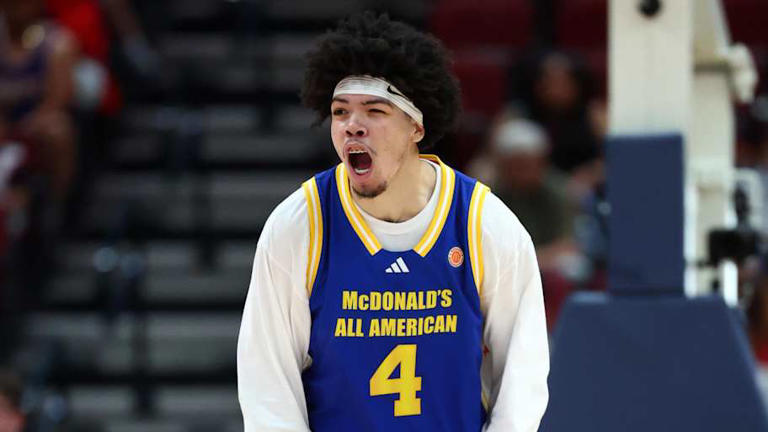
There are moments in college basketball when a single decision doesn’t just shape a roster—it reshapes an entire season, alters perception, and in some cases, puts a coach’s future under a microscope. For Kentucky, this offseason may end up being remembered as one of those moments. And at the center of it all is one name: Tyran Stokes.
What once looked like a calculated, high-upside gamble by Mark Pope is now being questioned from every angle. Was it vision? Was it overconfidence? Or was it a miscalculation that could ripple far beyond just one recruiting cycle?
To understand the weight of this situation, you have to rewind to how things began.
A Plan That Made Sense… At First
After a disappointing season, Pope entered the offseason with what many believed was a clear and logical blueprint. The idea was simple: retain young talent, develop continuity within his system, and make selective additions rather than overhauling the entire roster.
In theory, it was exactly what Kentucky needed.
College basketball has shifted dramatically in recent years. The transfer portal has turned roster-building into a year-round chess match, and programs that chase quick fixes often struggle with chemistry and identity. Pope appeared determined to avoid that trap. Instead of starting over, he wanted to build something sustainable.
But plans, especially in modern recruiting, rarely survive first contact with reality.
The Early Fixation on Tyran Stokes
Very early in the cycle, Kentucky locked in on Tyran Stokes, widely considered one of the most dominant and versatile prospects in the country. For months, the Wildcats were seen as the frontrunner.
That early positioning may have been the turning point.
Landing a player like Stokes isn’t just about adding talent—it’s about reshaping your entire roster philosophy. You don’t just recruit around him; you build for him. Offensive roles shift. Playing time expectations change. Financial resources (especially in the NIL era) get allocated differently.
And that’s exactly what Kentucky did.
They committed time, energy, and significant resources into securing Stokes. But in doing so, they may have quietly closed doors elsewhere.
The Cost of Waiting
Recruiting is as much about timing as it is about talent. While Kentucky stayed locked in on Stokes, other elite prospects began making decisions.
Names like Christian Collins and Caleb Holt were reportedly within reach. Donnie Freeman, a highly sought-after transfer option, was also in the picture at one point. These were not fallback players—they were difference-makers who could have immediately addressed Kentucky’s needs.
But as the Stokes pursuit intensified, those opportunities slipped away.
Why? Because in recruiting, perception matters. When a program is clearly prioritizing one player, others notice. They don’t want to be secondary options. They don’t want to wait. And they certainly don’t want to risk being squeezed out if the top target commits.
So they move on.
By the time Kentucky realized the situation was shifting, the market had already begun to dry up.
The Financial Gamble
Another layer to this situation lies in resource allocation.
In today’s college basketball landscape, NIL deals are a critical component of recruiting. Programs must carefully decide how to distribute their financial commitments. Going all-in on one player can mean limiting flexibility elsewhere.
Reports and speculation suggest Kentucky may have set aside a significant portion of its NIL resources for Stokes. If true, that would mean fewer options in the transfer portal and less leverage in pursuing multiple high-level recruits simultaneously.
It’s a high-risk, high-reward strategy.
If you land the player, it can transform your program overnight. If you don’t, you’re left scrambling with fewer options and less time.
Unfortunately for Kentucky, the latter scenario appears to have played out.
The Decision That Changed Everything
After months of anticipation, delays, and speculation, Tyran Stokes made his decision.
He chose Kansas.
In that moment, the entire offseason narrative shifted.
What was once seen as a bold pursuit suddenly looked like a costly gamble. Kentucky wasn’t just missing out on Stokes—they were now facing the reality of a roster that had been shaped around a player who never arrived.
And the timing couldn’t have been worse.
By late April, most of the top recruits and transfer portal players had already committed elsewhere. The pool of available talent had thinned considerably, leaving Kentucky with limited options to fill key gaps.
The Roster Fallout
One of the most glaring issues now facing the Wildcats is the absence of a clear offensive centerpiece.
With Otega Oweh no longer in the picture, Kentucky lacks a proven, dominant scoring option. That role could have been filled by Stokes. It might have been addressed by players like Holt or Collins. It could have been supplemented through the transfer portal.
But none of those scenarios materialized.
Instead, Kentucky is left with a roster that raises more questions than answers:
Who becomes the go-to scorer?
Where does consistent offensive production come from?
Can the current group develop quickly enough to compete at a high level?
These are not minor concerns. They are foundational issues that can define a season.
The Pressure from Big Blue Nation
No program in college basketball operates under a microscope quite like Kentucky. Expectations aren’t just high—they’re relentless.
And when things go wrong, the scrutiny intensifies quickly.
A growing segment of the fanbase is already expressing frustration. For them, this isn’t just about missing out on one recruit. It’s about a pattern of decisions that have left the program in a vulnerable position.
Some are calling for change. Others are questioning whether Pope is the right long-term fit. And while it’s important to recognize that rebuilding takes time, patience is often in short supply when expectations are championship-level.
Was It Really a Mistake?
It’s easy, in hindsight, to label the pursuit of Tyran Stokes as a mistake. But the reality is more complicated.
Every elite program takes risks in recruiting. You have to. Playing it safe rarely leads to landing top-tier talent. And if Kentucky had secured Stokes, this narrative would look completely different.
Instead of criticism, there would be praise.
Instead of questions, there would be optimism.
That’s the thin line coaches walk.
So the real question isn’t whether pursuing Stokes was wrong—it’s whether the approach left too little margin for error.
Did Kentucky hedge enough?
Did they maintain flexibility?
Did they prepare for the possibility that things might not go their way?
Those are the questions that matter now.
The Bigger Picture: A Changing Landscape
This situation also highlights a broader reality in college basketball.
Recruiting is no longer just about relationships and evaluations. It’s about timing, perception, financial strategy, and adaptability. Coaches must balance long-term vision with short-term needs, all while navigating an increasingly competitive and unpredictable environment.
Mark Pope’s offseason may serve as a case study in how quickly things can shift.
One decision leads to another. One delay creates a ripple effect. And before you know it, an entire strategy has unraveled.
What Happens Next?
The story isn’t over.
There’s still time for Kentucky to make adjustments, explore remaining options, and find ways to strengthen the roster. Development within the current group could also play a significant role. Unexpected contributors emerge every season, and chemistry can sometimes compensate for a lack of star power.
But the margin for error is now razor-thin.
Pope and his staff must navigate the remainder of the offseason with precision. Every move matters. Every decision carries weight.
The Job Security Question
Which brings us back to the headline question:
Did chasing Tyran Stokes put Mark Pope’s job at risk?
The answer isn’t immediate—but the pressure is undeniably building.
Coaching at Kentucky comes with expectations that leave little room for prolonged struggles. One disappointing season can be explained. Two begins to raise concerns. And if the current trajectory doesn’t improve, those concerns could turn into serious conversations.
That doesn’t mean Pope is on the brink. But it does mean the stakes have been raised.
Significantly.
Final Thoughts
In the end, this isn’t just a story about one recruit.
It’s about risk, strategy, timing, and the unforgiving nature of college basketball at the highest level. It’s about how quickly perception can change, and how one decision can influence an entire program’s direction.
Chasing Tyran Stokes may or may not define Mark Pope’s tenure at Kentucky.
But it has already reshaped the conversation.
And now, all eyes are on what comes next.




