


Debates about the greatest teams ever assembled are a staple of basketball culture. From NBA dynasties to dominant college squads and even legendary high school lineups, fans love to argue over which group truly stands above the rest. But when it comes to AAU basketball—the breeding ground for future stars—one story might have just ended the conversation for good.
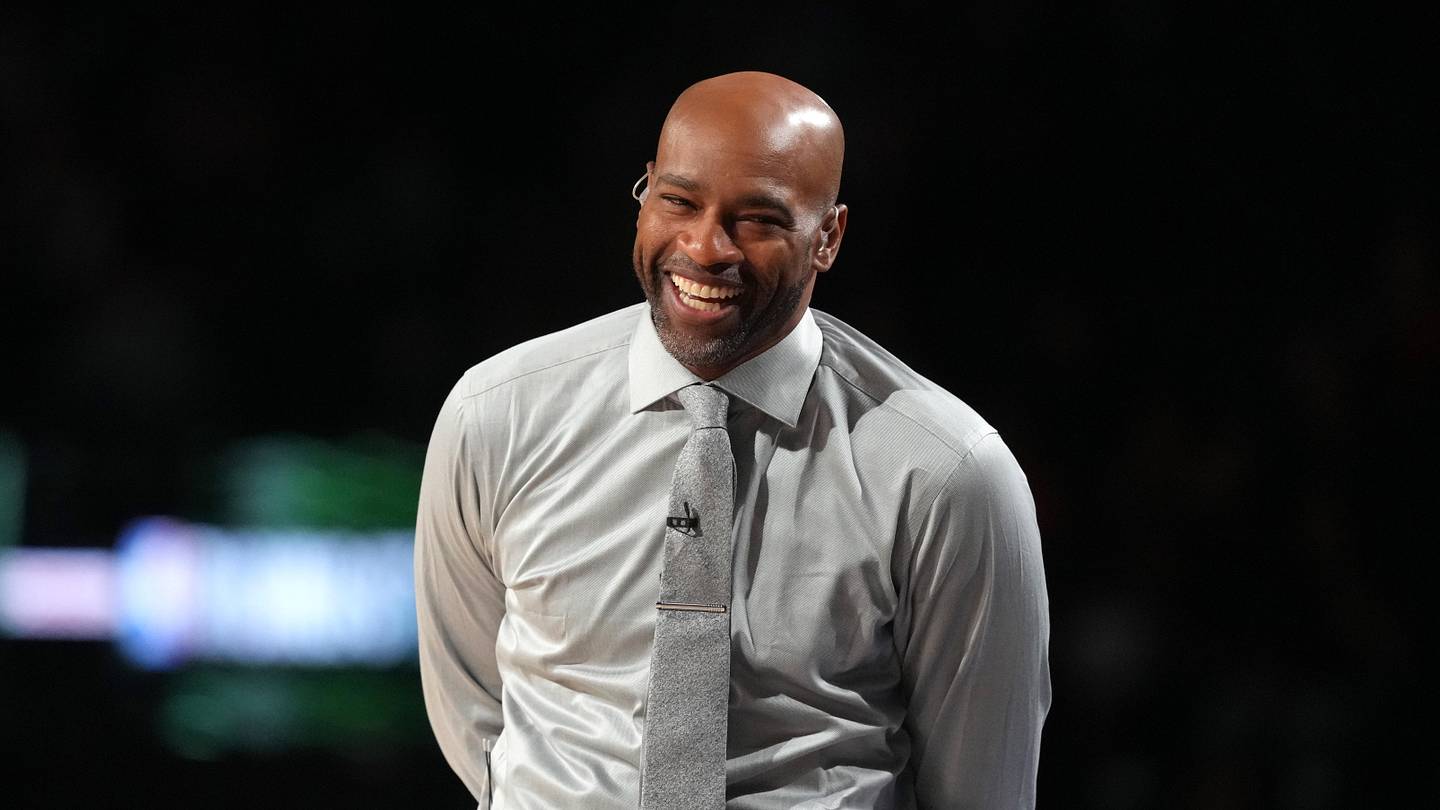
Vince Carter, one of the most electrifying players to ever step on a basketball court, recently shared a jaw-dropping memory that has reignited this debate in a big way. Speaking on his podcast alongside Tracy McGrady, Carter reflected on his AAU days and casually dropped a roster that sounds more like an All-Star team than a youth squad.
The team? The 1994 Patterson, New Jersey AAU squad.
And the names on that roster are nothing short of unbelievable.
Leading the group was Carter himself, who would go on to become a Hall of Famer, an eight-time NBA All-Star, and one of the most iconic dunkers in basketball history. But he wasn’t alone—not even close. This team was stacked with future NBA talent at nearly every position.
Tim Thomas, a highly skilled forward who became a New Jersey basketball legend, was part of the lineup. Richard “Rip” Hamilton, known for his elite scoring ability and later a key piece of an NBA championship team, was there too. Kevin Freeman, another high-level player who carved out a solid basketball career, added even more depth.
And then there’s the name that truly takes this story to another level: Kobe Bryant.
Yes, that Kobe Bryant—the “Black Mamba,” a five-time NBA champion, league MVP, and one of the greatest players in the history of the game—was part of that same AAU squad.
Take a moment to let that sink in.
Five future NBA players. Multiple All-Stars. Hall of Fame talent. All on one AAU team.
It almost sounds unfair.
At the time, these players were still teenagers, just beginning to scratch the surface of their potential. But even then, it was clear to anyone watching that this group was different. Their skill level, competitiveness, and basketball IQ set them apart in ways that few teams could match.
Carter’s story isn’t just about nostalgia—it’s backed up by what these players went on to accomplish at the highest level. When you combine the careers of that roster, the numbers are staggering:
69 total seasons in the NBA
29 All-Star Game appearances
17 All-NBA selections
6 NBA championships
4 first-round draft picks
2 Hall of Fame inductions
And those accolades only scratch the surface.
What makes this team so special isn’t just the individual talent, but the collective greatness. It’s rare to see one future NBA player on an AAU team, let alone five. Even rarer is having multiple players who would go on to become stars, champions, and global icons.
That’s why Carter’s claim carries so much weight. He isn’t speculating or exaggerating—he lived it. He shared the court, the practices, the competition, and the chemistry with a group that would eventually leave a lasting mark on basketball history.
Of course, there have been other legendary AAU and high school teams over the years. Some featured multiple future pros, others dominated their competition in historic fashion. But very few—if any—can match the sheer level of talent that the 1994 Patterson team brought together.
It’s one thing to have a great player. It’s another to have a lineup full of them.
And that’s what separates this team from the rest.
Carter’s story serves as both a reminder and a revelation. A reminder of how deep basketball talent runs, especially at the grassroots level, and a revelation of just how rare it is for so much greatness to exist in one place at one time.
So the next time the debate comes up—about the greatest AAU team ever assembled—you might want to think twice before arguing against this squad.
Because when you stack up the names, the accomplishments, and the legacy, it’s hard to find a team that even comes close.
And as Vince Carter himself made clear, some debates don’t need much discussion once you know the full story.




